
Mi casa, mi cuerpo – My House, my Body
2026 –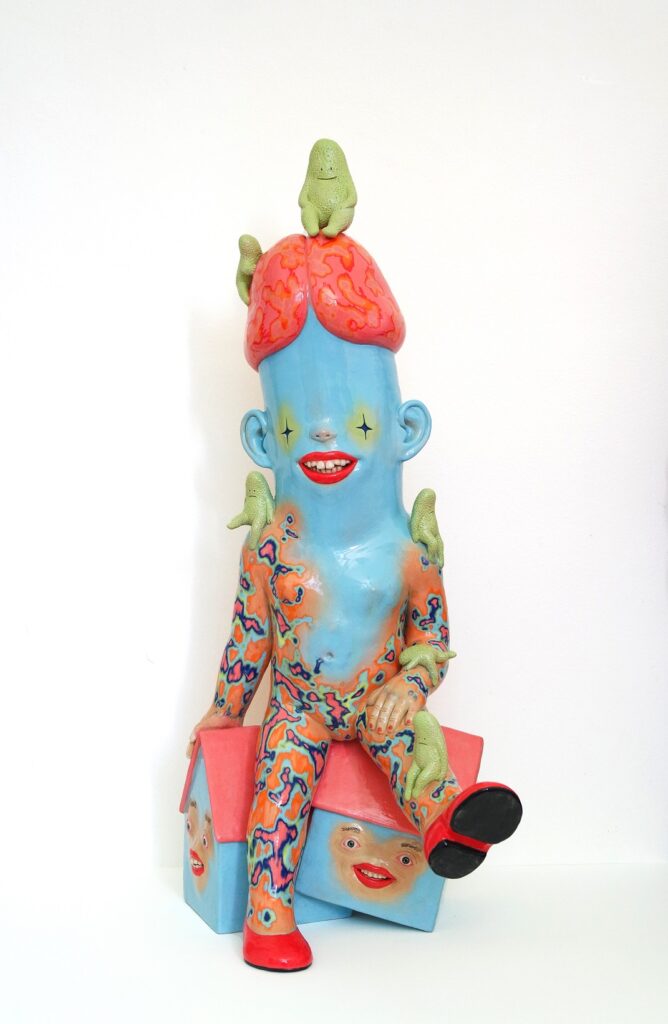
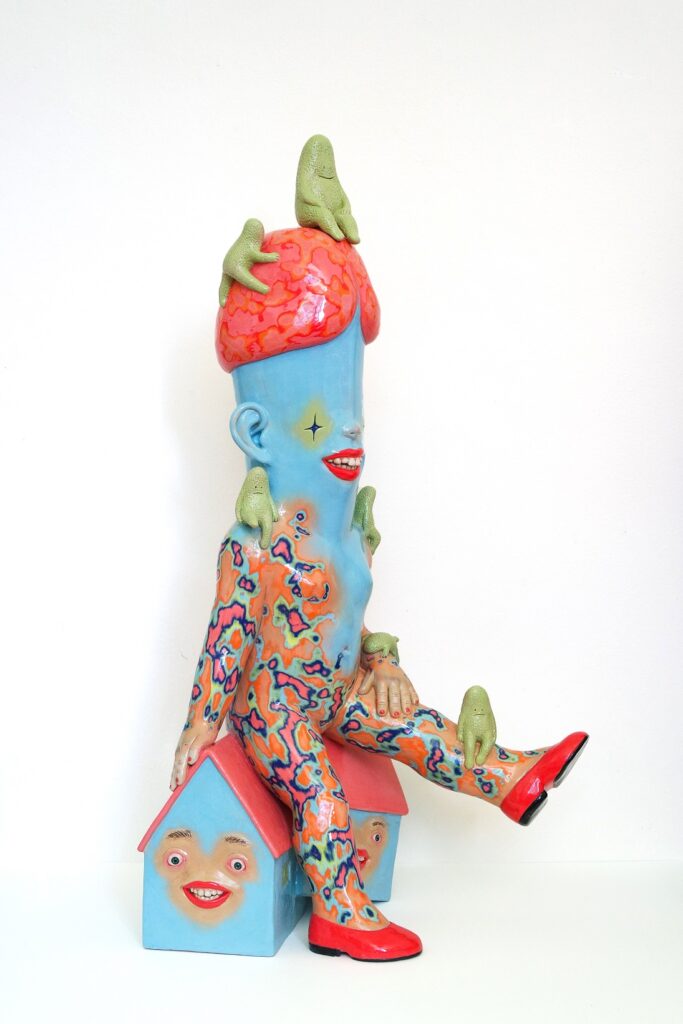
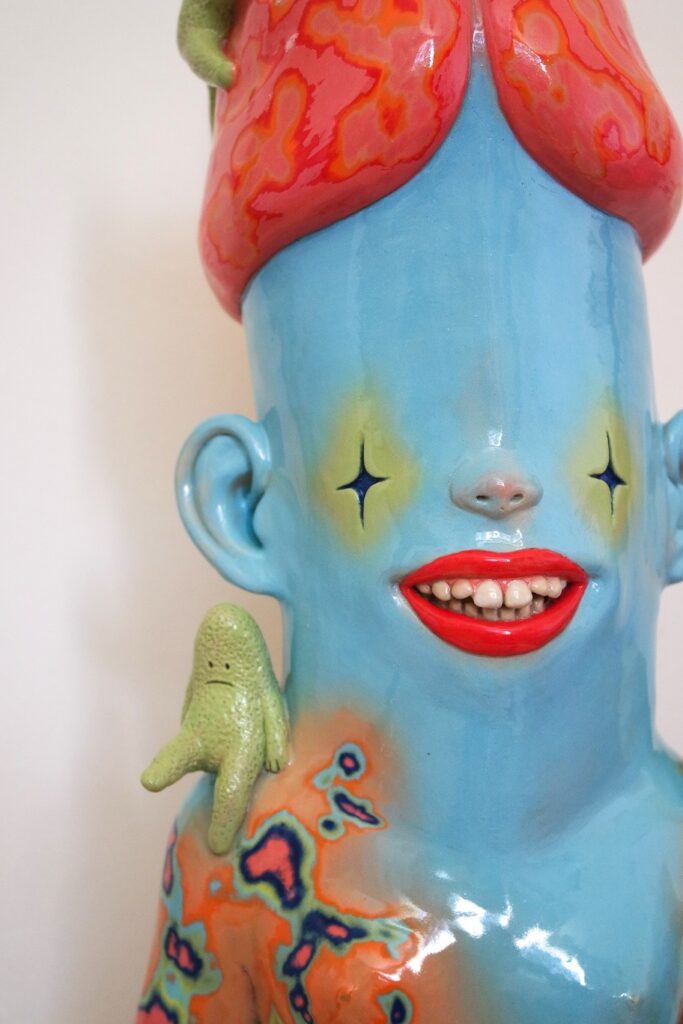
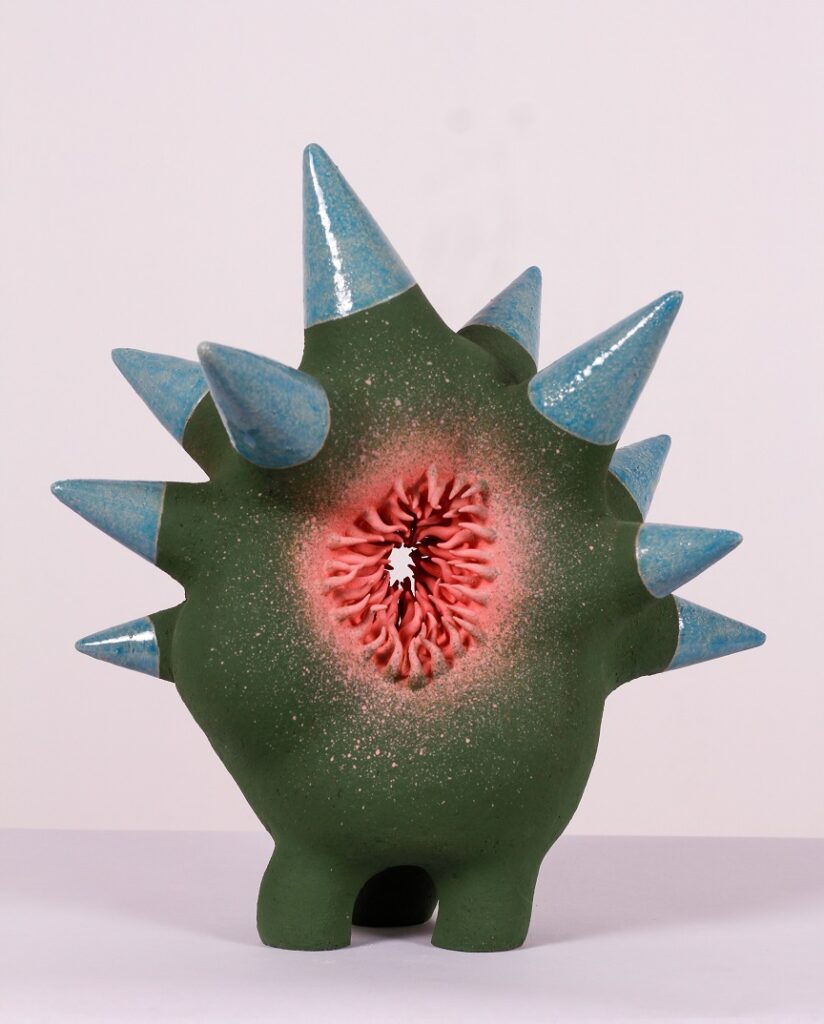
2026, stoneware with engobe and glaze, 69 x 33 x 32 cm
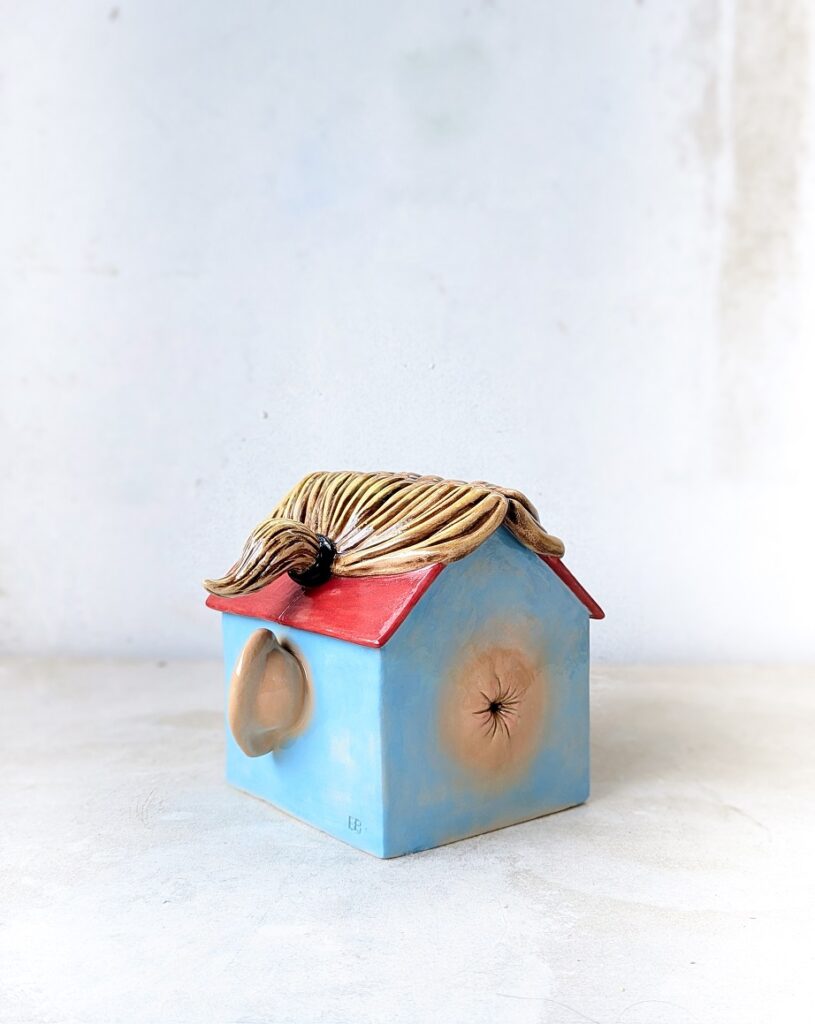
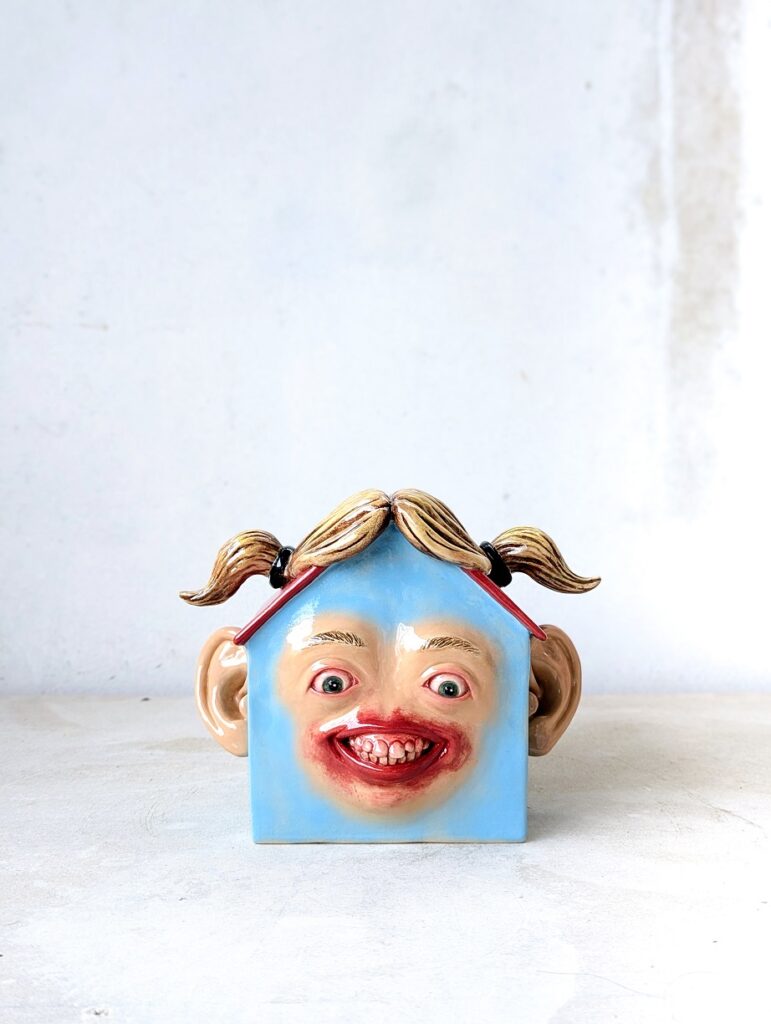
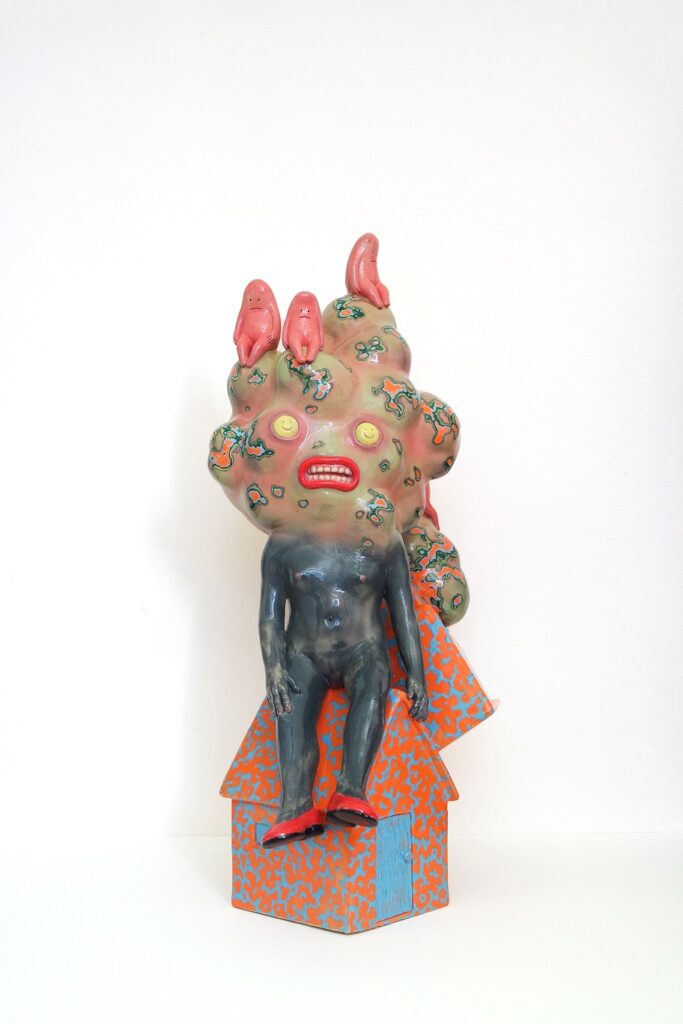
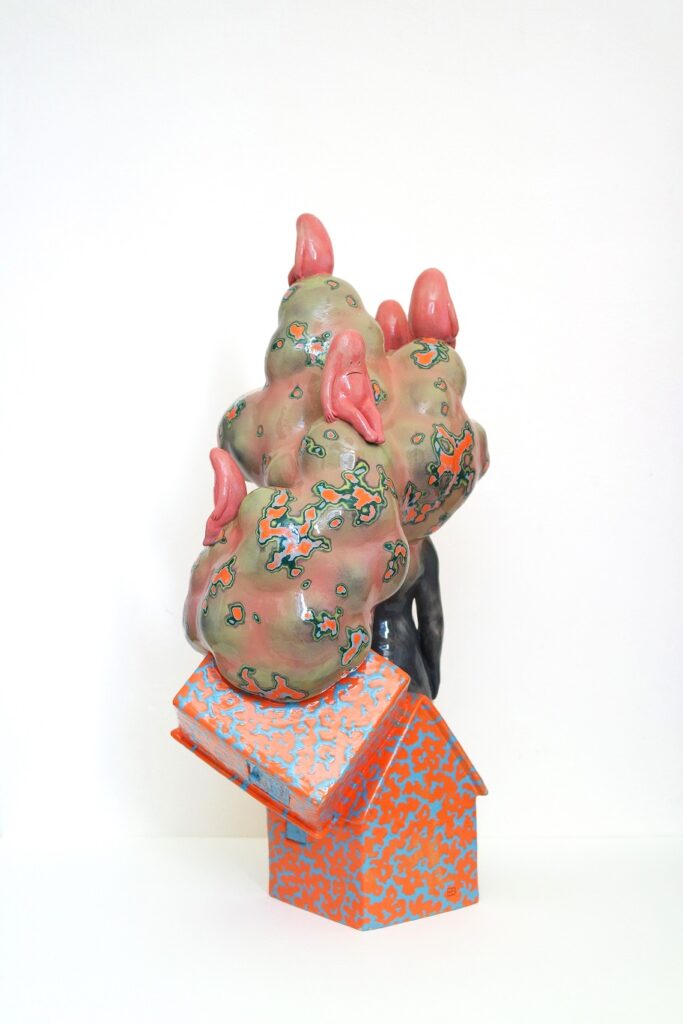
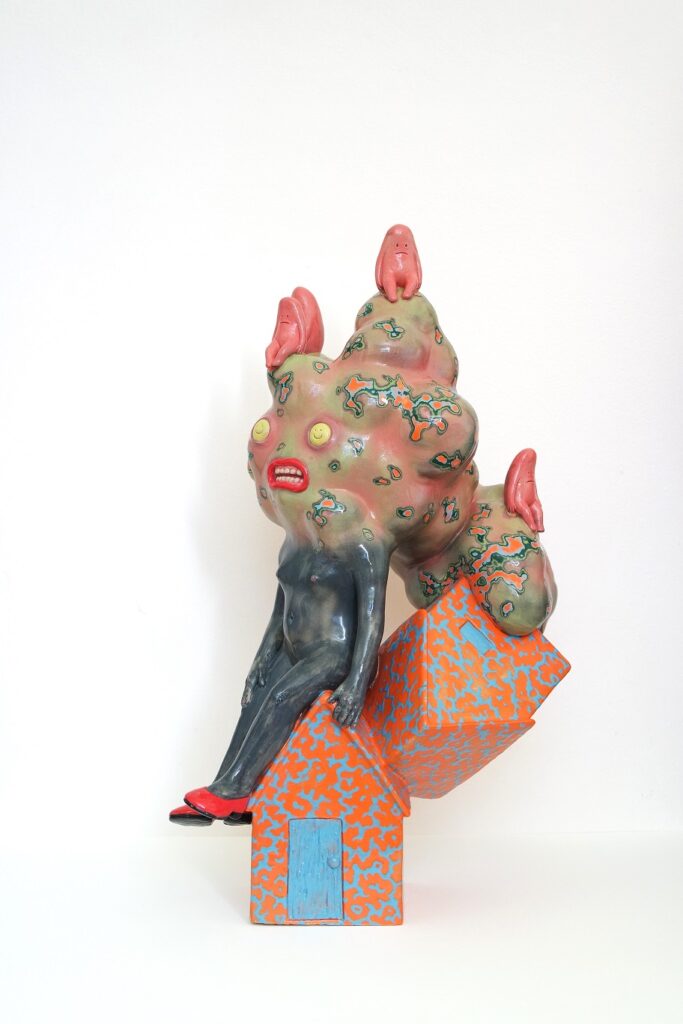
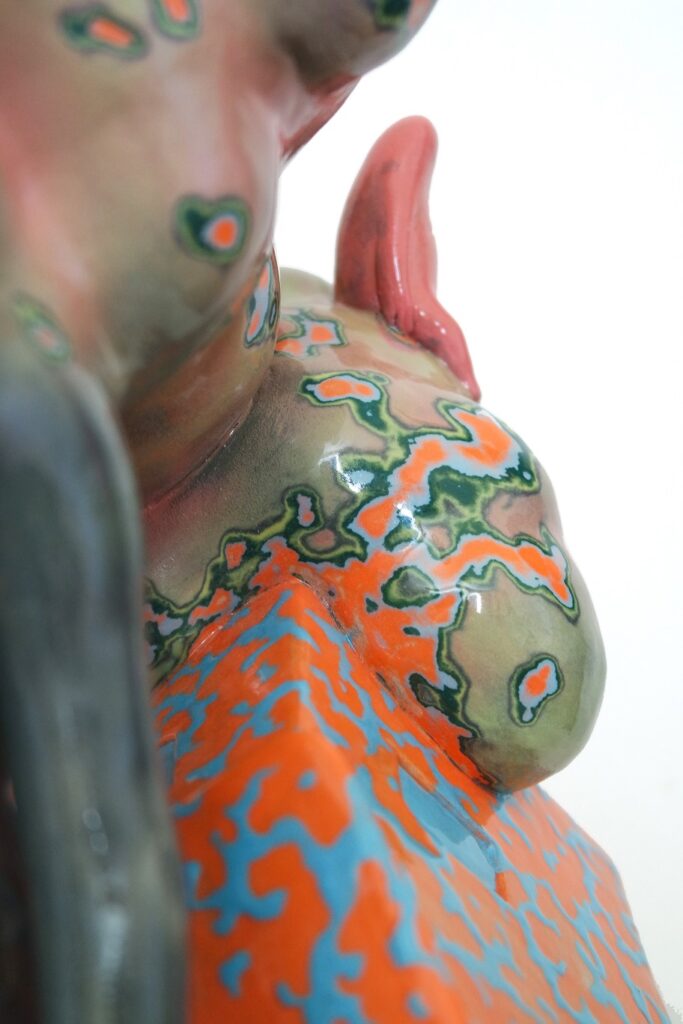
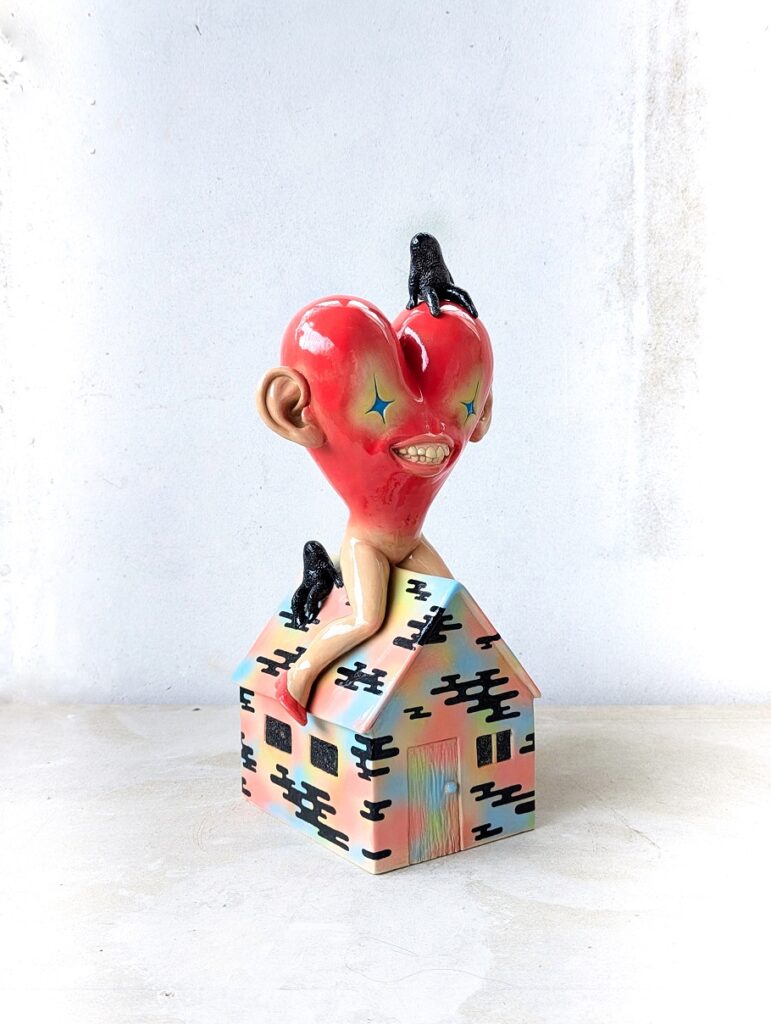
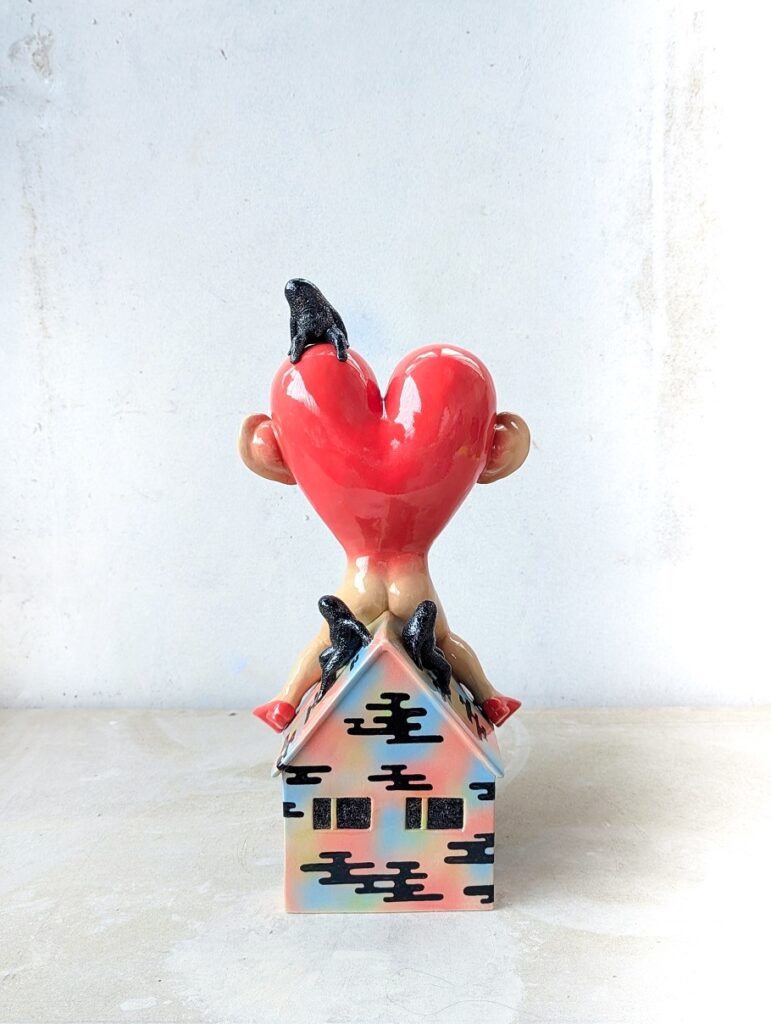
2026, stoneware with engobe and glaze, 42 x 21 x 18 cm
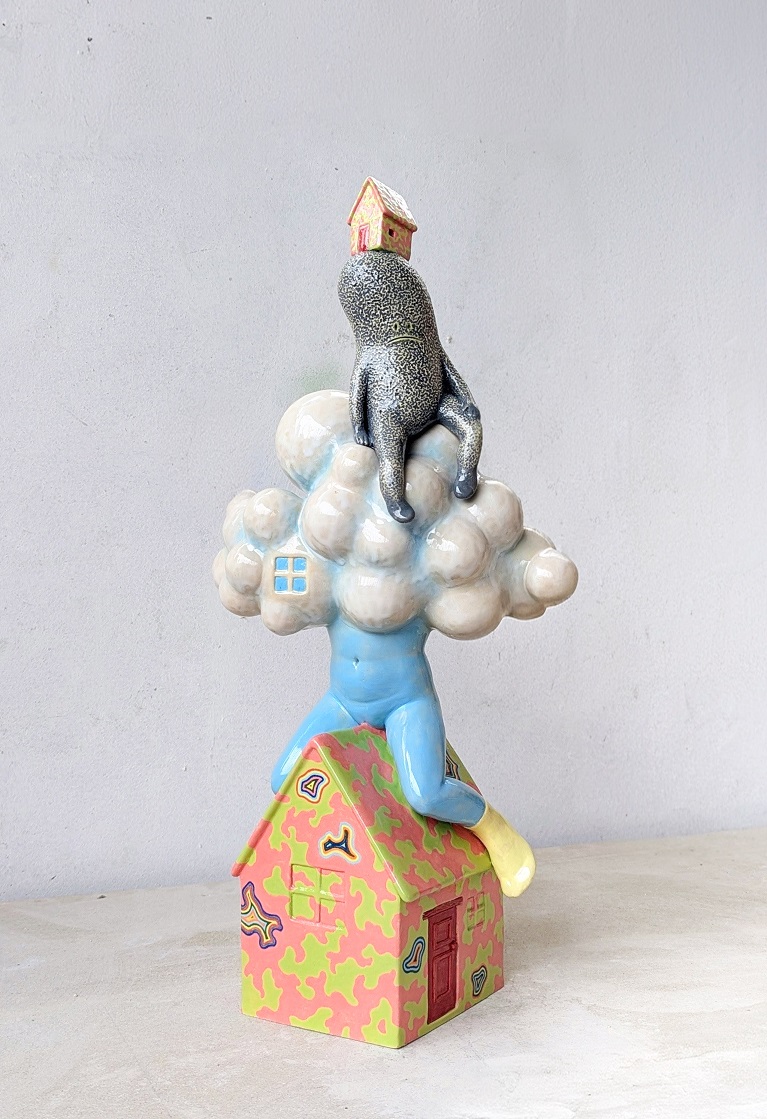
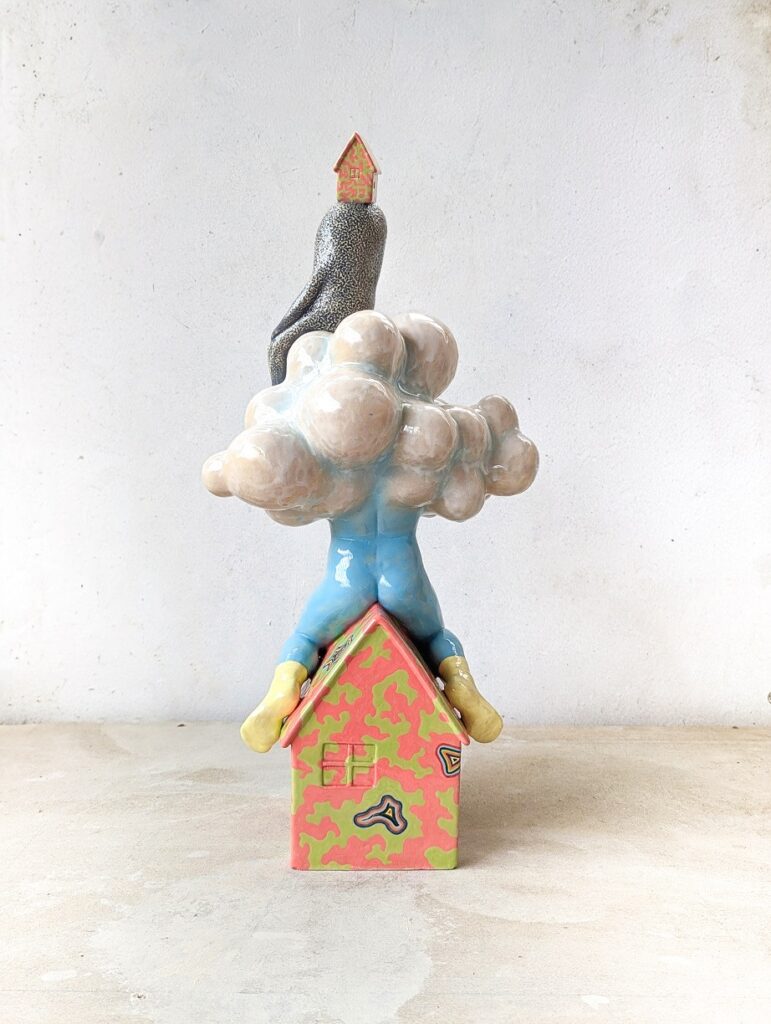
2026, stoneware with engobe and glaze, 54.6 x 26 x 15.5 cm
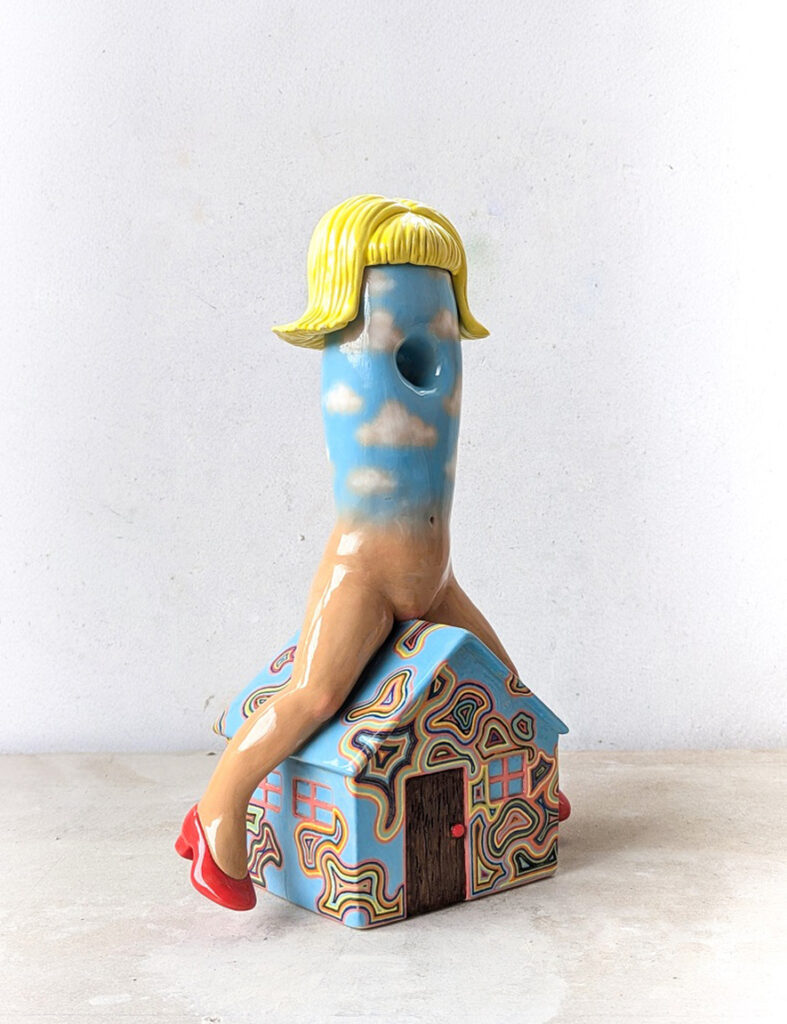
2026, stoneware with engobe and glaze, 44.5 x 29 x 15 cm
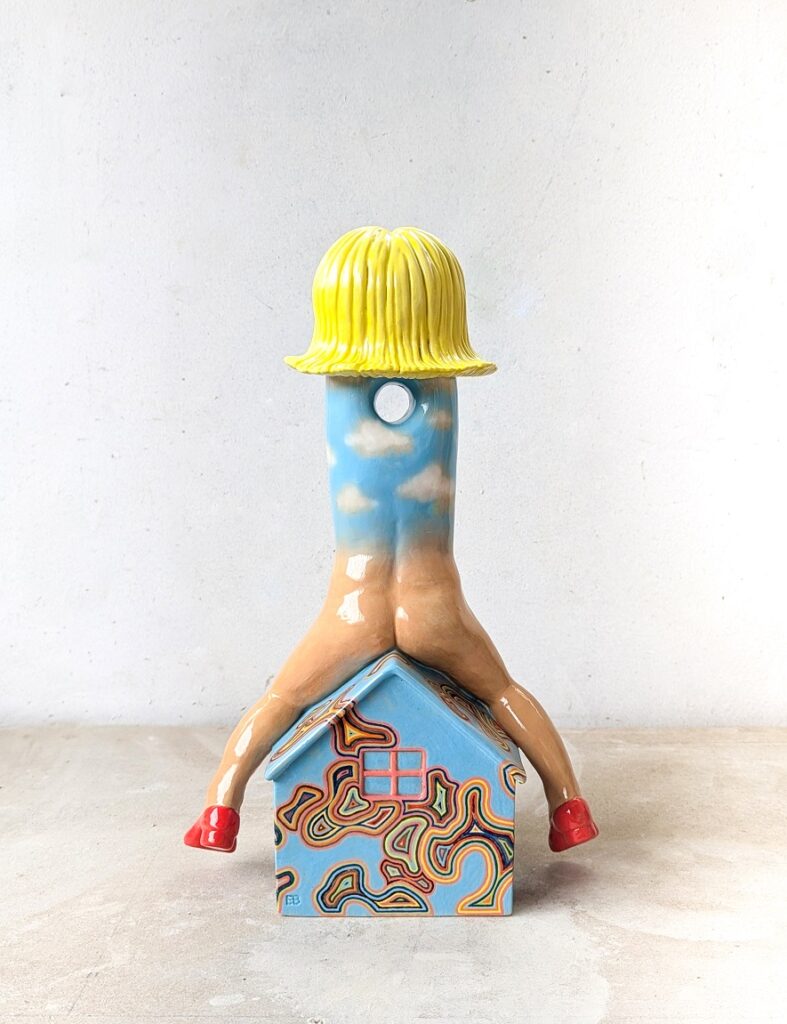
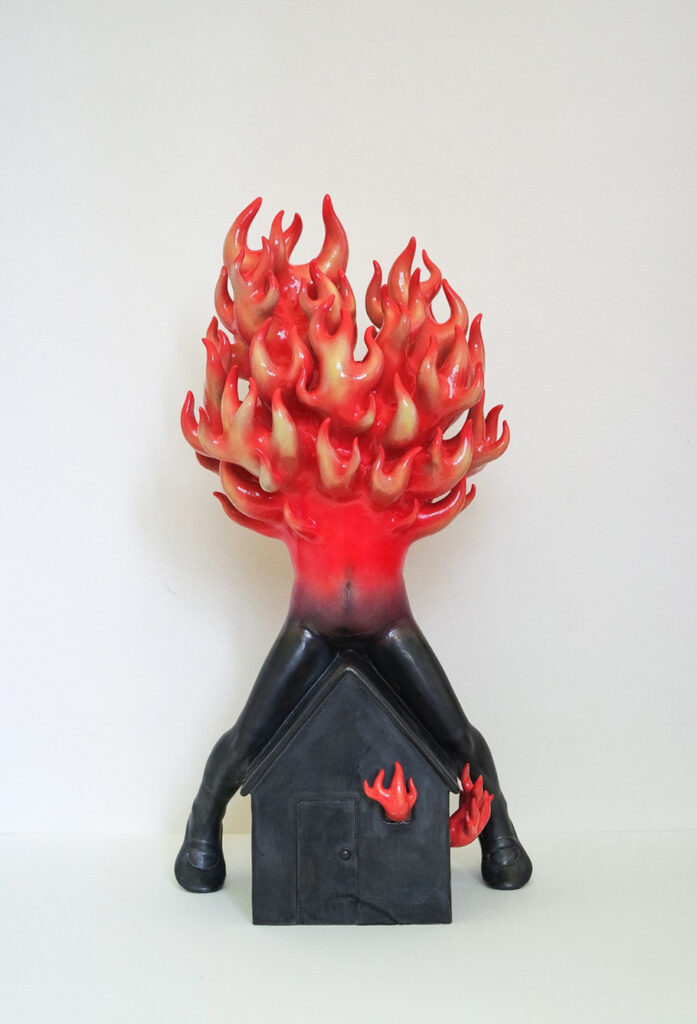
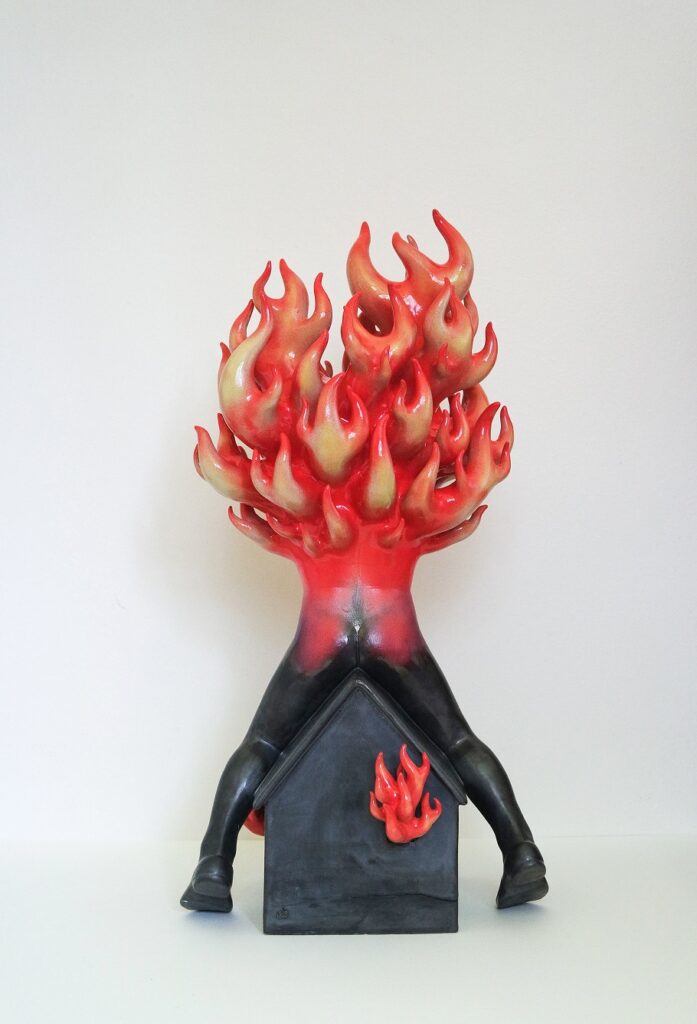
2026, stoneware with engobe and glaze, 53 x 28 x 21 cm
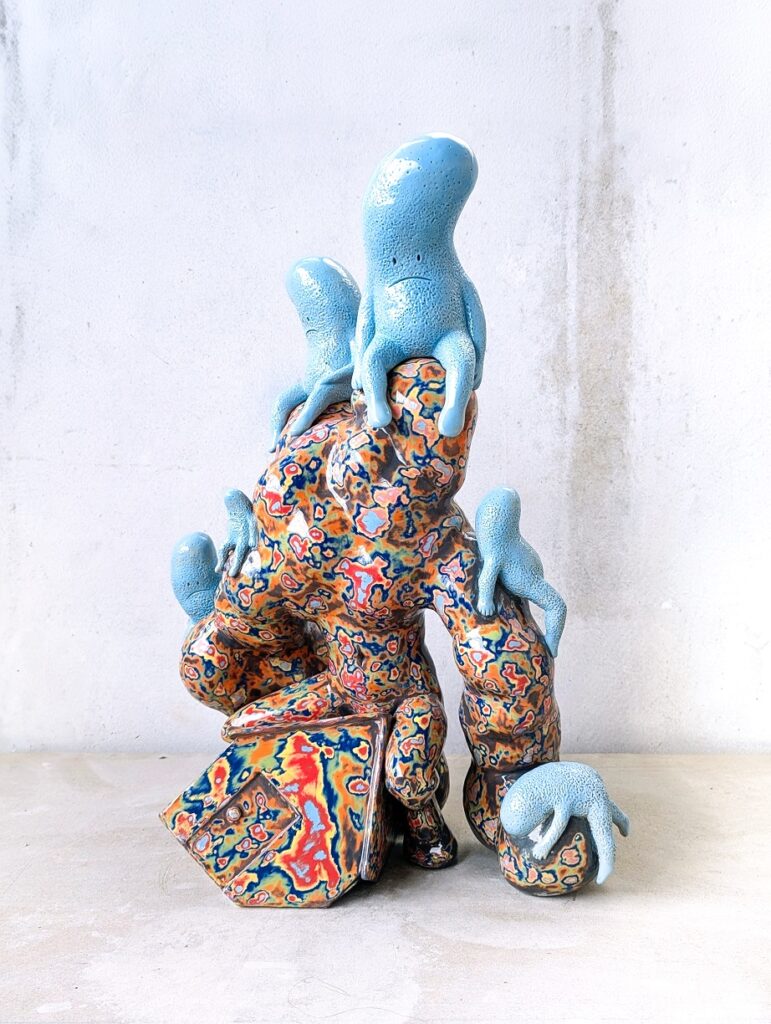
2026, stoneware with engobe and glaze, 56 x 43 x 28 cm
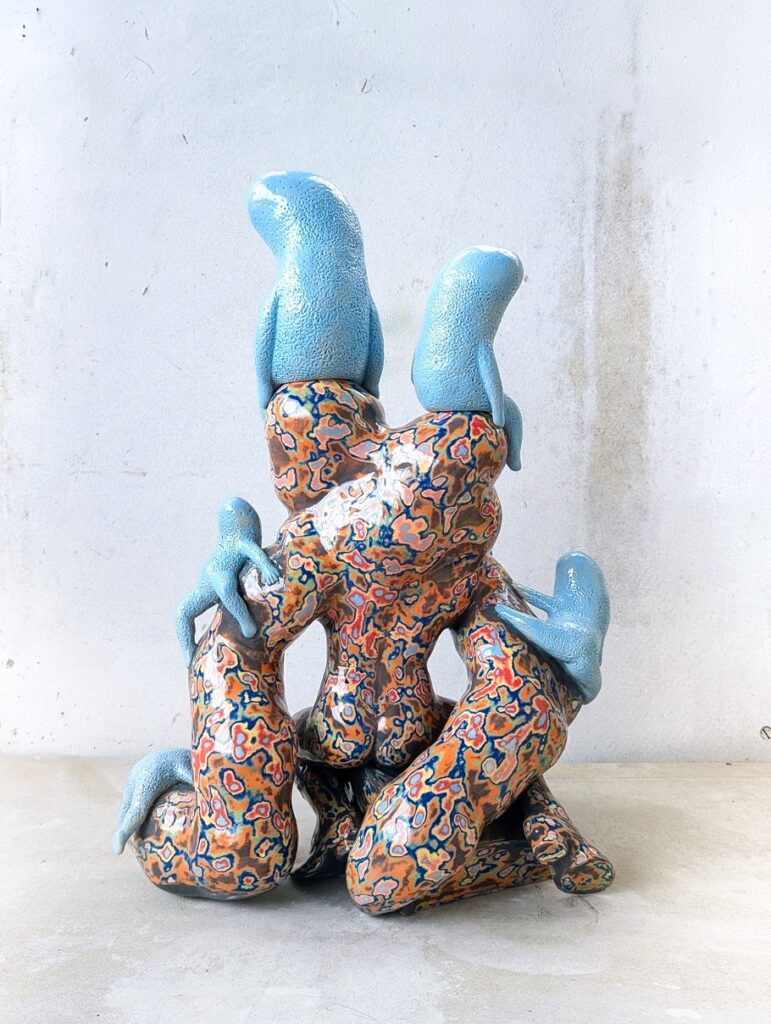
The suicidals
2026 –Extension of the project Mi Casa, Mi Cuerpo
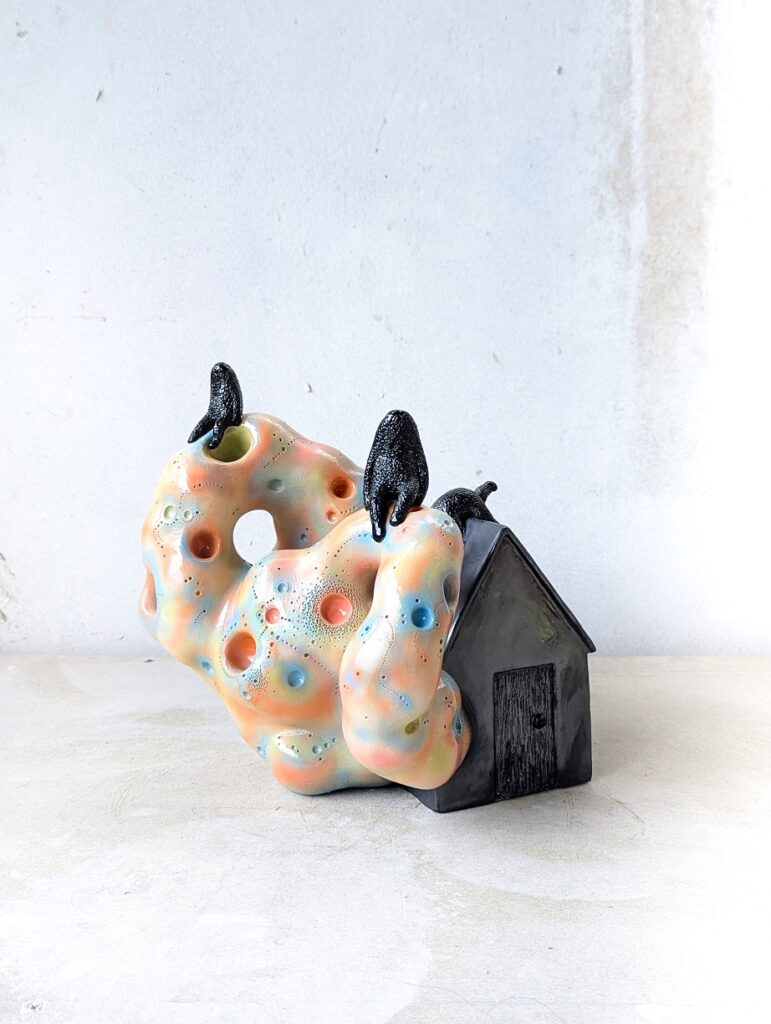
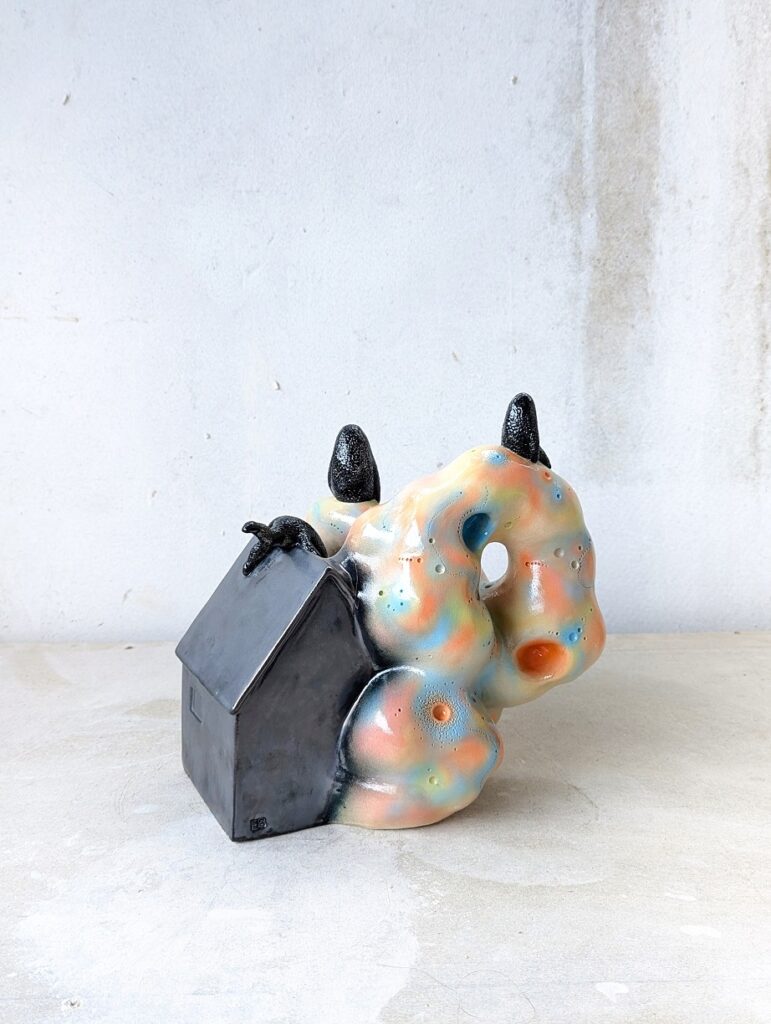
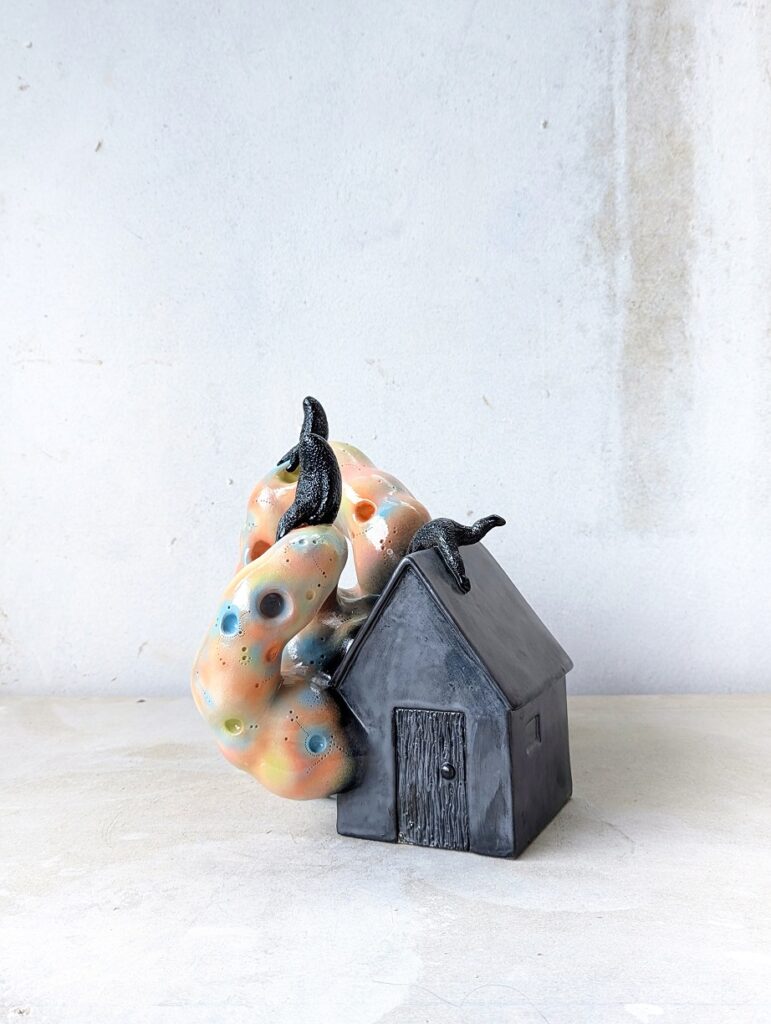
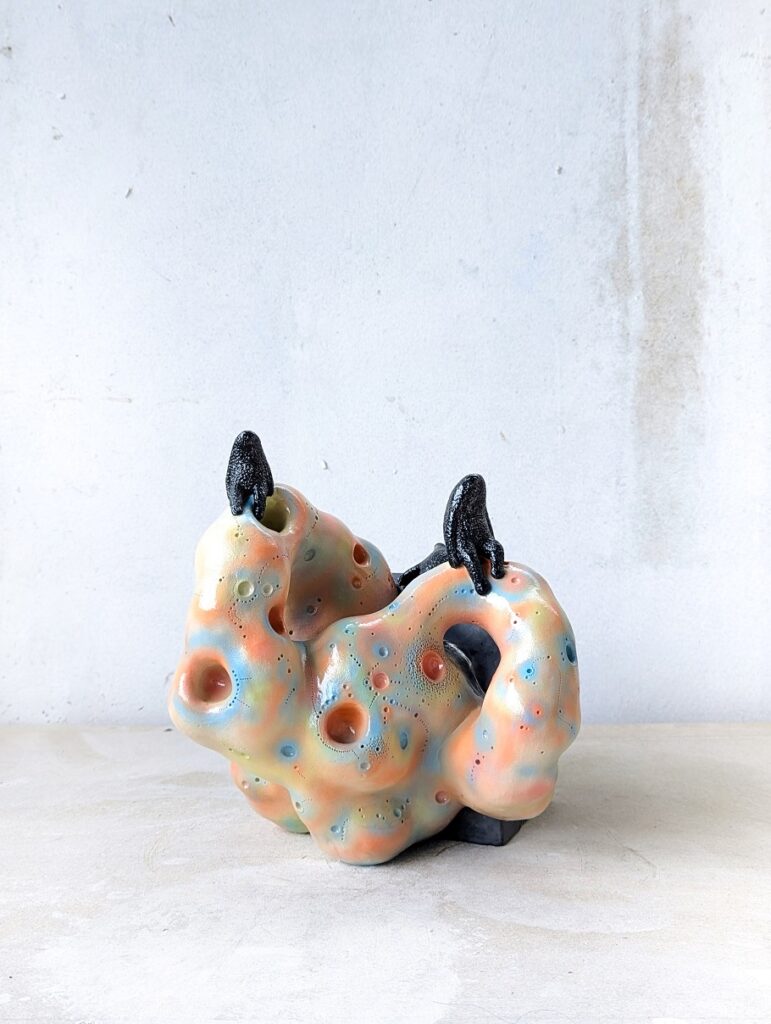
stoneware with engobe and glaze,
27 x 25 x 23 cm
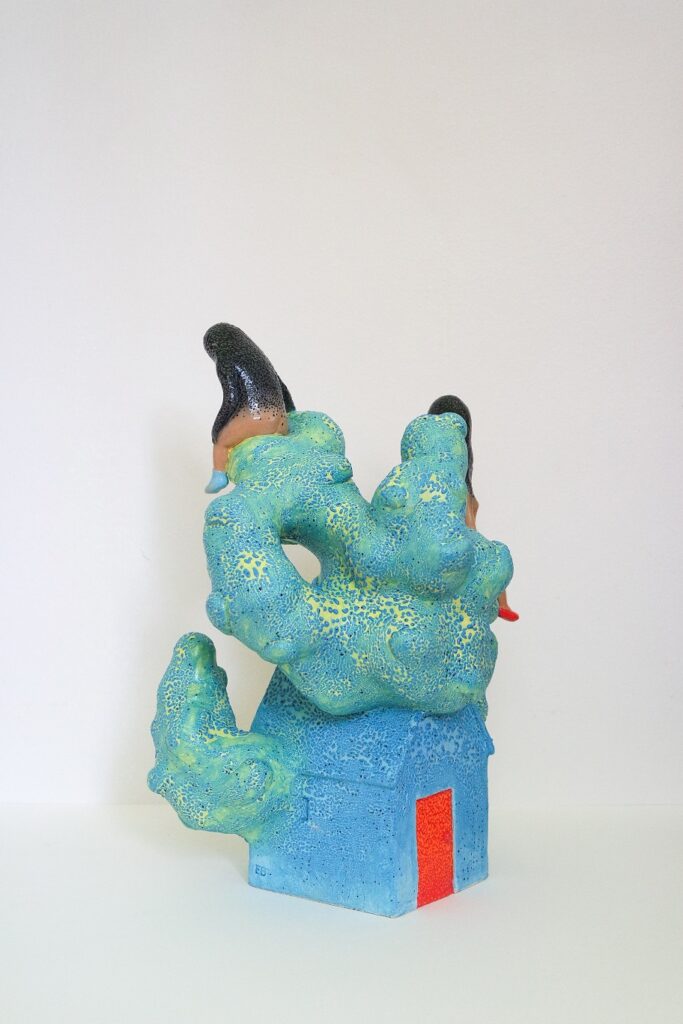
39 x 28 x 26 cm
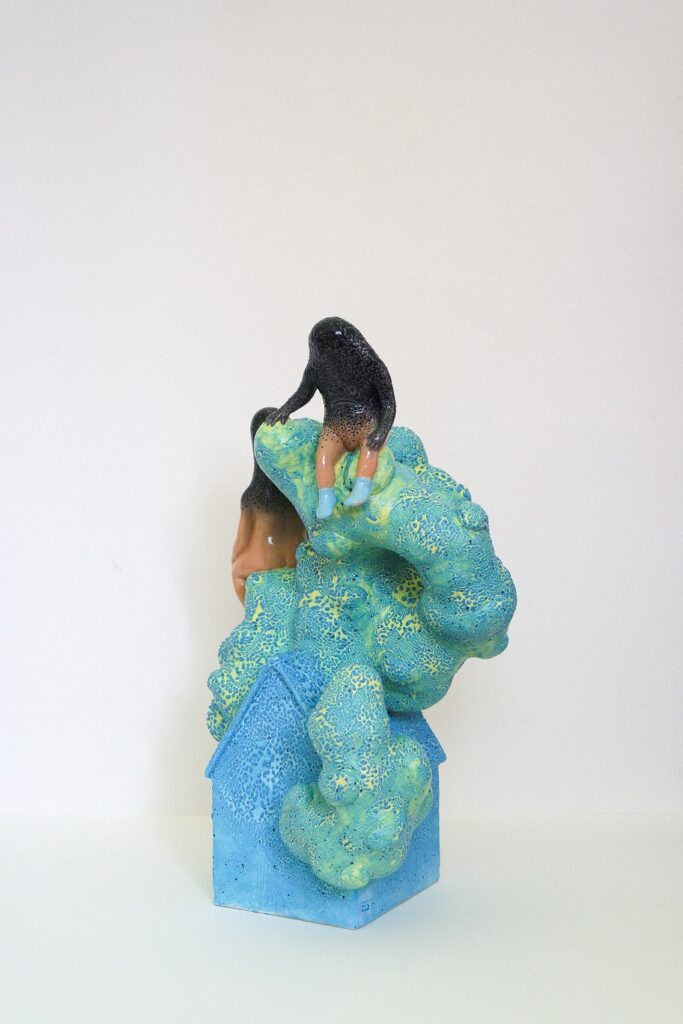
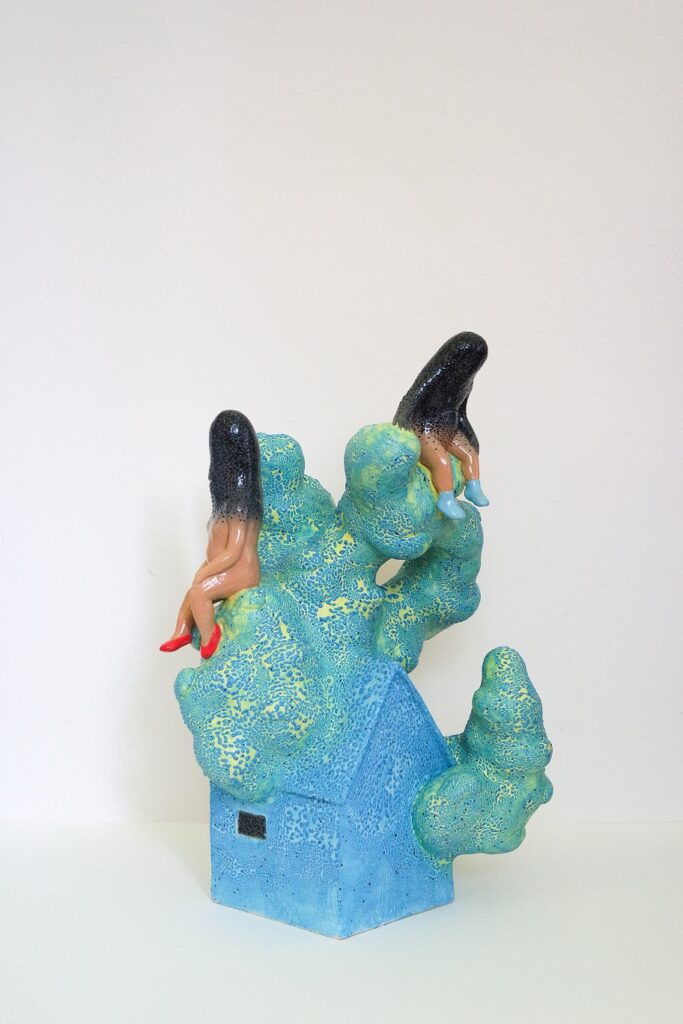
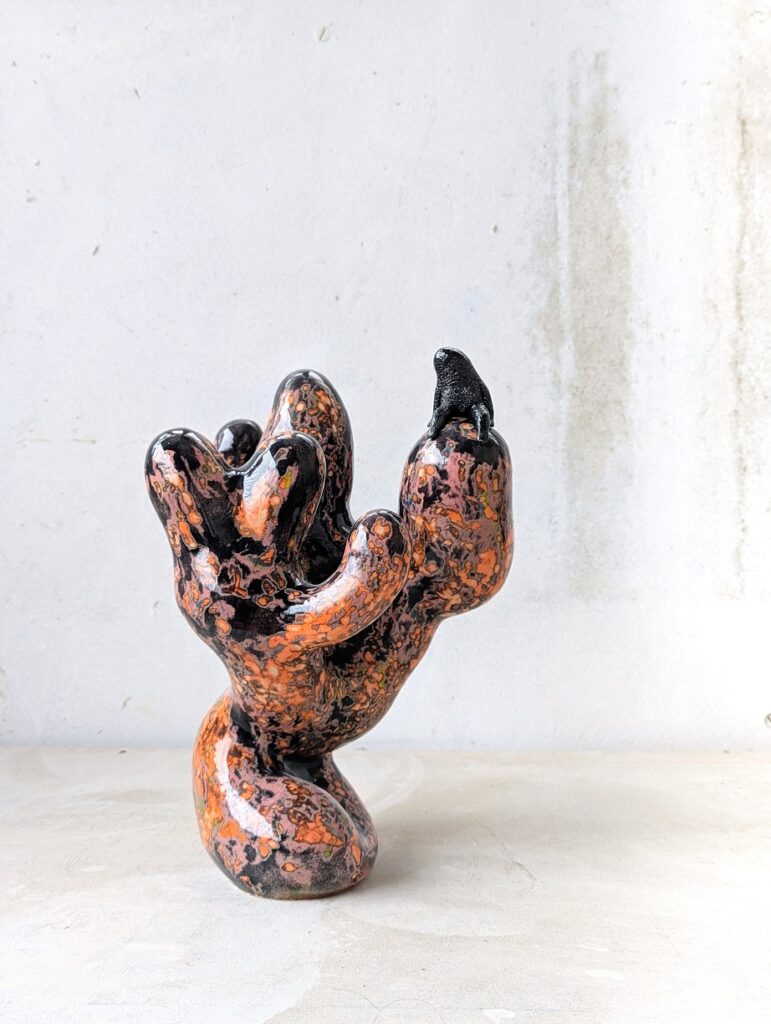
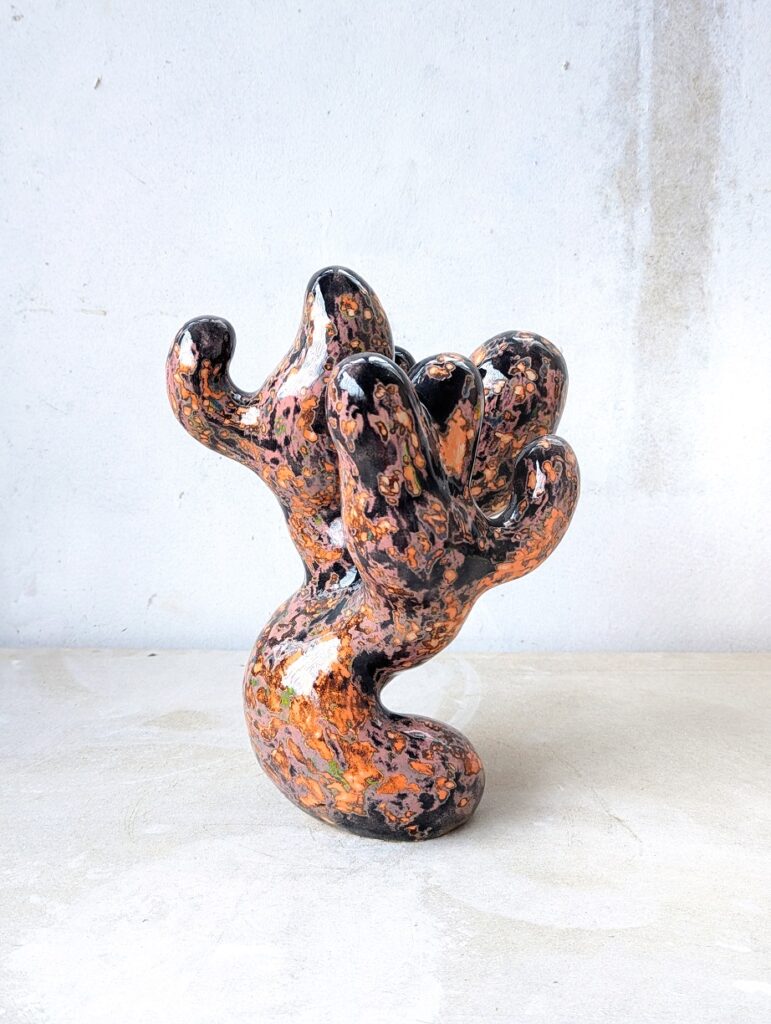
2026, stoneware with engobe and glaze, 45 x 25 x 23 cm
Everyday Chimeras
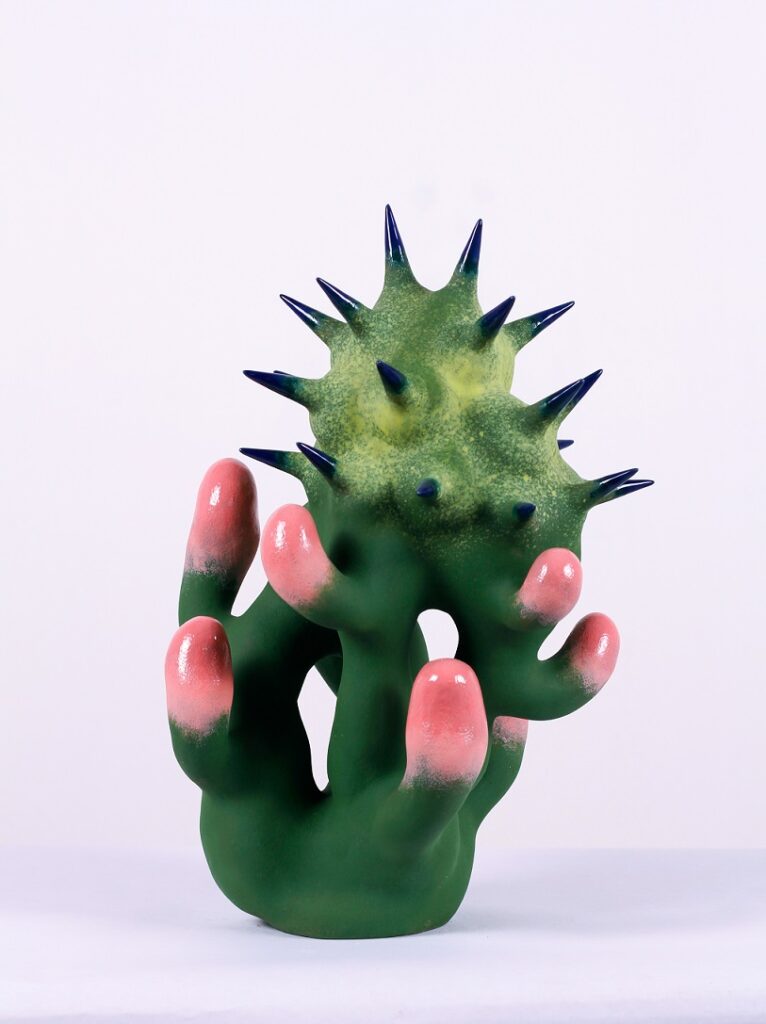
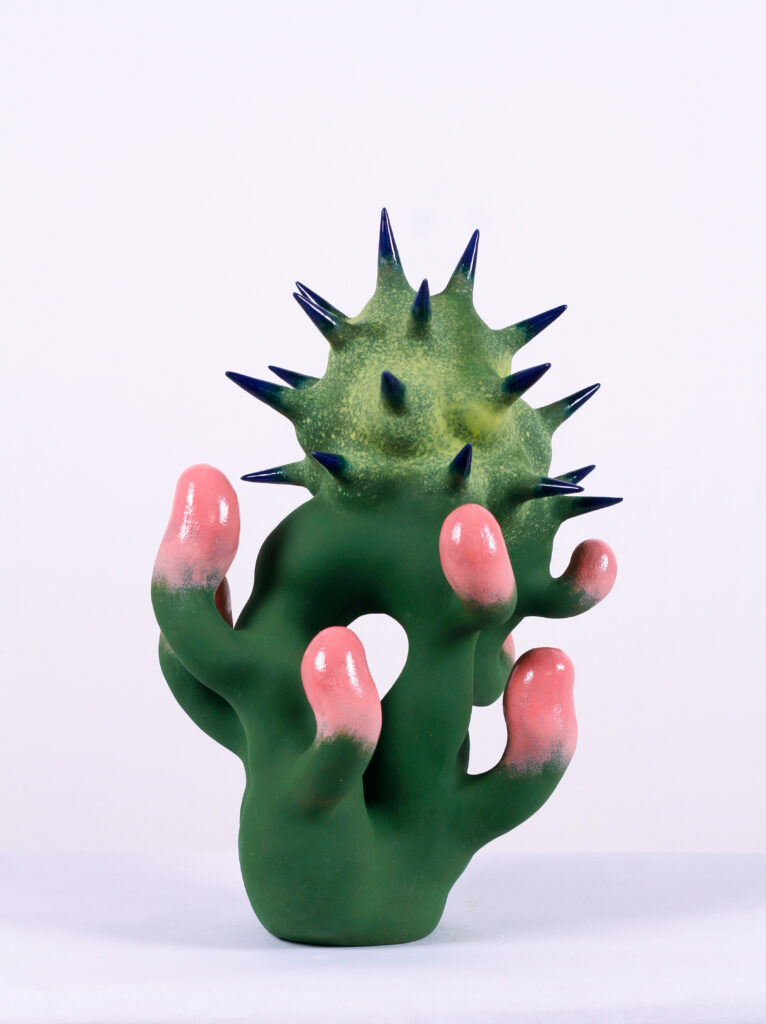
2023 –These pieces take the form of fantastical entities shaped by various influences. They give rise to hybrid figures in which elements of the everyday and the imagination intertwine. Clouds, ex-votos in the shape of hearts, animals, or clowns coexist with images drawn from dreams and nightmares.
The earliest works in this series have opened up the lines of inquiry I continue today. They emerge from free associations, nourished by the random forms and elements that surround me. This intuitive gesture becomes a way of taming anxiety and transforming the ordinary into fictional matter.
Creation then becomes an almost automatic process, in which inner life manifests itself through images akin to magical realism. Each piece develops as an autonomous universe, endowed with its own formal and symbolic logic.
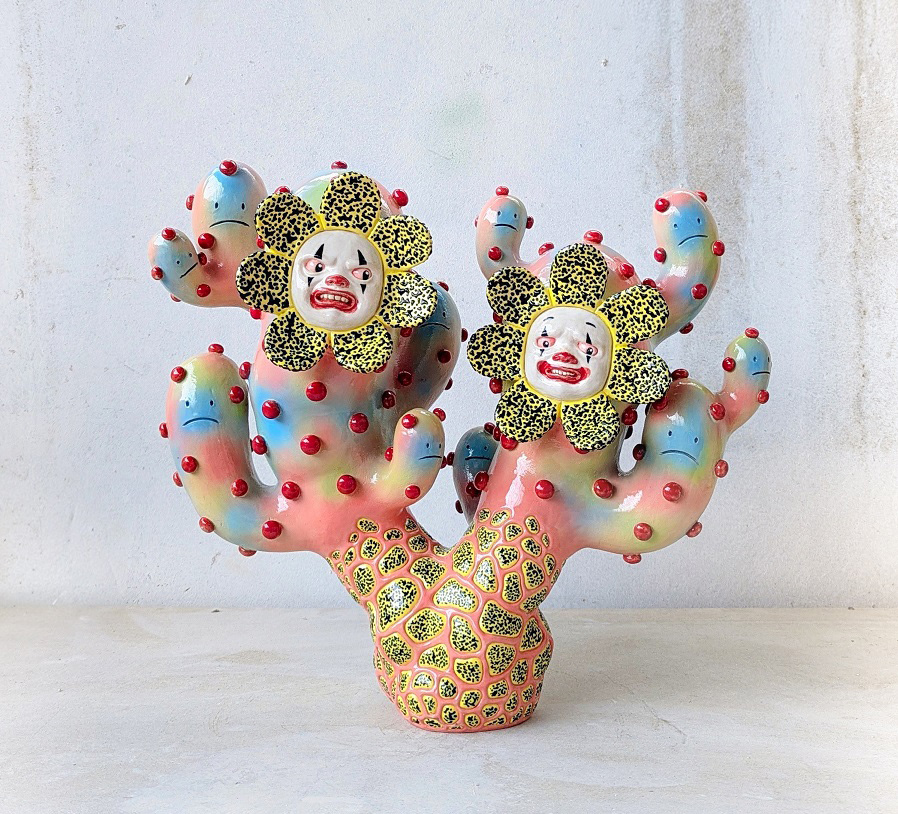
2026, stoneware with engobe and glaze, 39.5 x 43 x 22 cm
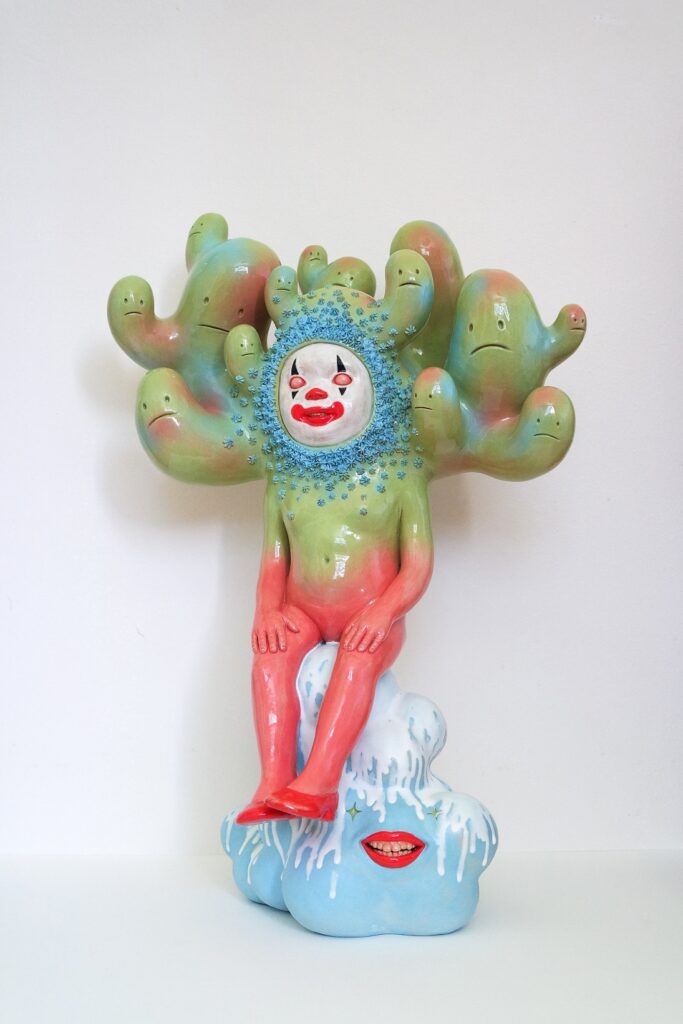
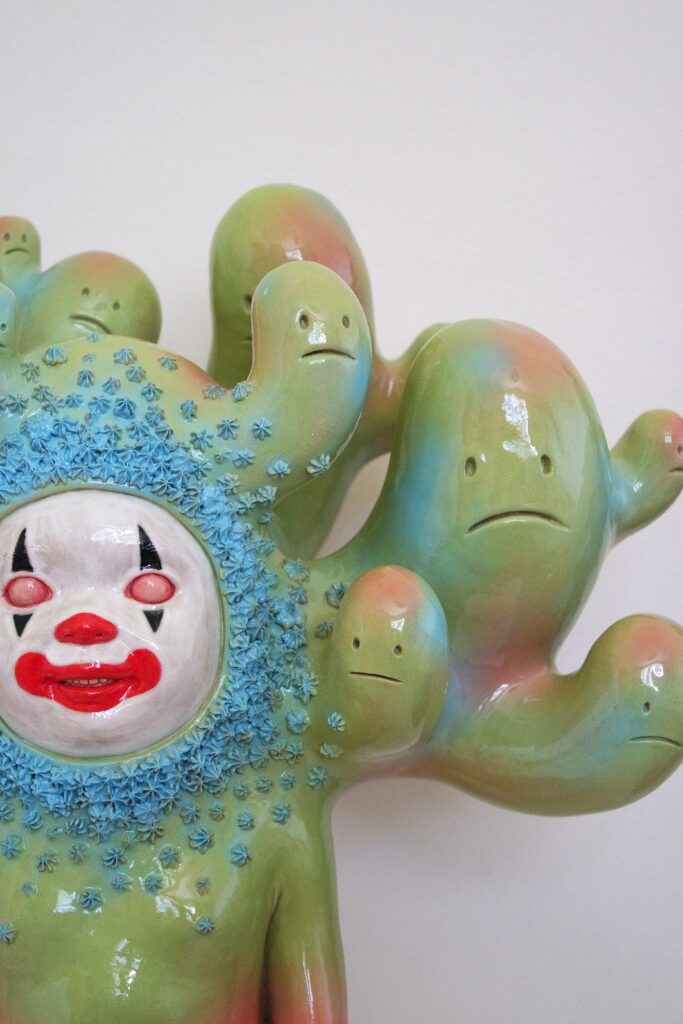
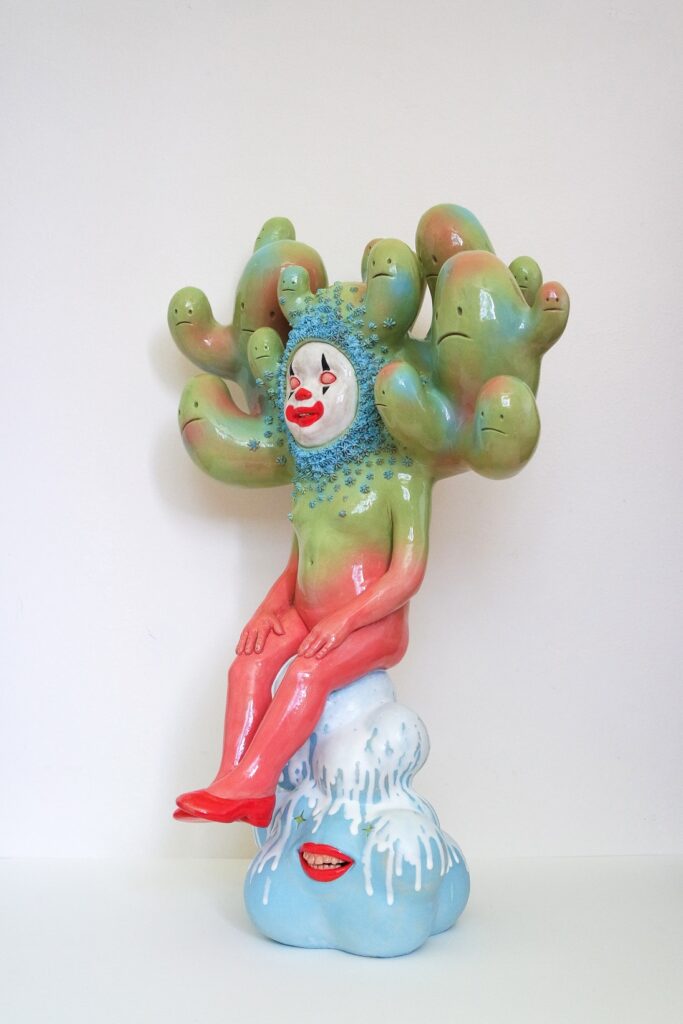
2026, stoneware with engobe and glaze, 59 x 40 x 28 cm
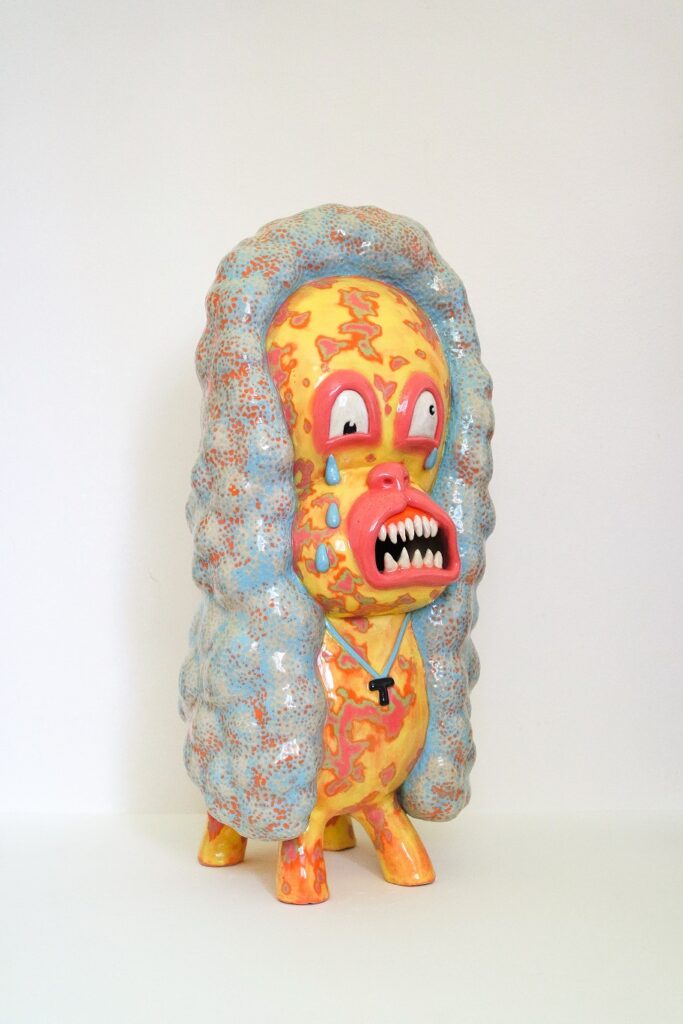
2026, stoneware with engobe and glaze, 50 x 23 x 24 cm
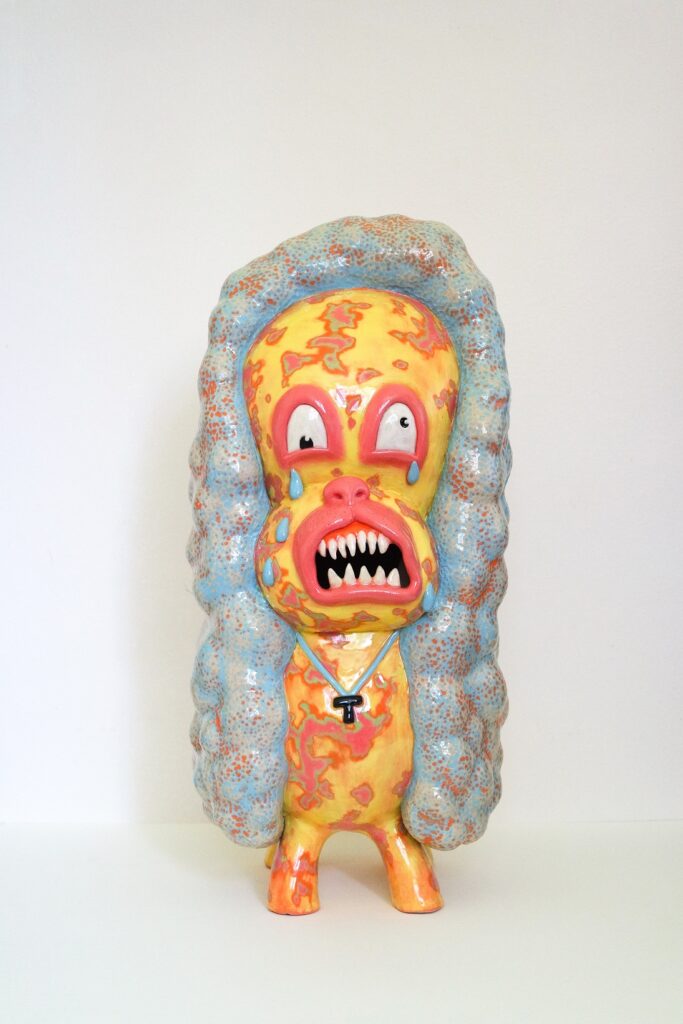
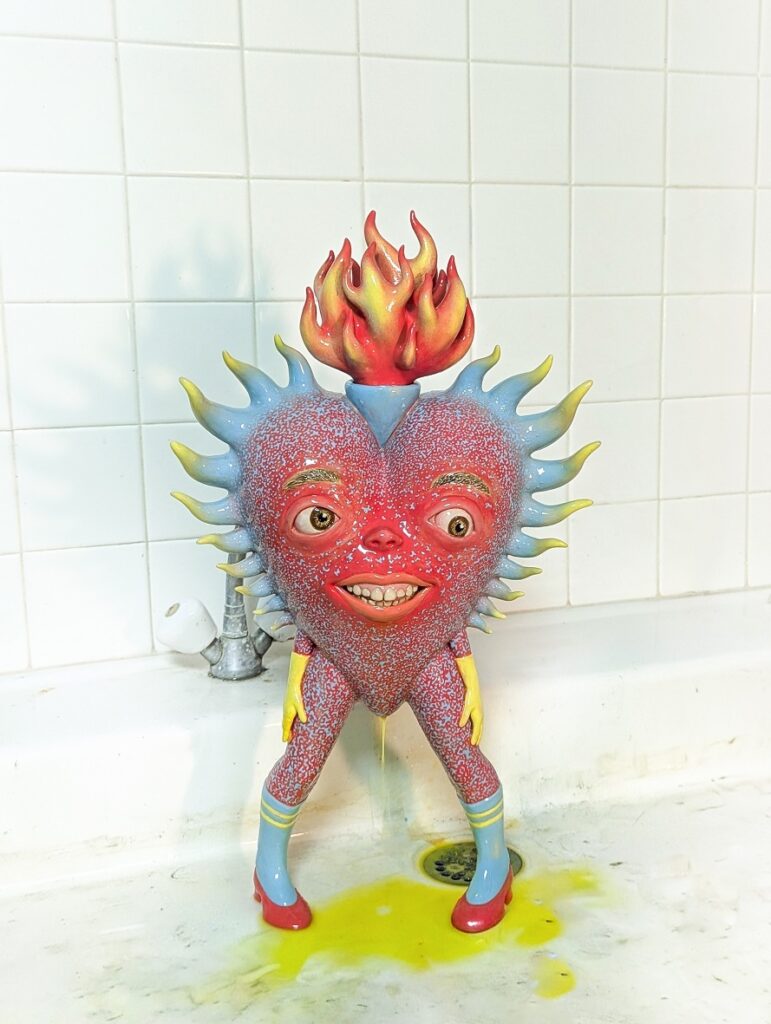
2026, grès engobé et émaillé, stoneware with engobe and glaze, colored water, 52.5 x 30.5 x 13 cm
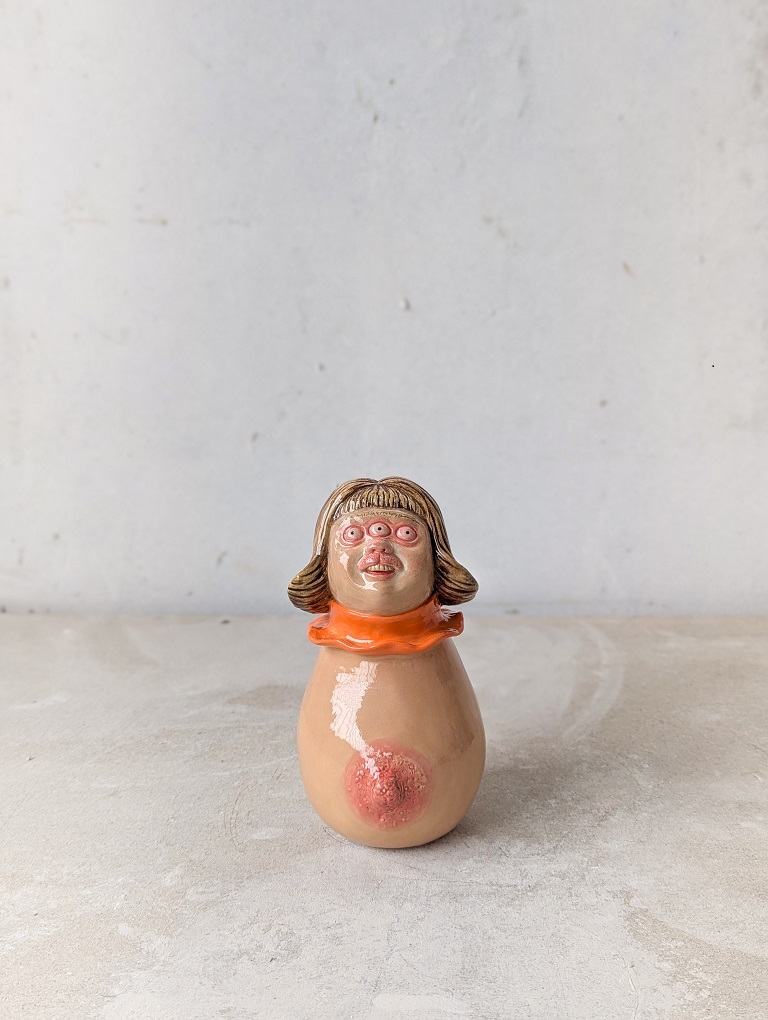
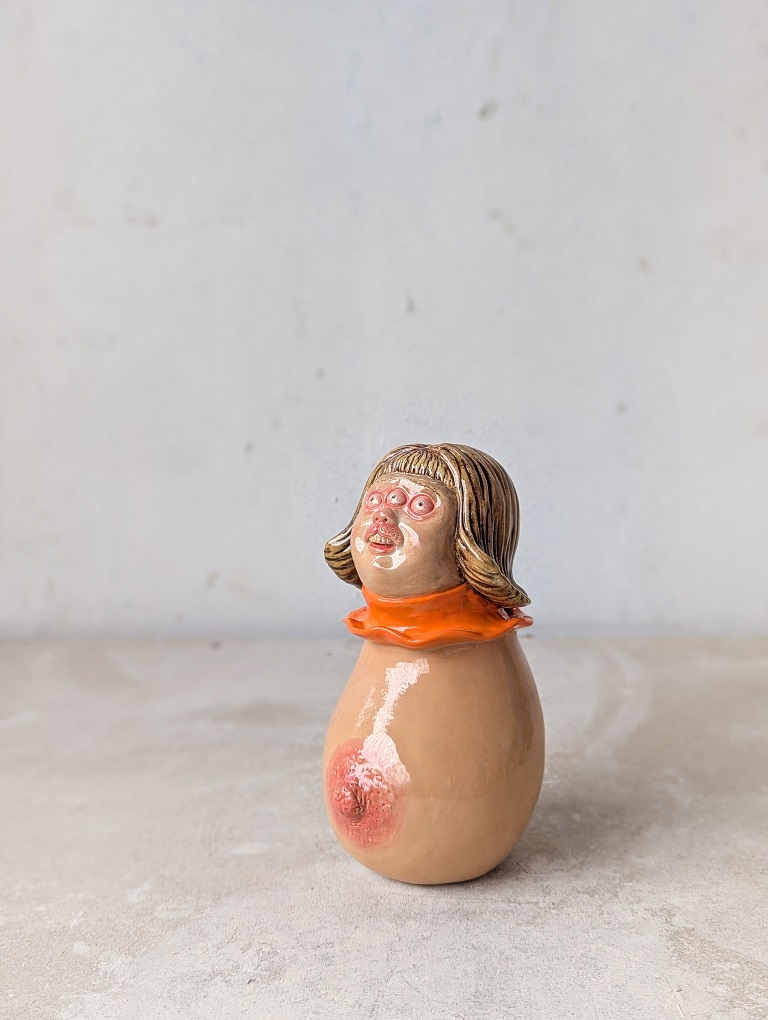
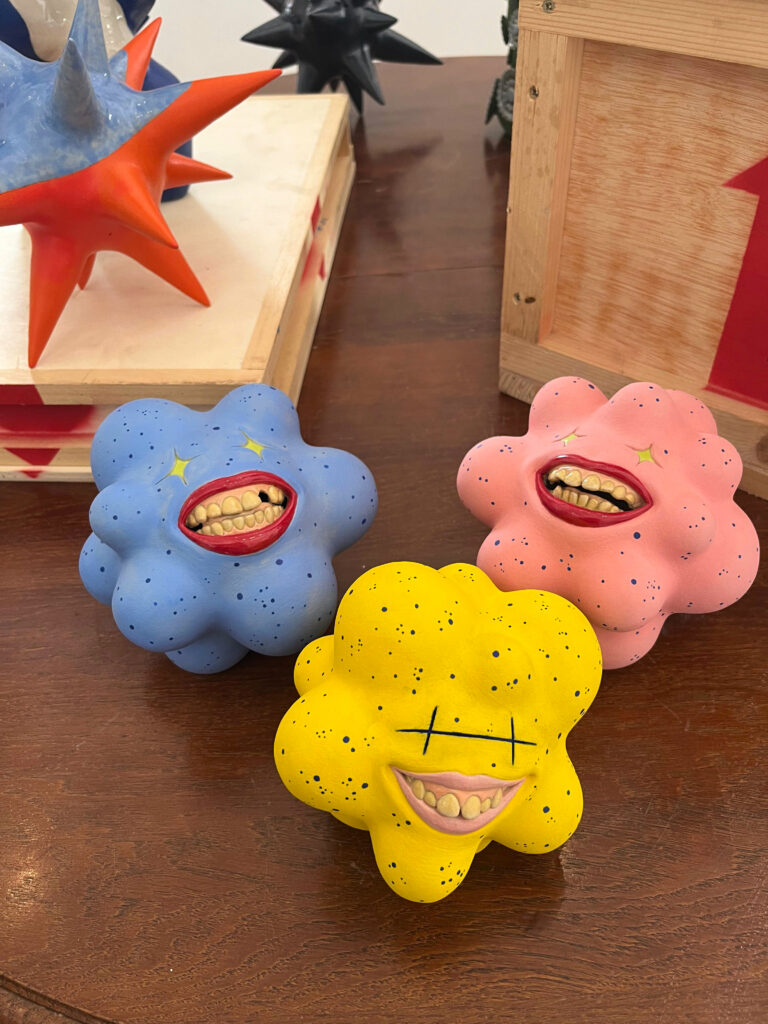
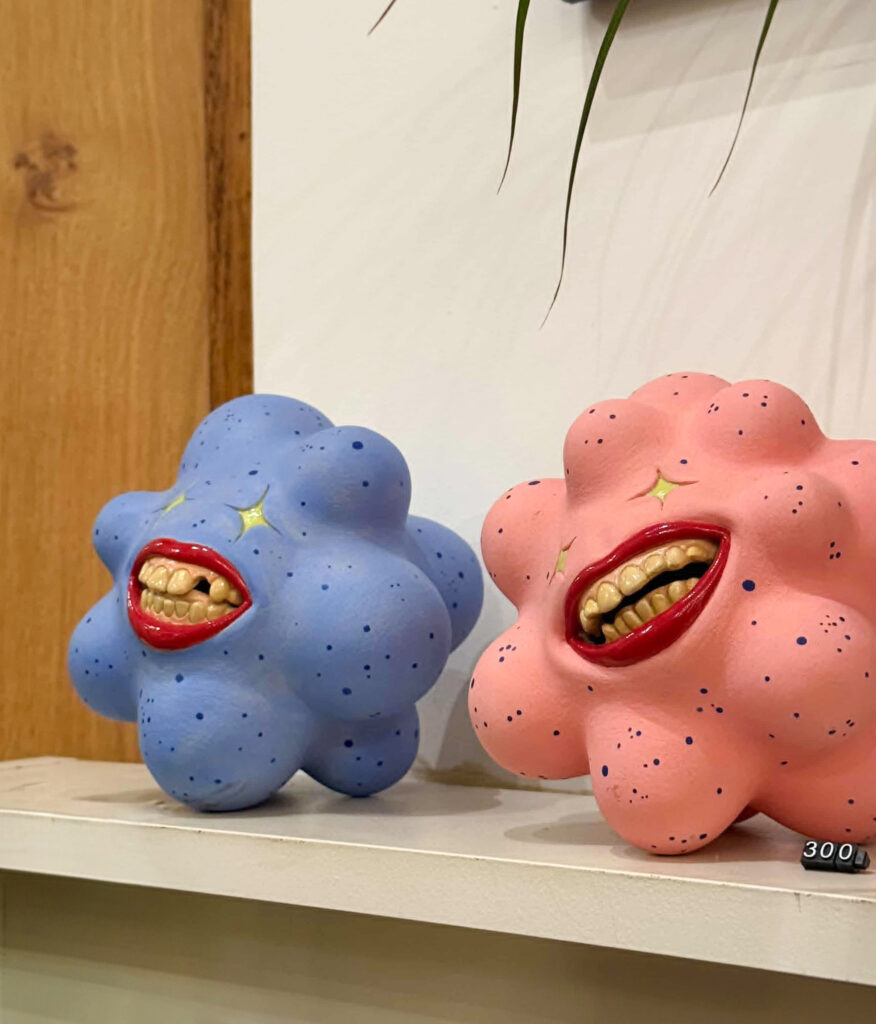
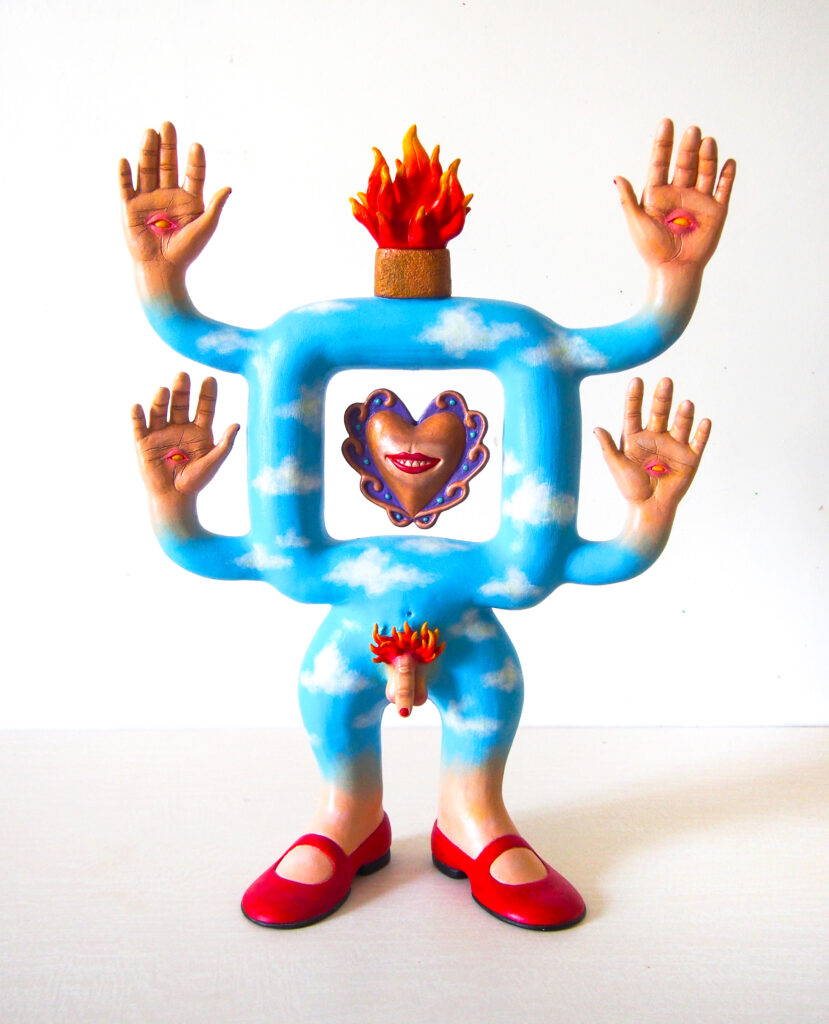
2023, stoneware, acrylic, varnish, 46 x 34.5 x 12 cm
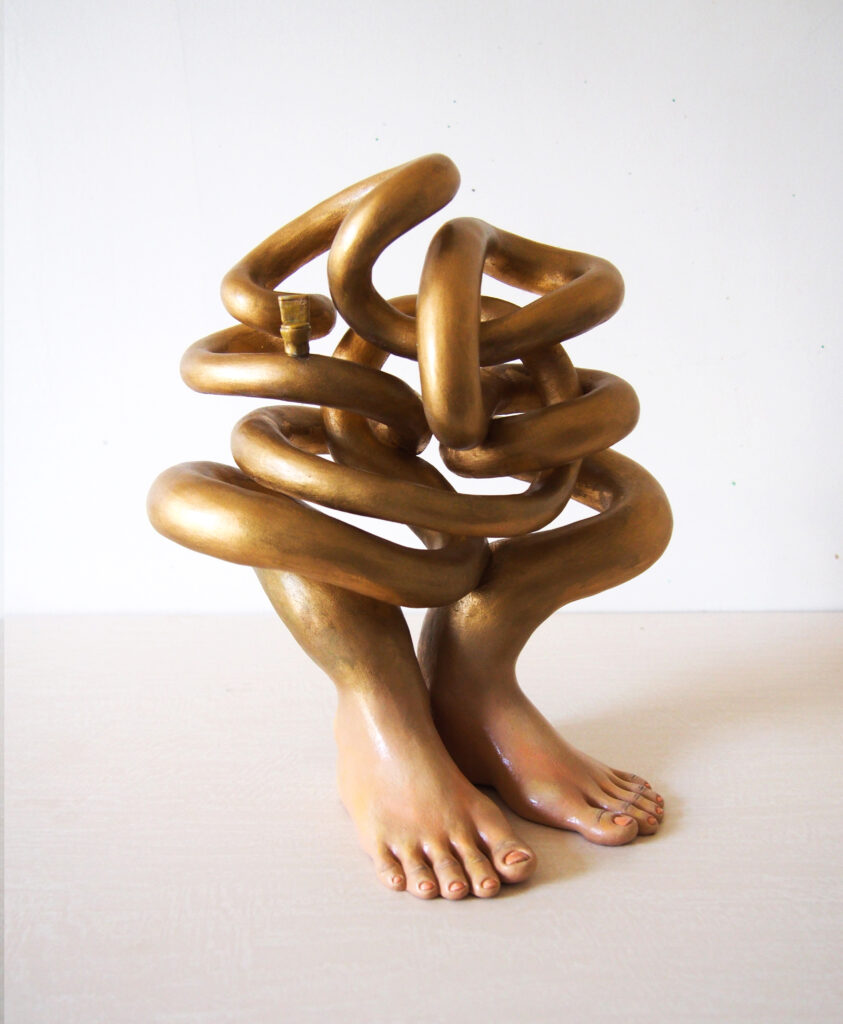
stoneware, acrylic, varnish, 30 x 26 x 20.5 cm.
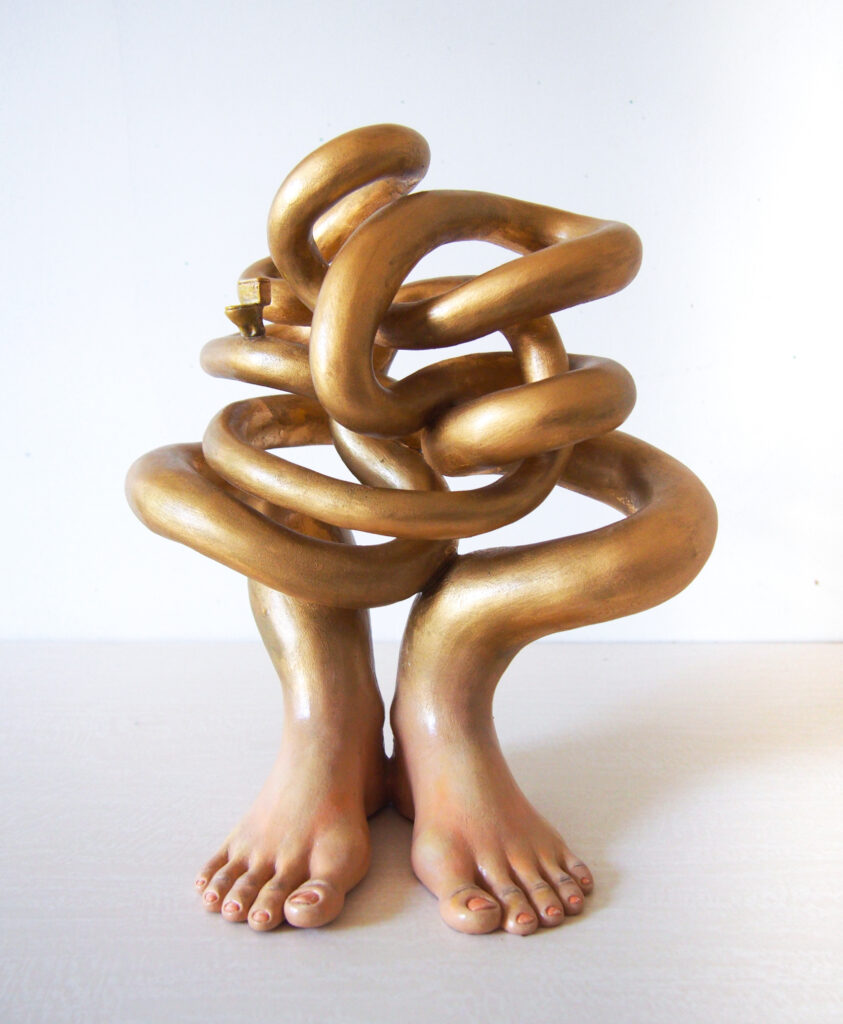
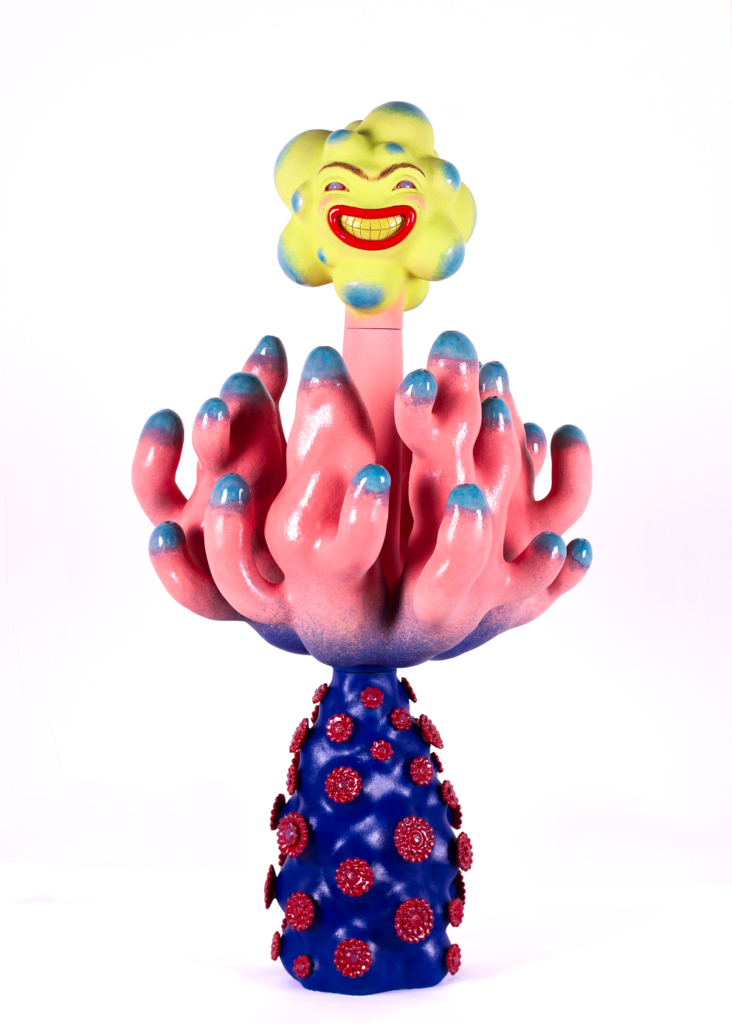
Like a Coral Anchored in the Void
2025Included in the solo exhibition Inhabiting Our Ghosts
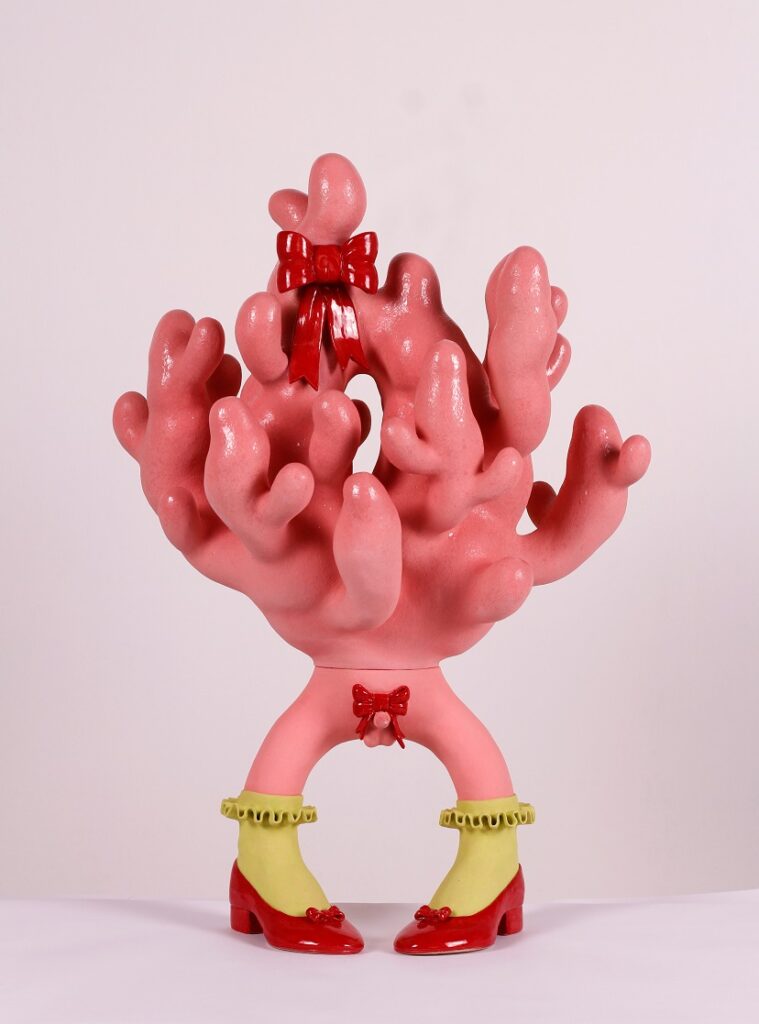
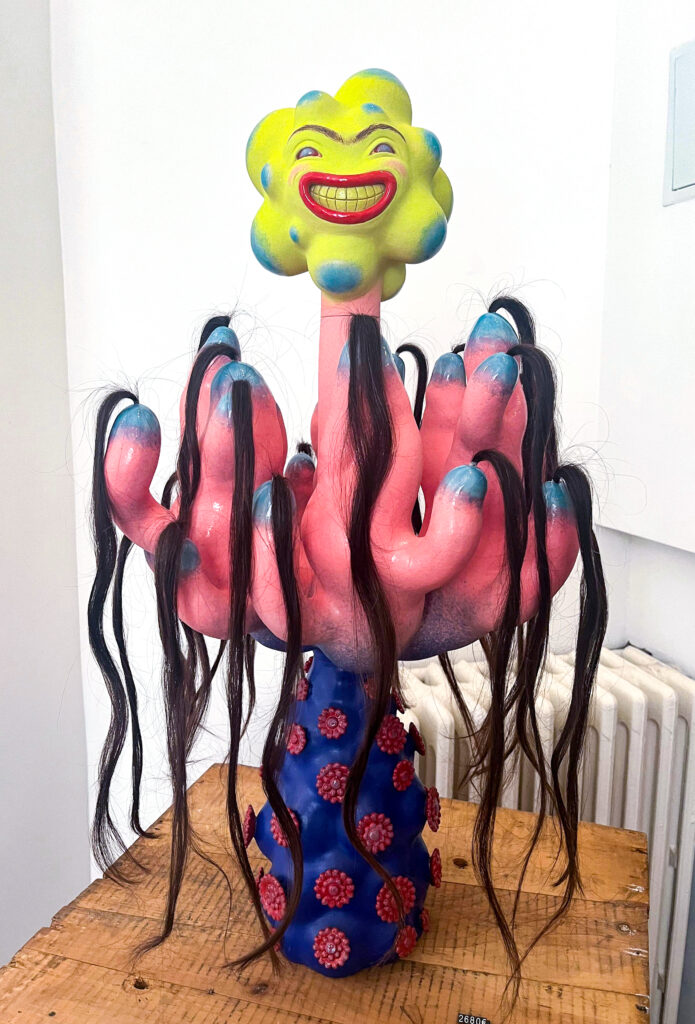
70 x 36 x 36 cm
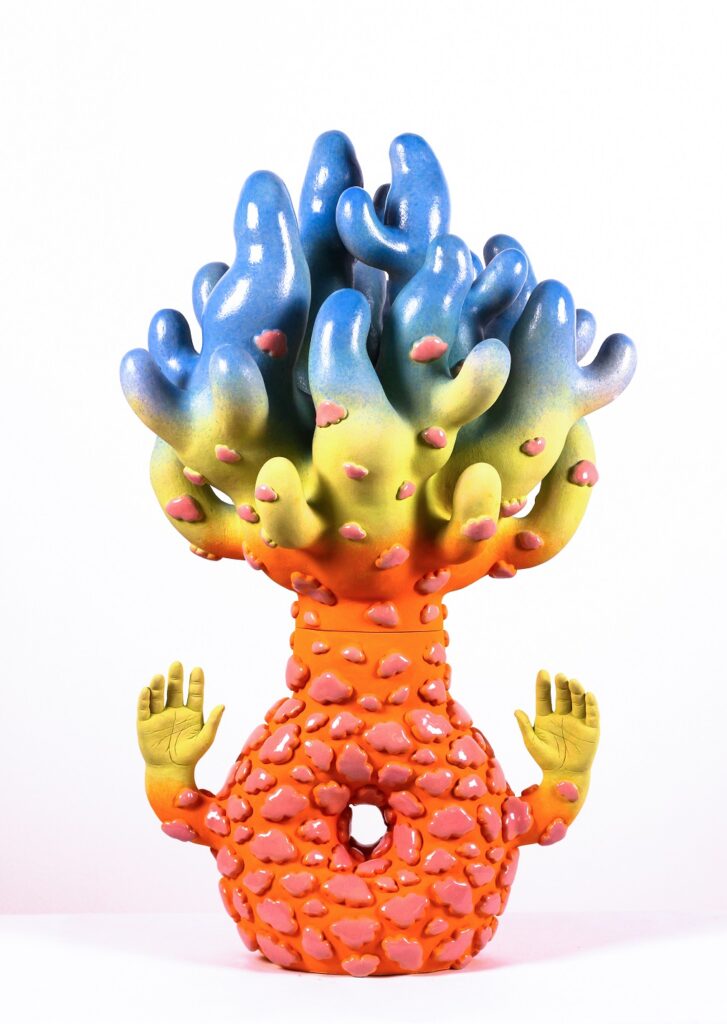
2025, stoneware with engobe and glaze, 67 x 40 x 40 cm
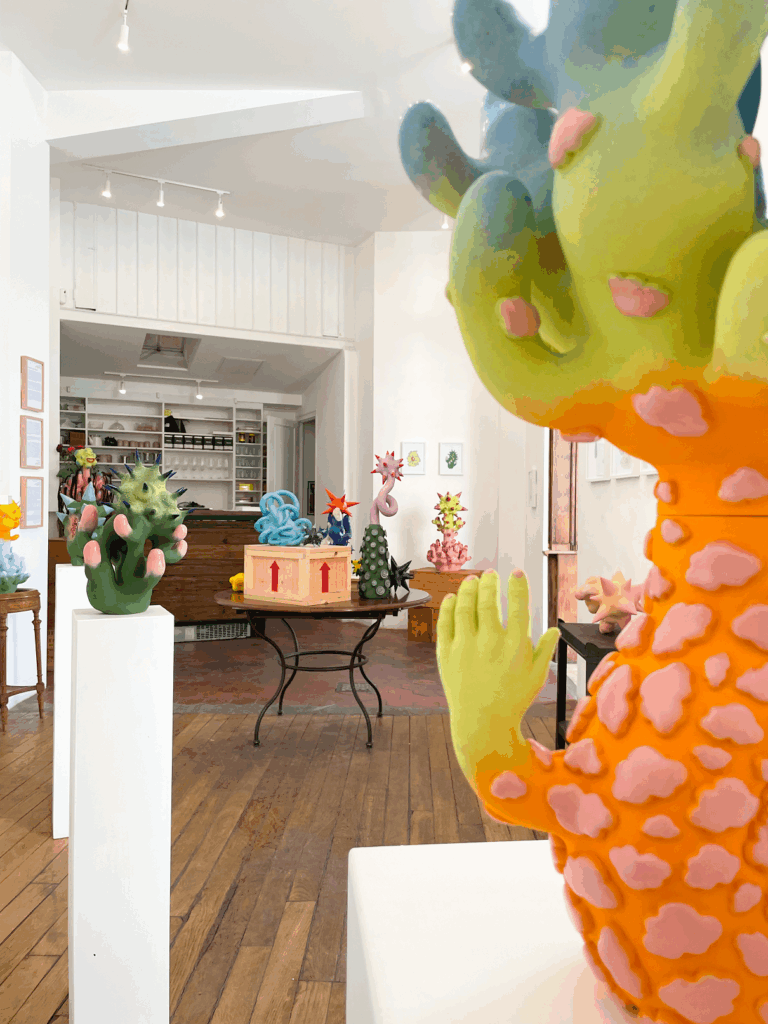
Inhabiting our Ghosts
2025Galerie Artivistas, Paris
As a foreigner, I discovered that remaining true to oneself in an unfamiliar context becomes a quest filled with doubt and self-questioning. Arriving in France as a young Mexican woman, in a country that carries so much symbolic weight in our collective unconscious, triggered an inner spiral. I have always avoided speaking of identity, roots, or anchoring, preferring instead to embrace a conception of freedom in which the field of becoming remains constantly open to us.
Yet an unexpected shift occurred when I finally became aware of my own foreign body, an entity floating in its persistent difference. Here, the ghost represents this image of the self that, due to the gap between the individual and their social existence, becomes a blurred, elusive figure. At times, one can feel not fully alive, caught in the paradox of experiencing oneself as dead.
The works in this exhibition invite us to navigate the ambivalence of desire: an eternally unsatisfied, unfinished longing. They explore the confrontation with the absurd and with freedom, as well as the ways in which one can become lost in self-representation, shaped by the pursuit of individual authenticity or by social norms that already carry their own fantasies. Through the metaphor of the specter, which embodies emptiness, hollow silhouettes and fragile interstices take shape.
I invite you to immerse yourself in this notion, which paradoxically symbolizes both absence and infinite potential. This void is not simply a gap, but a space of possibility: a place to dream, to escape, but also to lose oneself. In this context, we are confronted with an ontological void, where freedom can ultimately become paralyzing. As Kierkegaard wrote, the aesthetic individual is caught in the anxiety of a free and absurd existence, a state of perpetual suspension, a specter in which artistic experience becomes a way of anchoring oneself in impermanence, in the absence of choice, in an endless quest for meaning that can never be fully realized. Yet it is precisely in this liminal space, where mystery takes on a magical form, that the charm of the unknown resides in all that could be. It is a space in which one dwells in possibility.
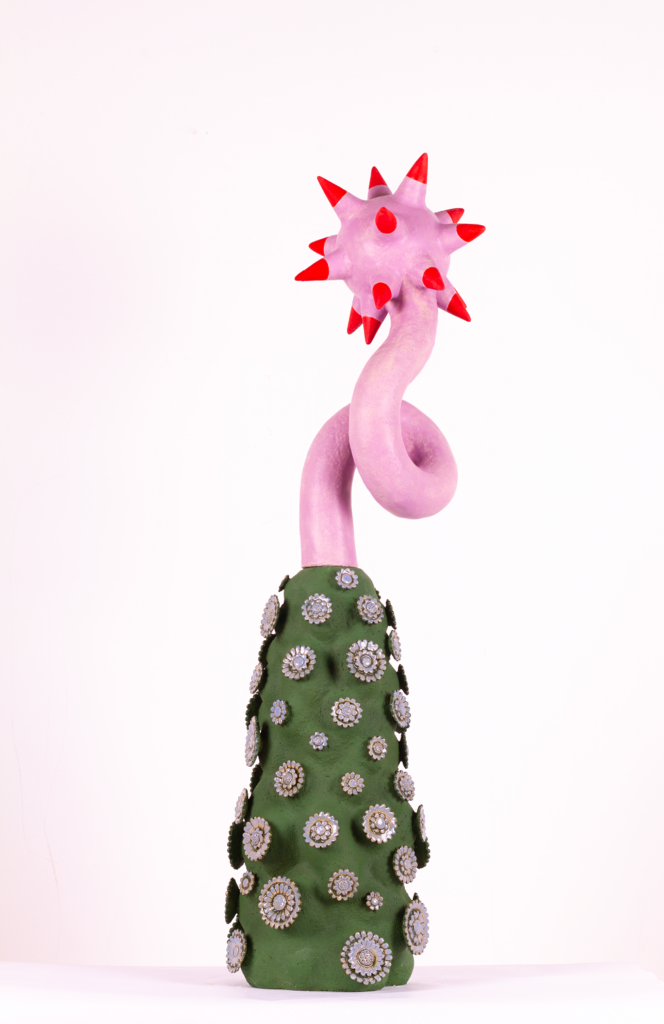
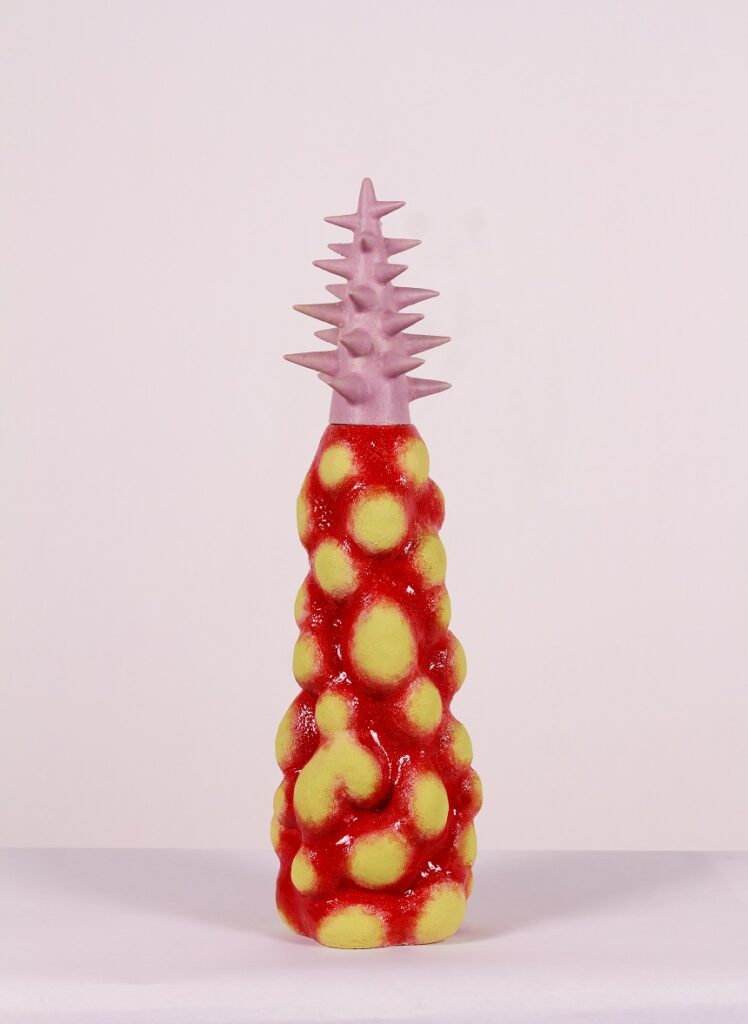
The idea of a fragmented, unsettled, vulnerable being gradually nourished the universe in which I have since immersed myself. The notion of self-division, not as rupture but as multiplicity of the self, became a space I could inhabit, where I could embody different versions of myself. In this way, I found a means of freeing myself from my marginal body. Through my works, with organic forms and vibrant colors, I attempt to bring my ghosts to life and invite them to gather. If we are to remain forever the ghosts of ourselves, then let us honor them, as we honor our dead, with humor and a spirit of celebration, at least for today.
Long live our ghosts!
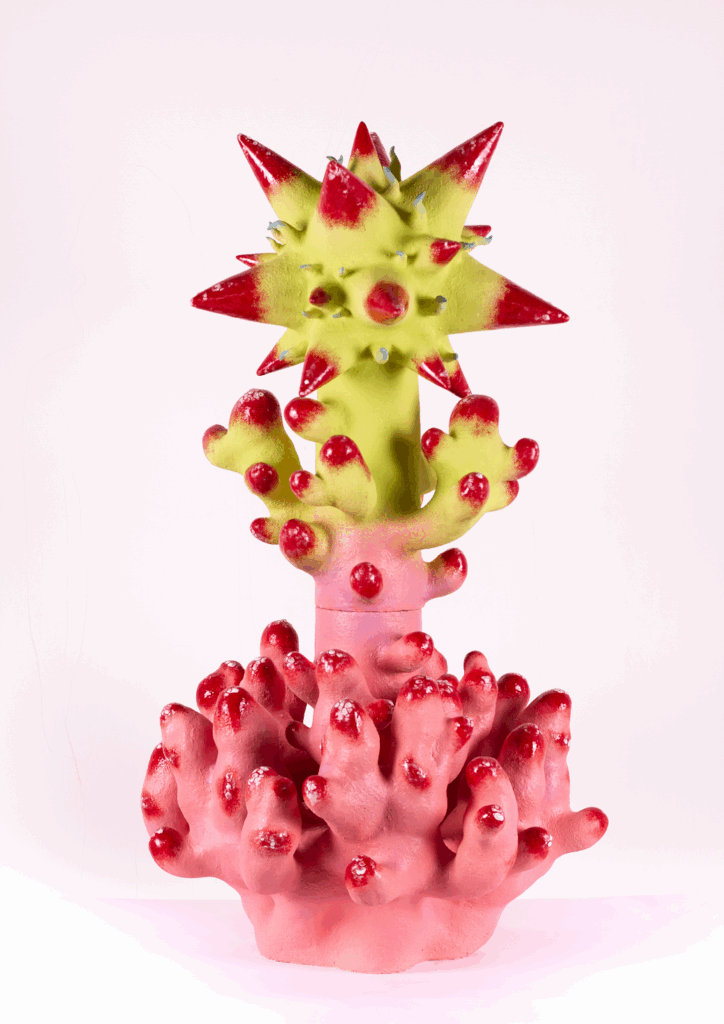
2025, stoneware with engobe and glaze, 73 x 42 x 40 cm
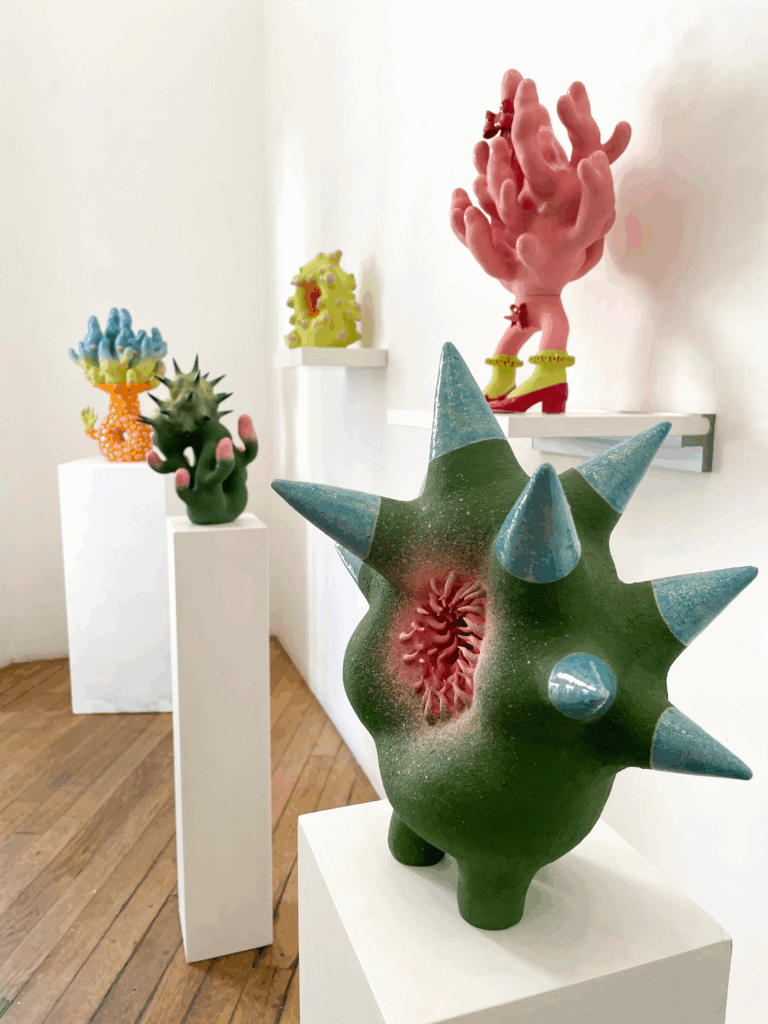
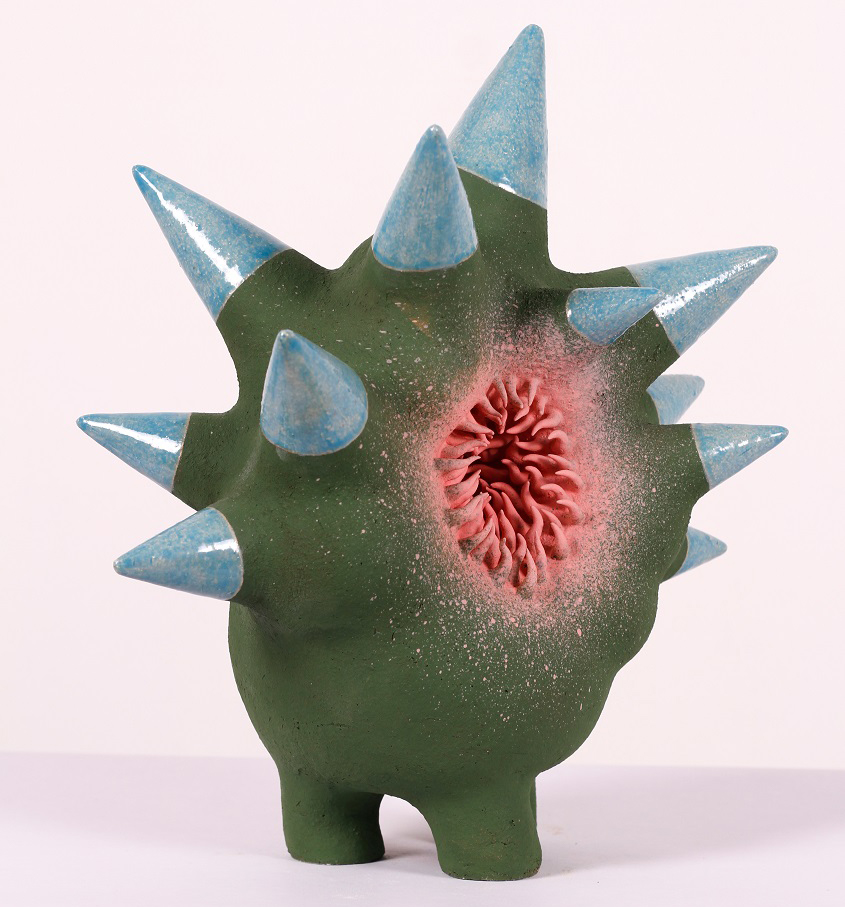

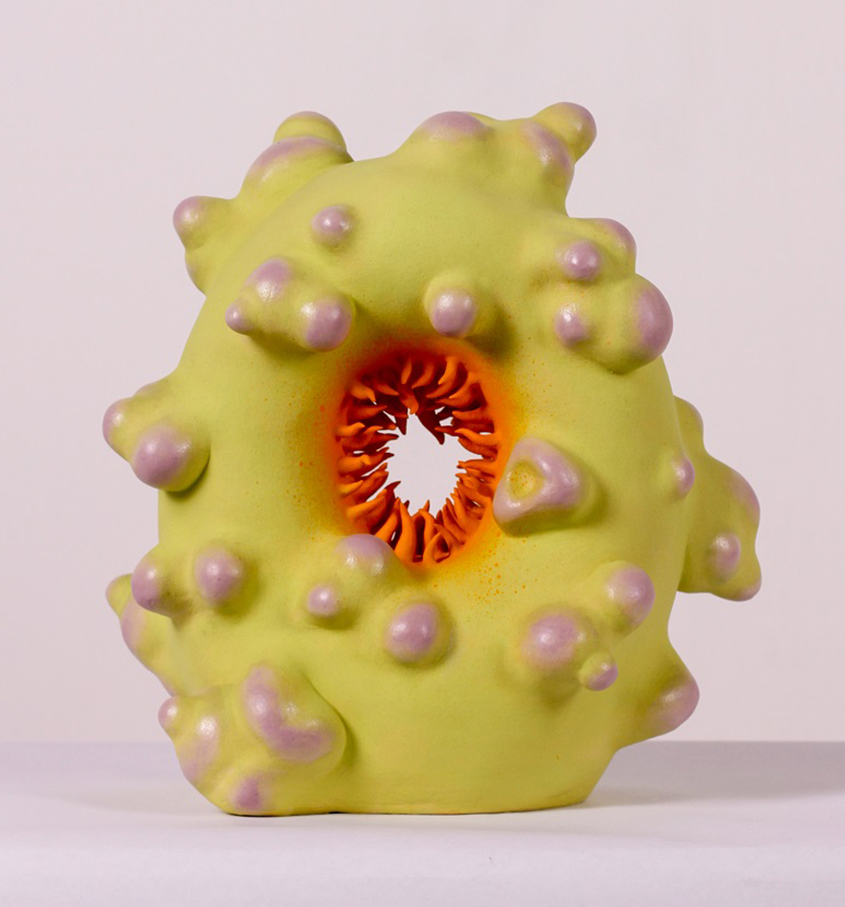
2025, stoneware with engobe and glaze, 35 x 28 x 22 cm
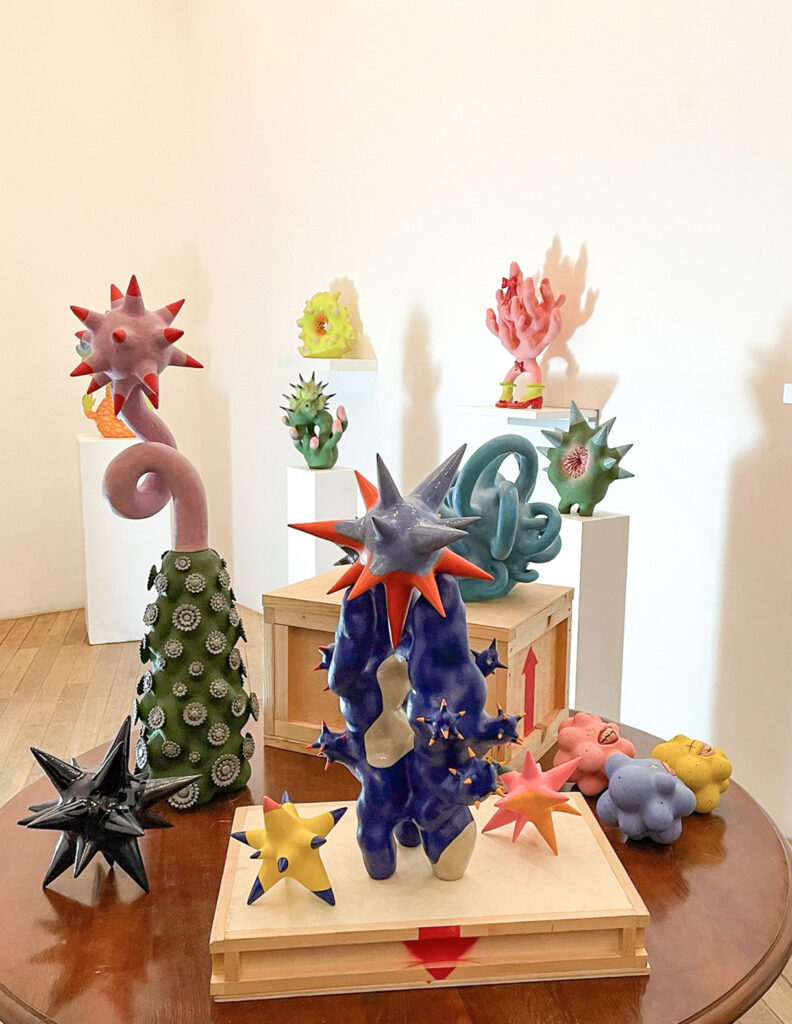
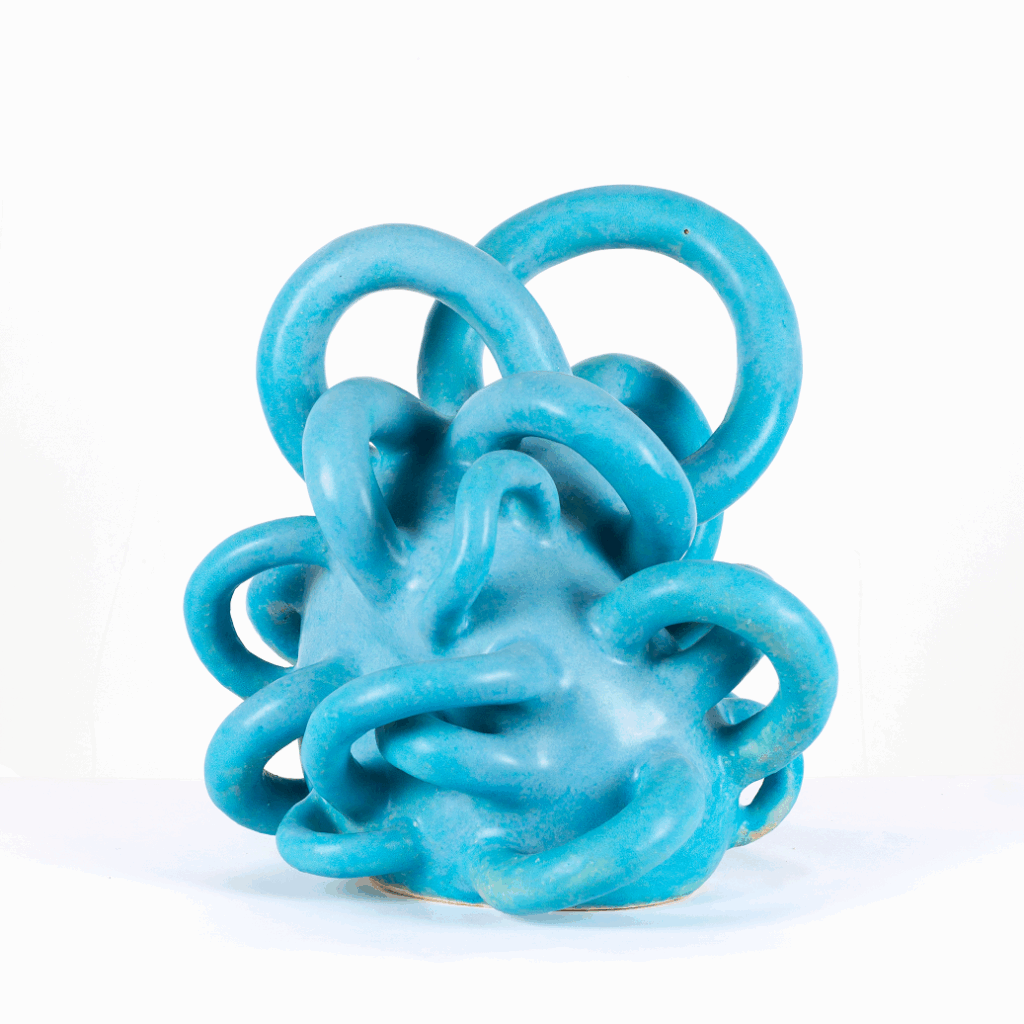
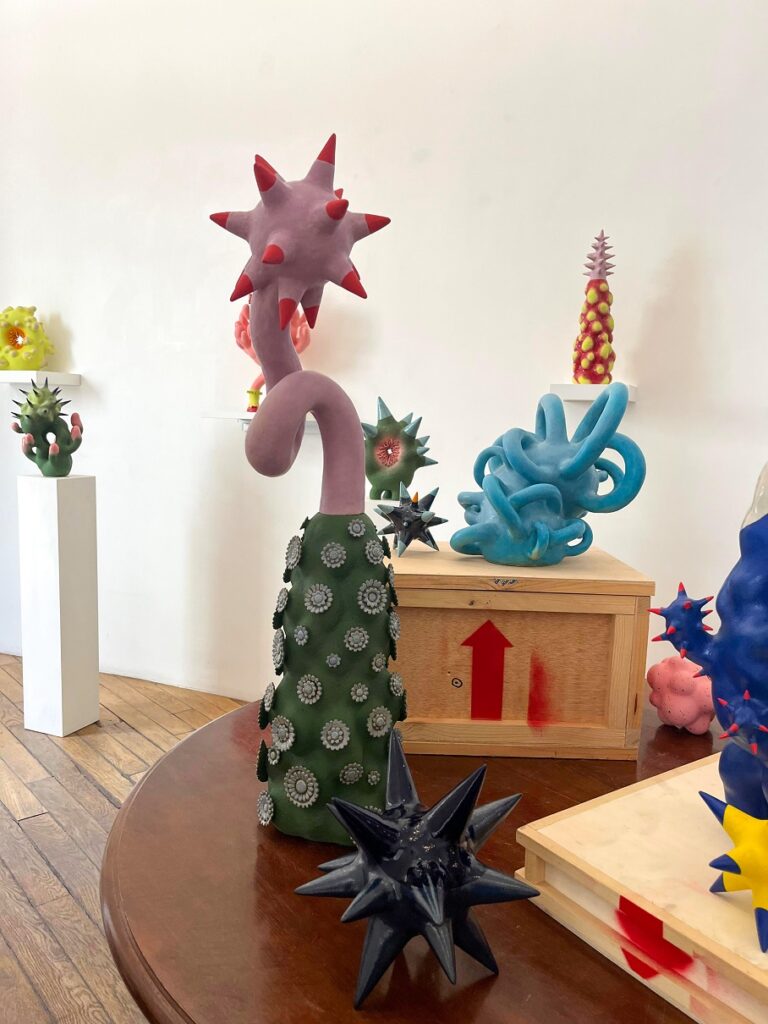
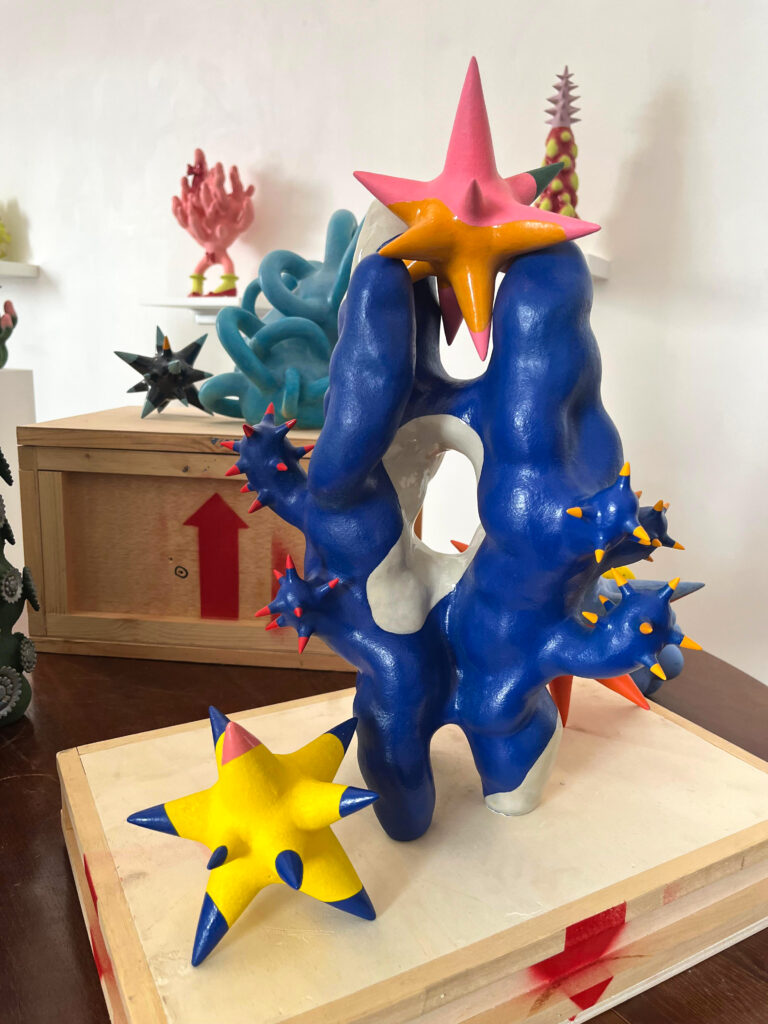
In the foreground :
Lilicia, 2025, stoneware with engobe and glaze, 79 x 25 x 25 cm
stoneware with engobe and glaze, variable dimensions
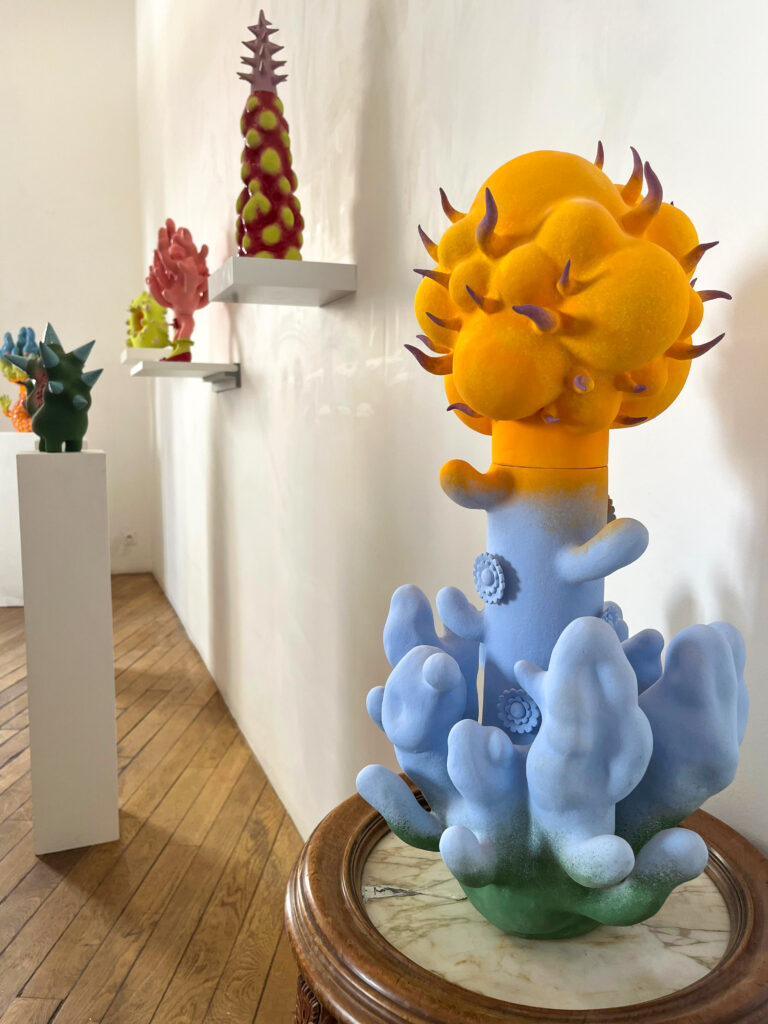
In the foreground :
Komi, 2024, stoneware with engobe and glaze, 46x30x25
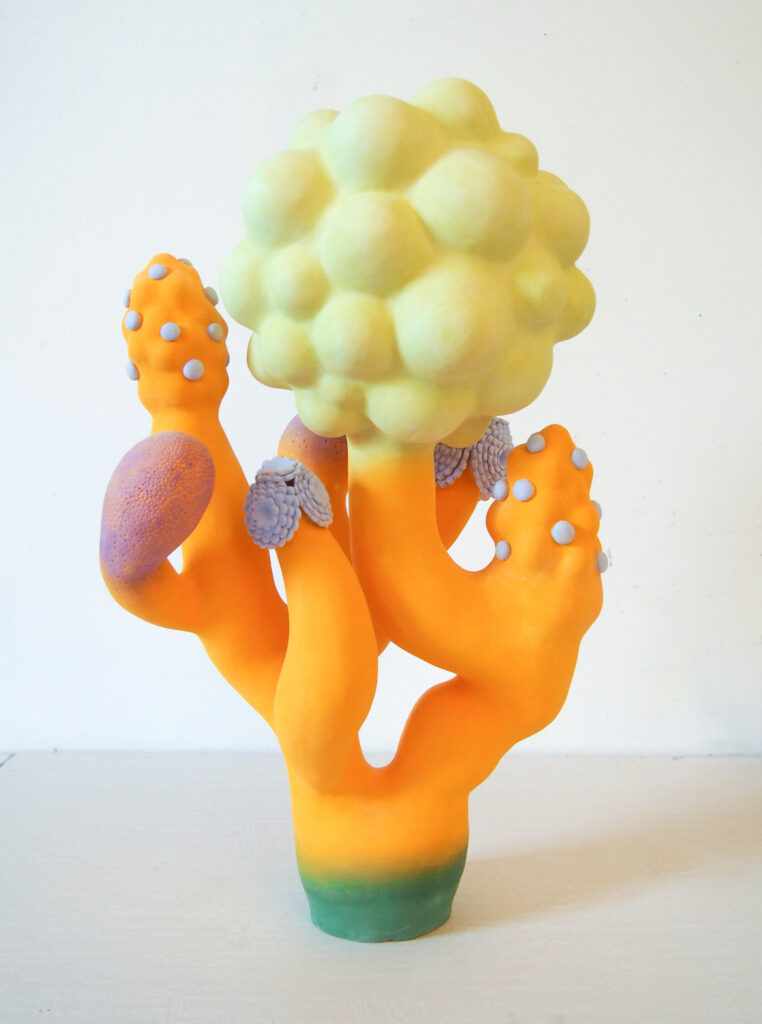
stoneware with engobe 47 x 29 x 21 cm
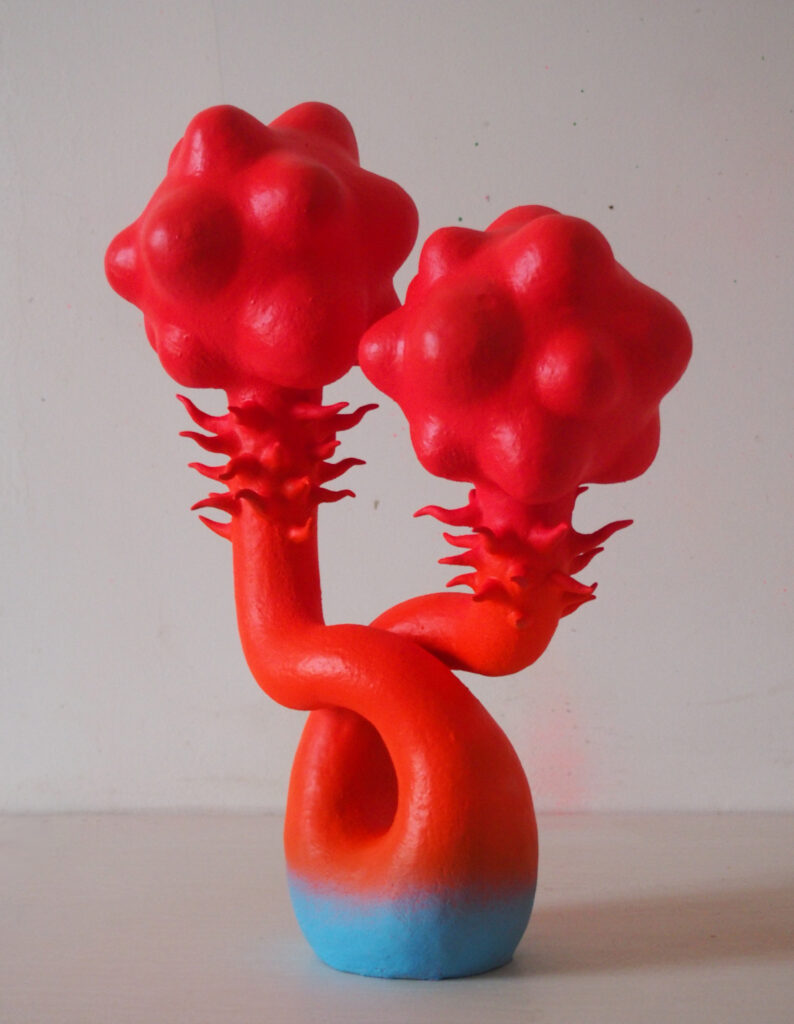


stoneware, lacquer, 45 x 35 x 35 cm
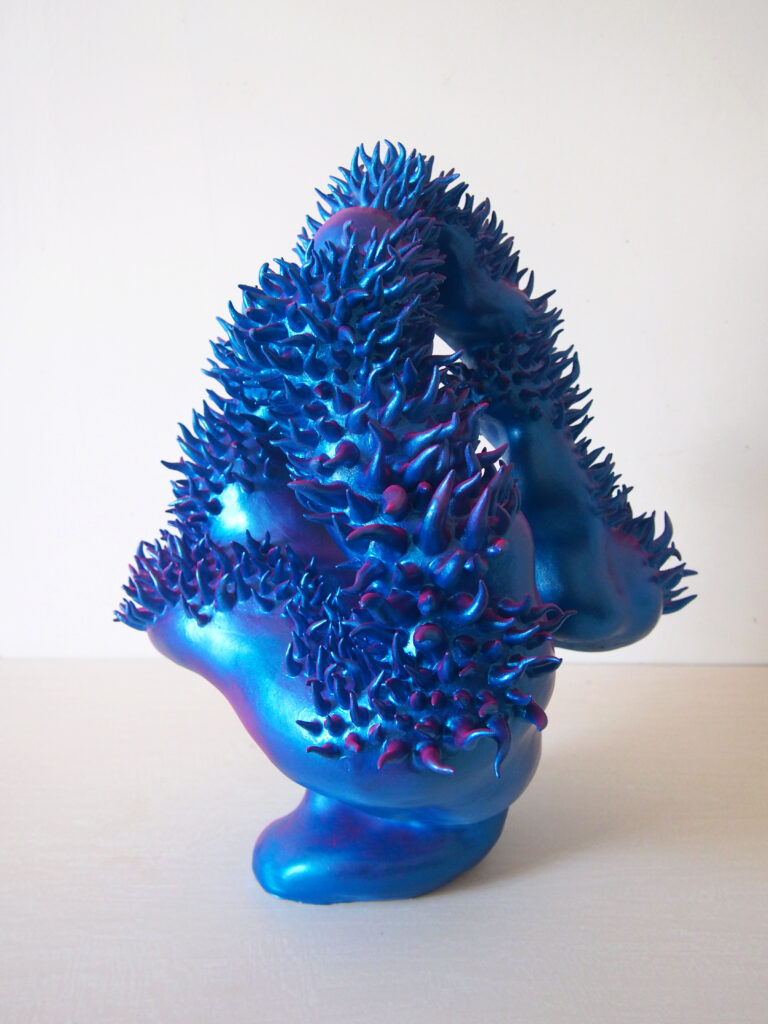

stoneware with engobe and glaze,
28 x 43 x 32 cm

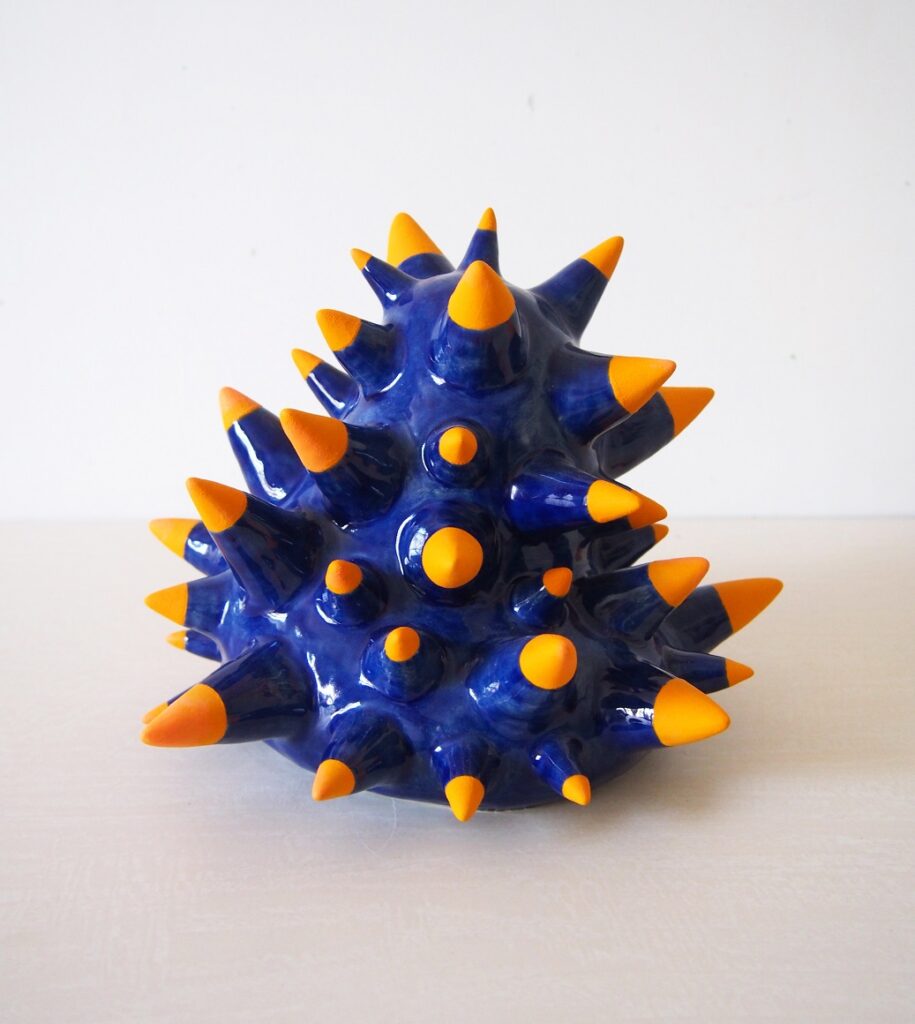
stoneware withe engobe and glaze,
25 x 26 x 20.5 cm
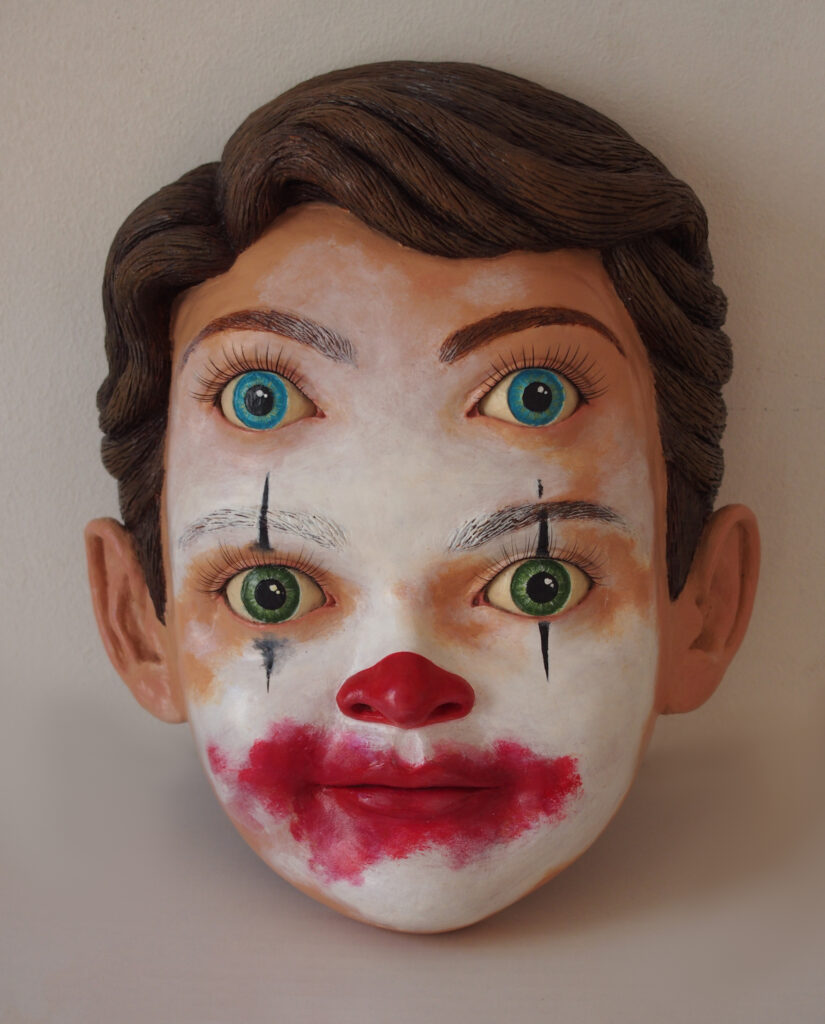
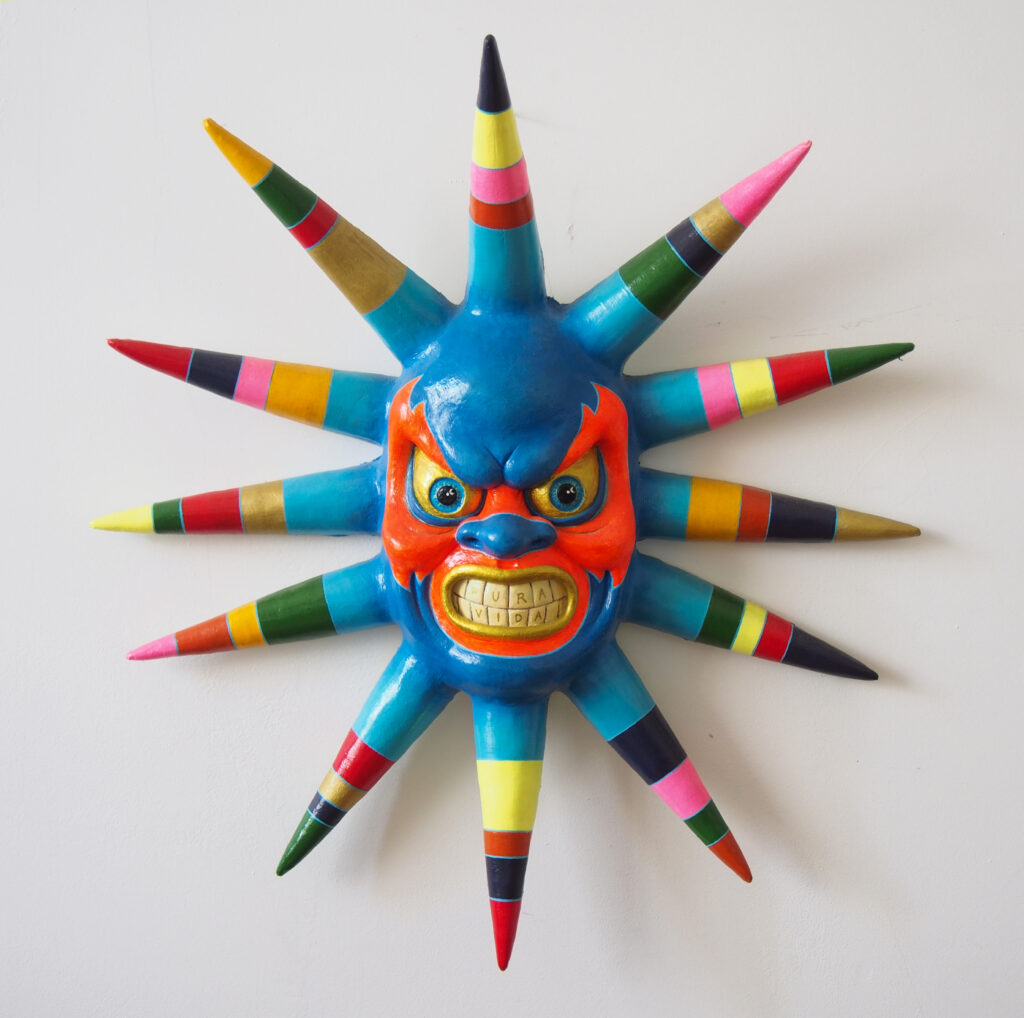
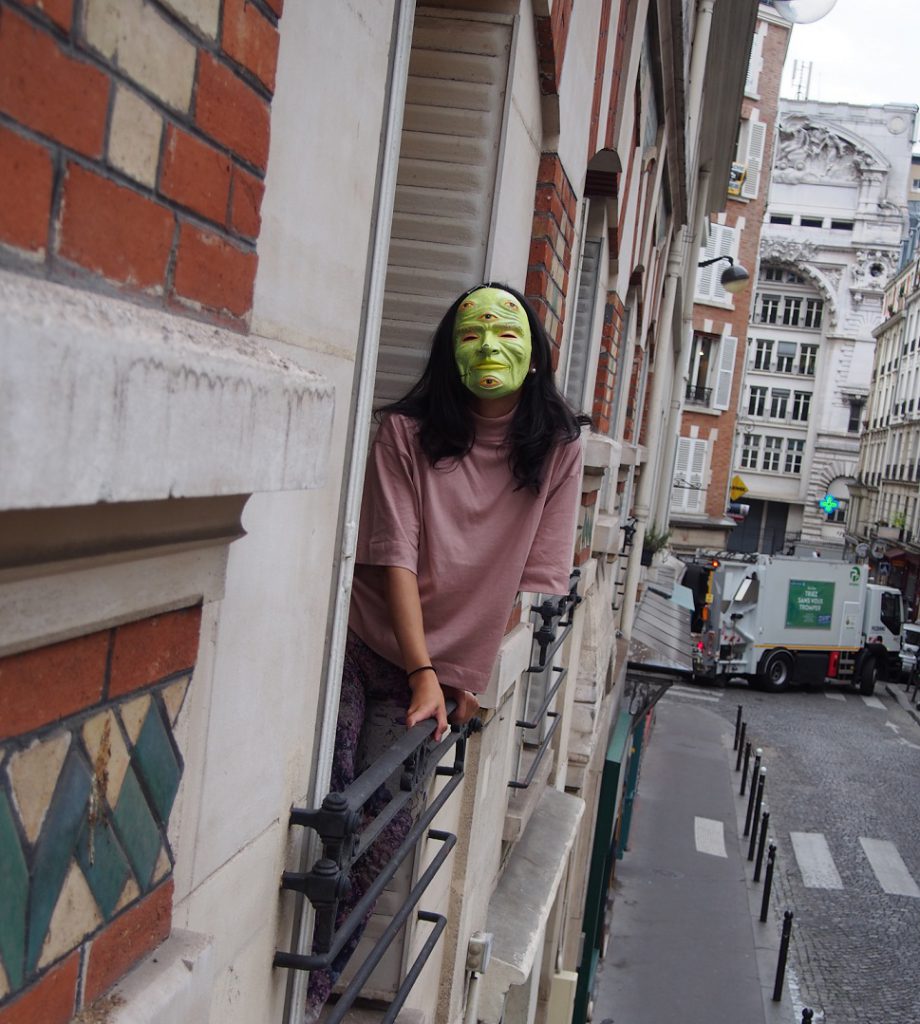
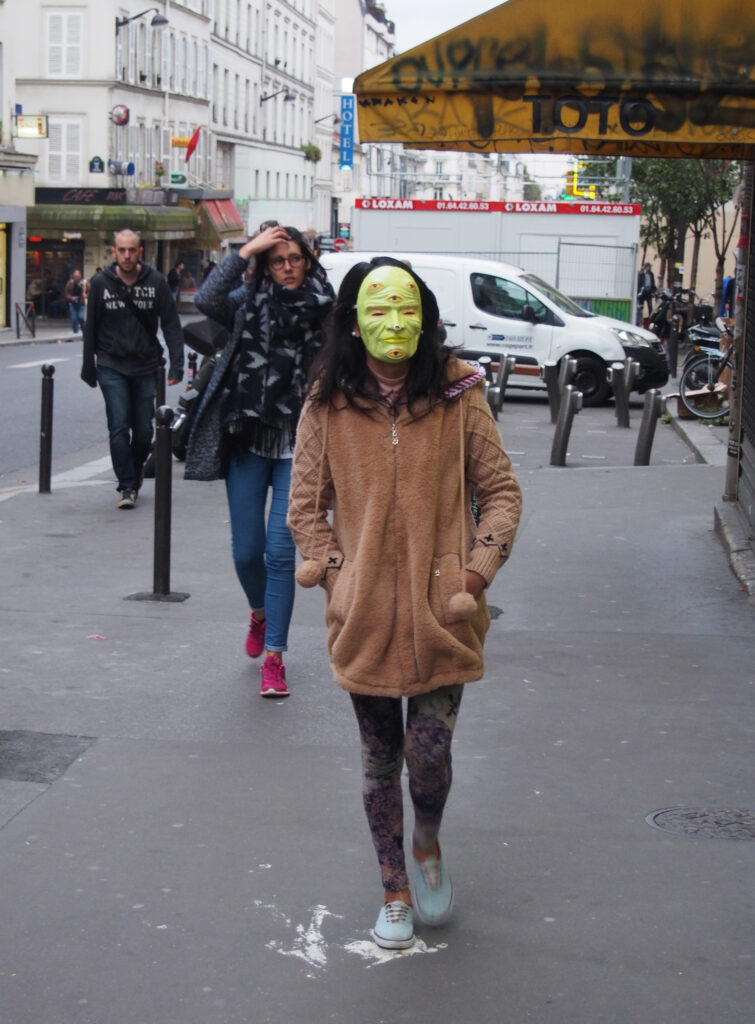
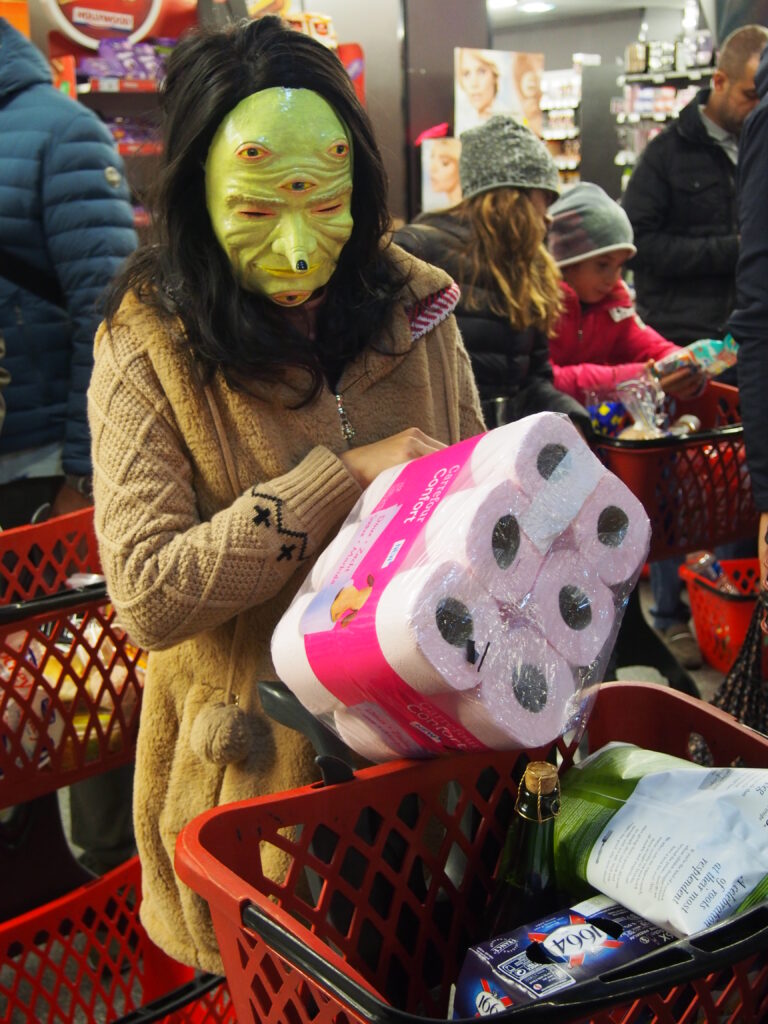
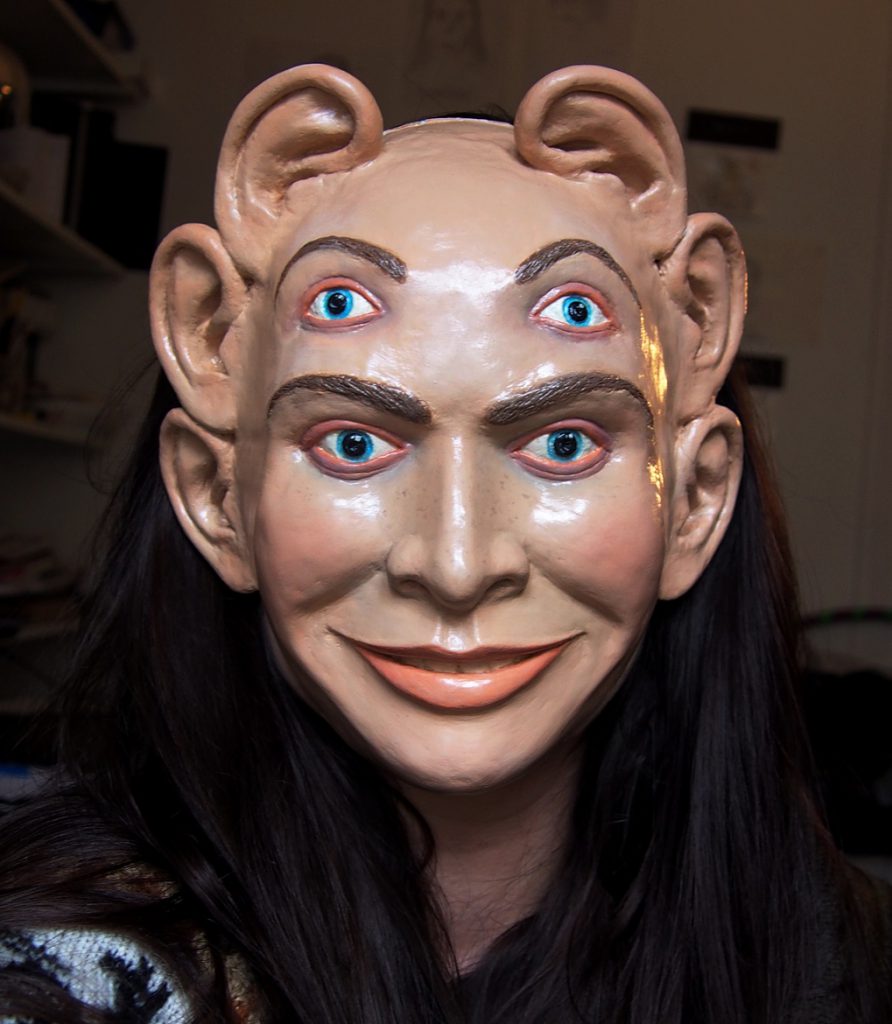
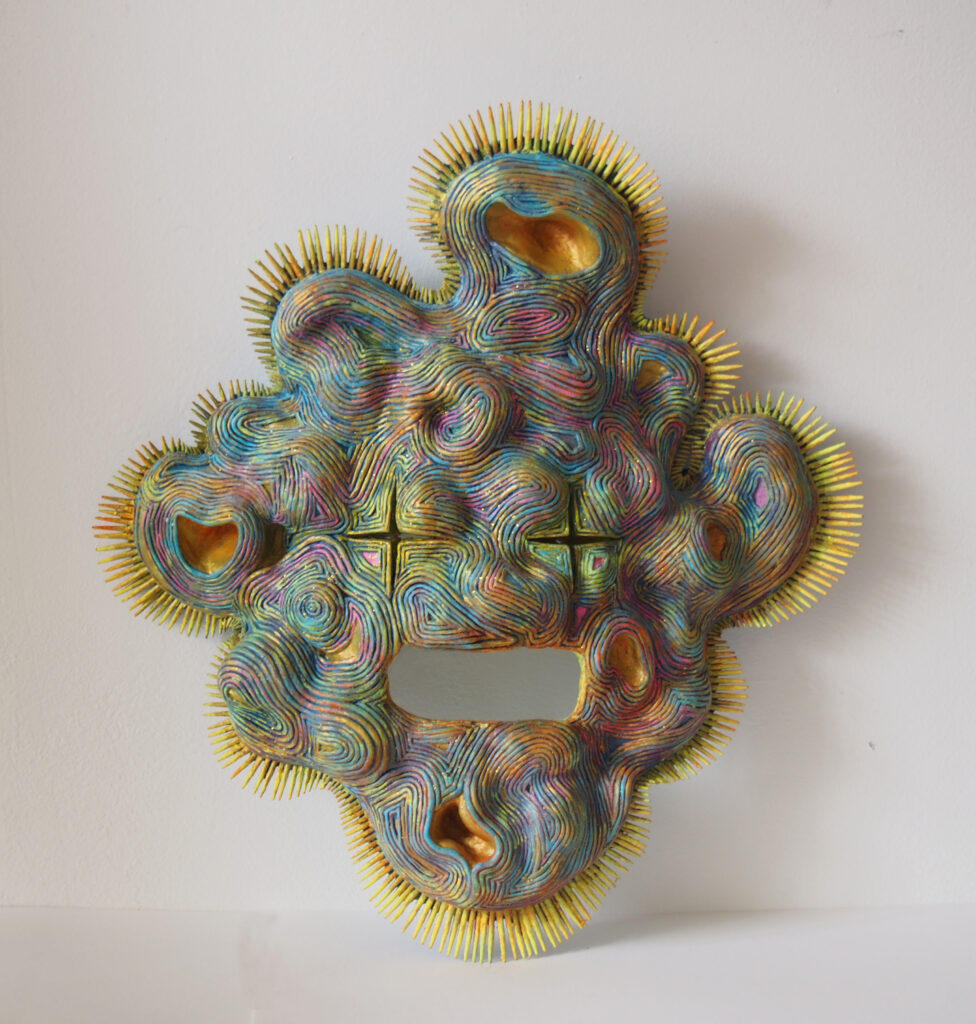
Masks
2015 – 2020


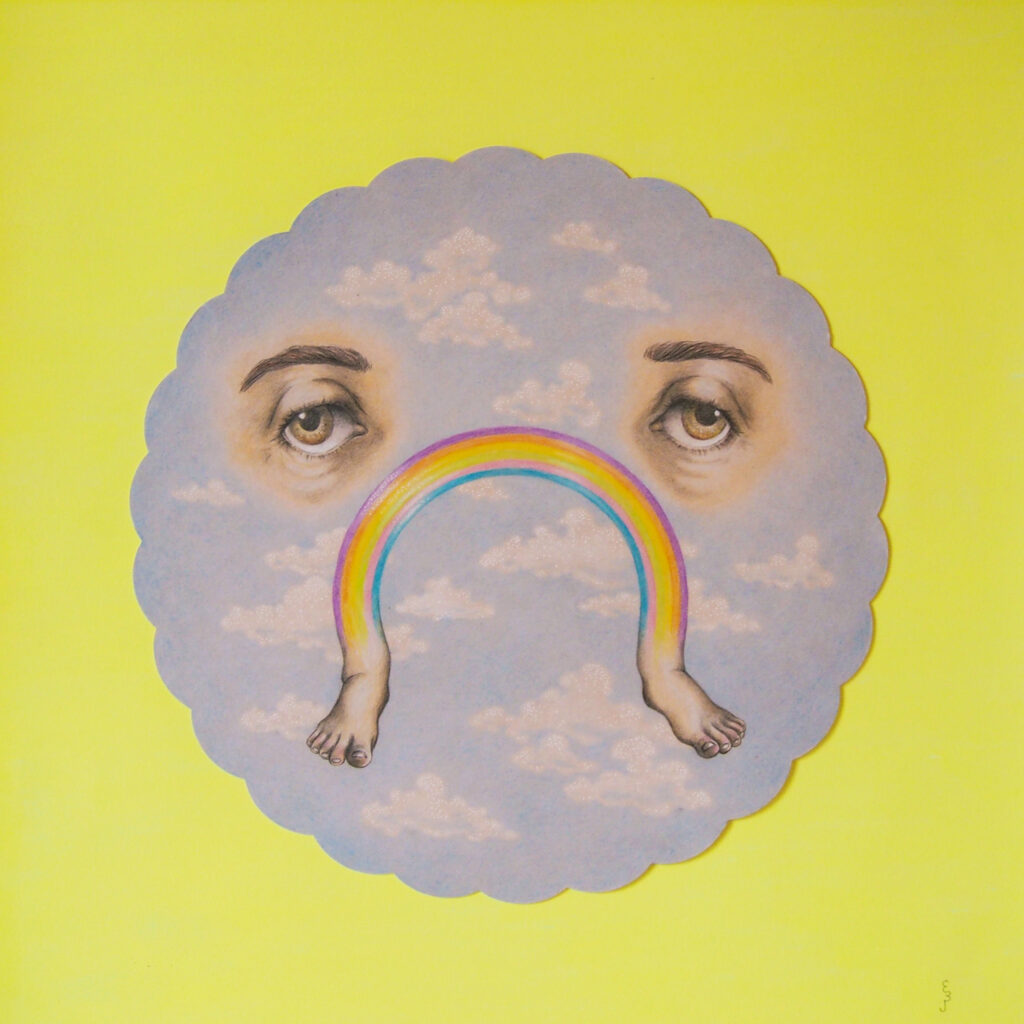
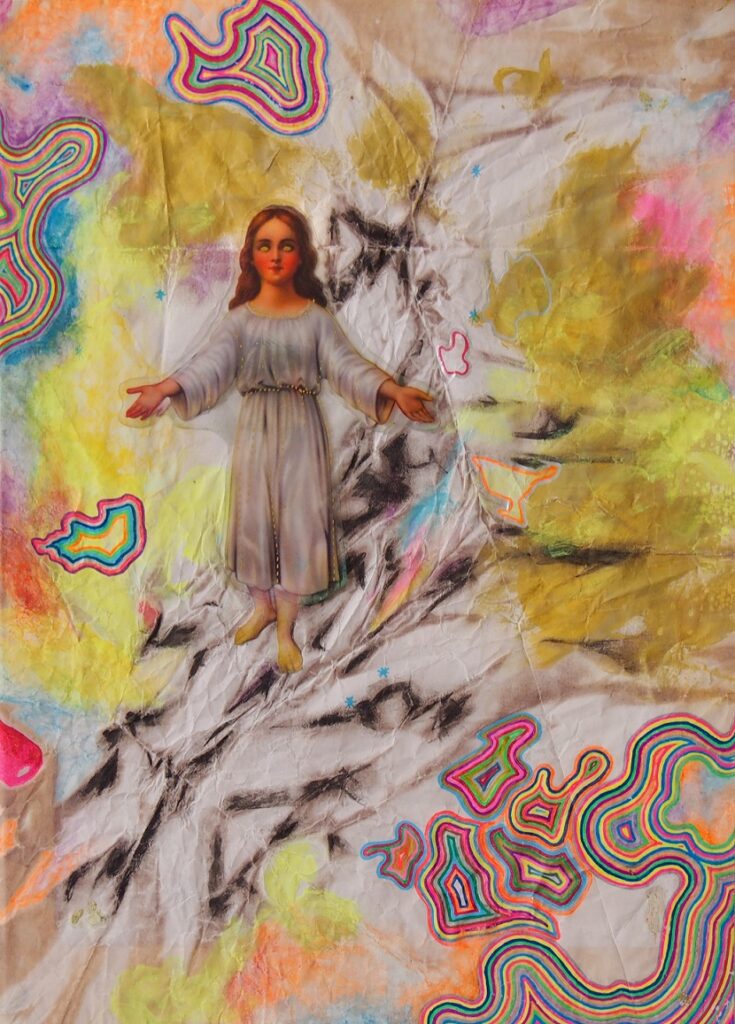
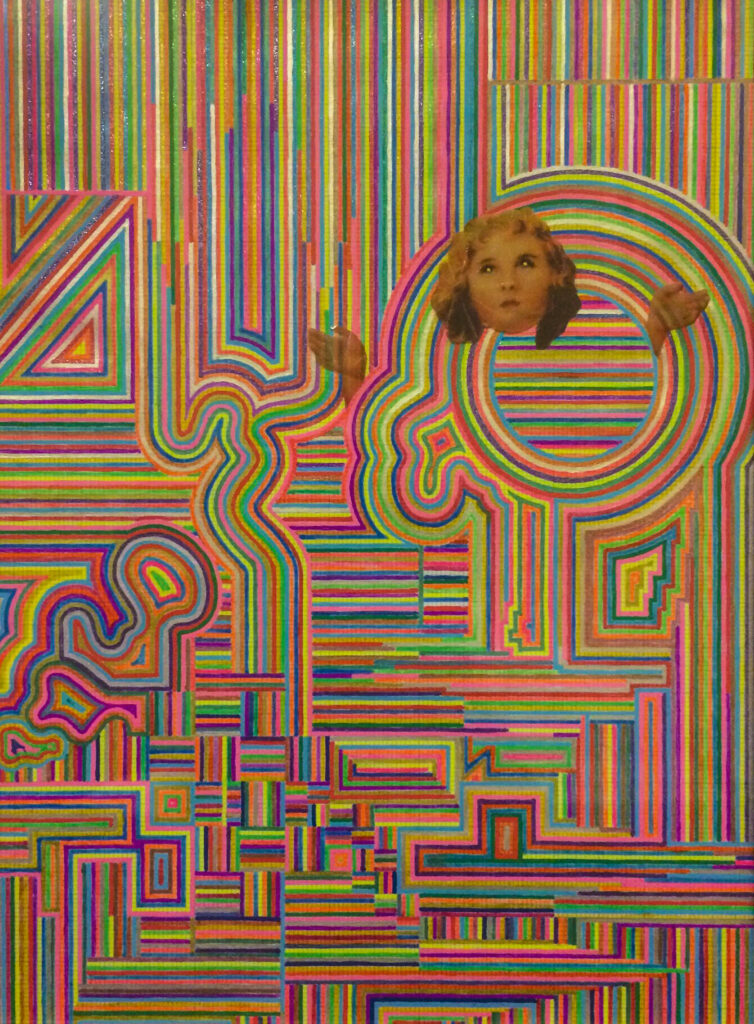
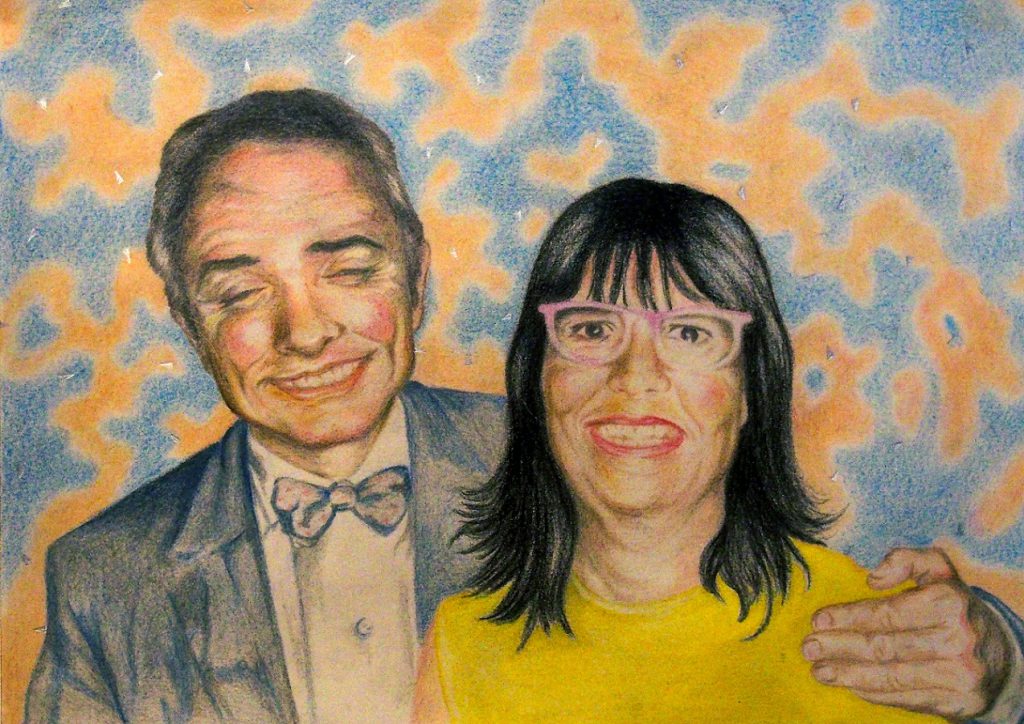
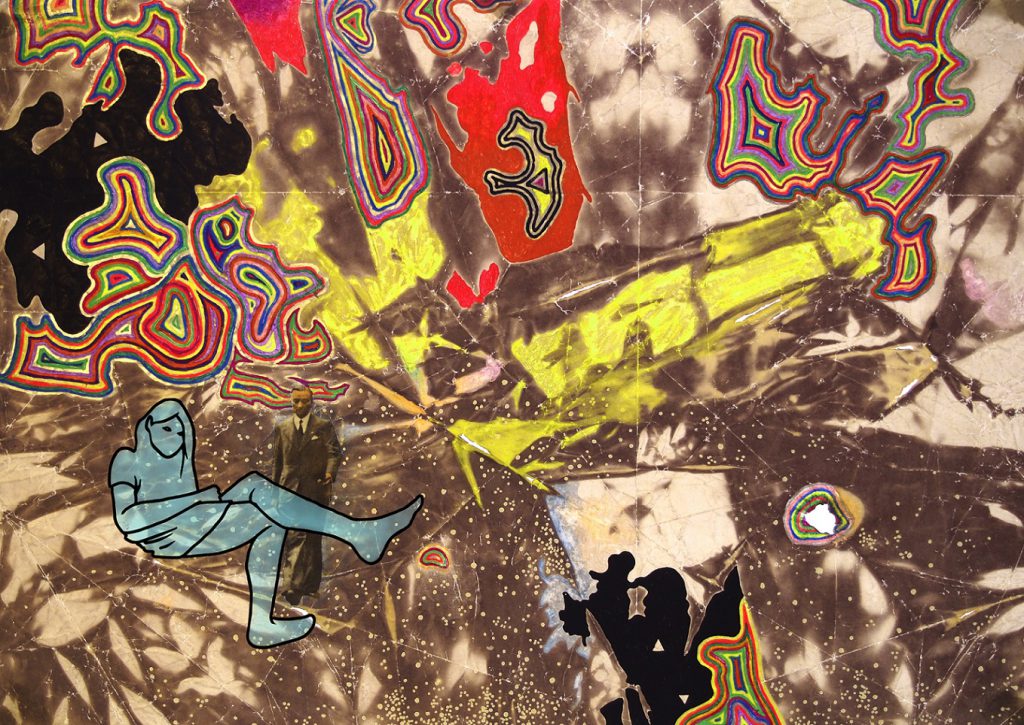
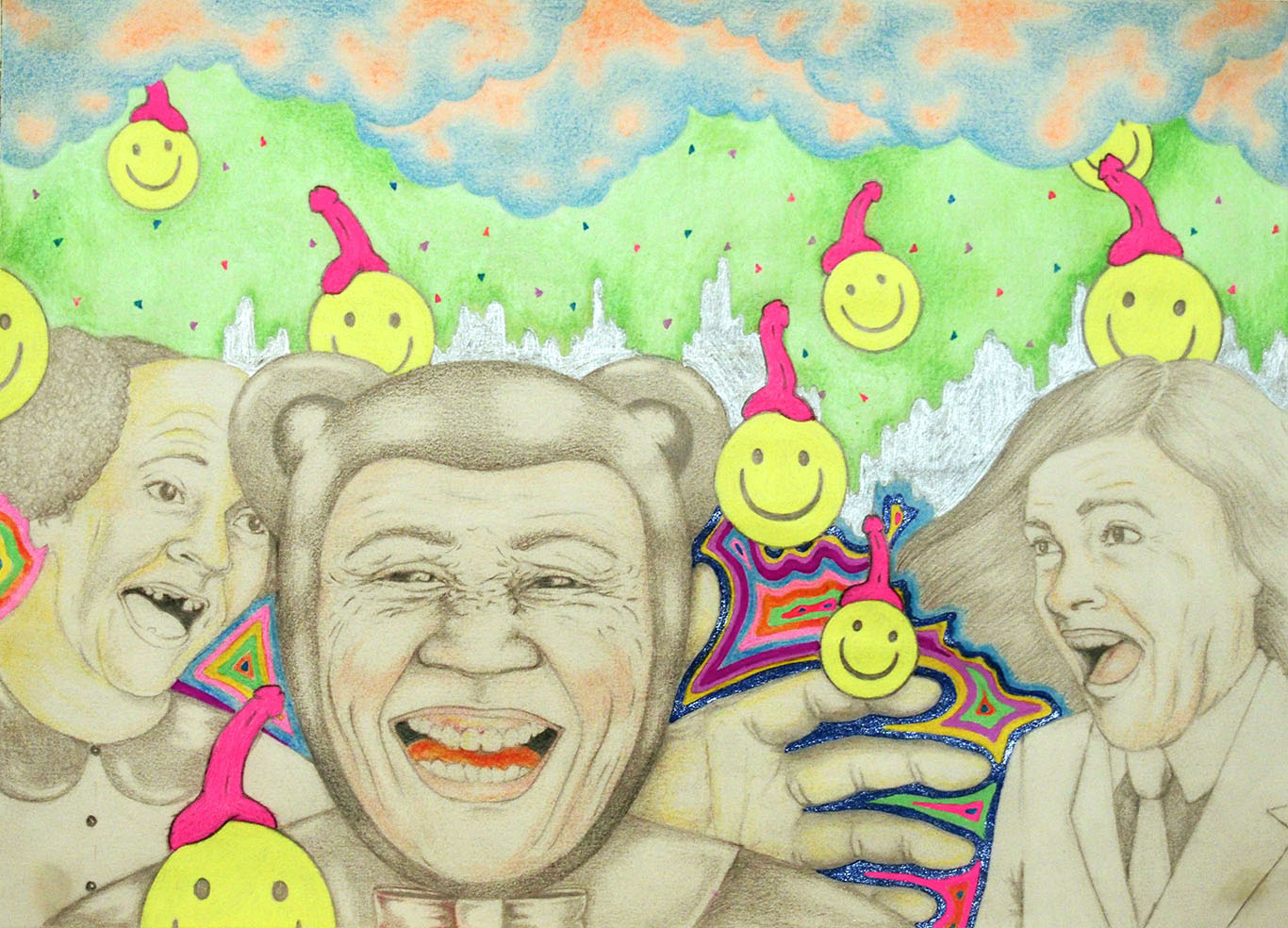
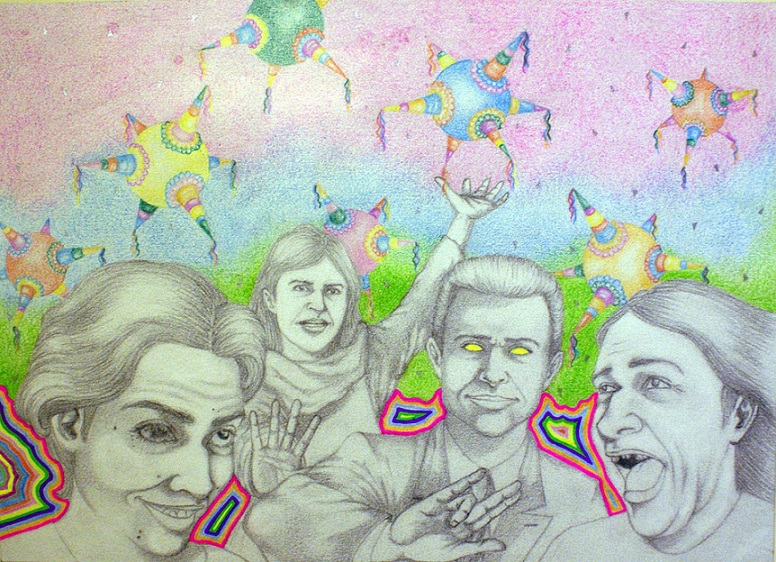
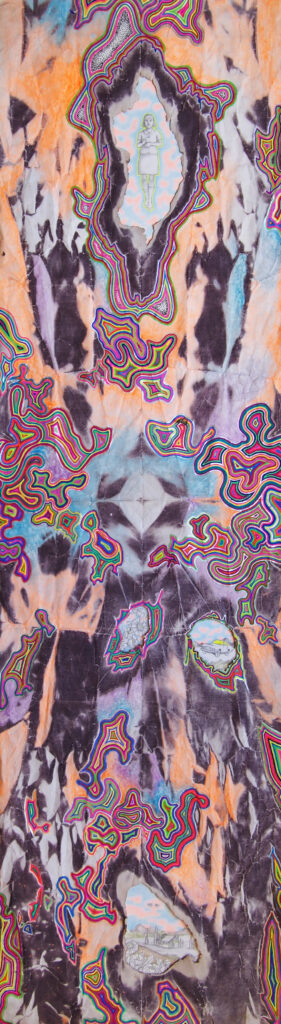
Drawings
2015 – 2020
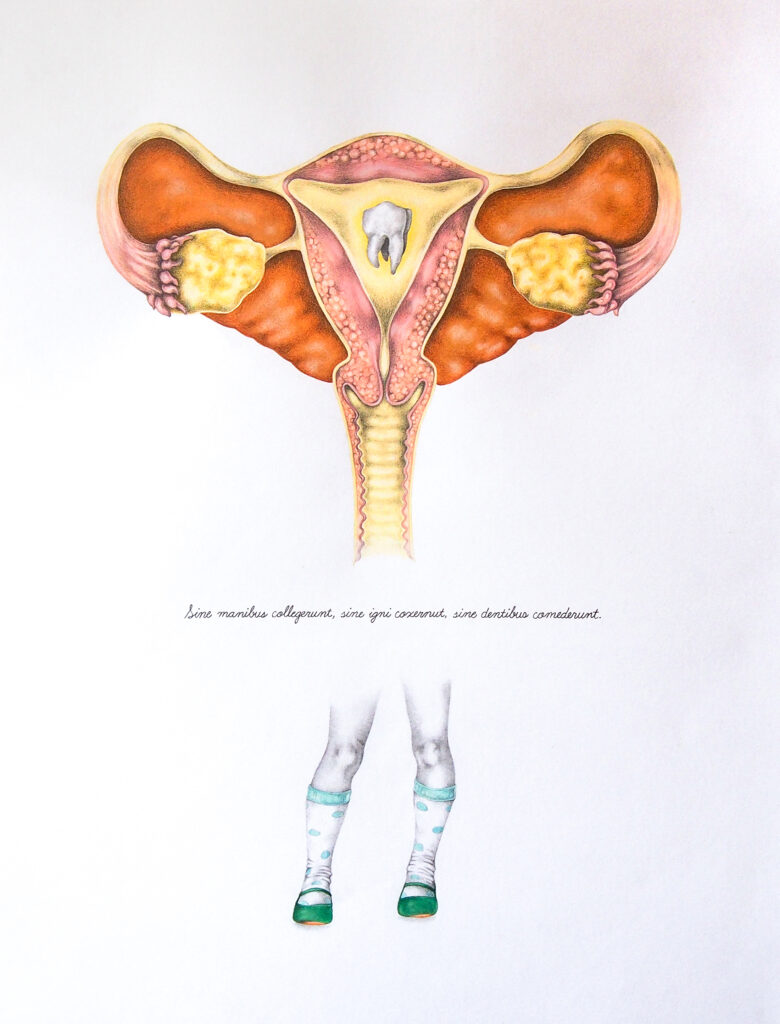
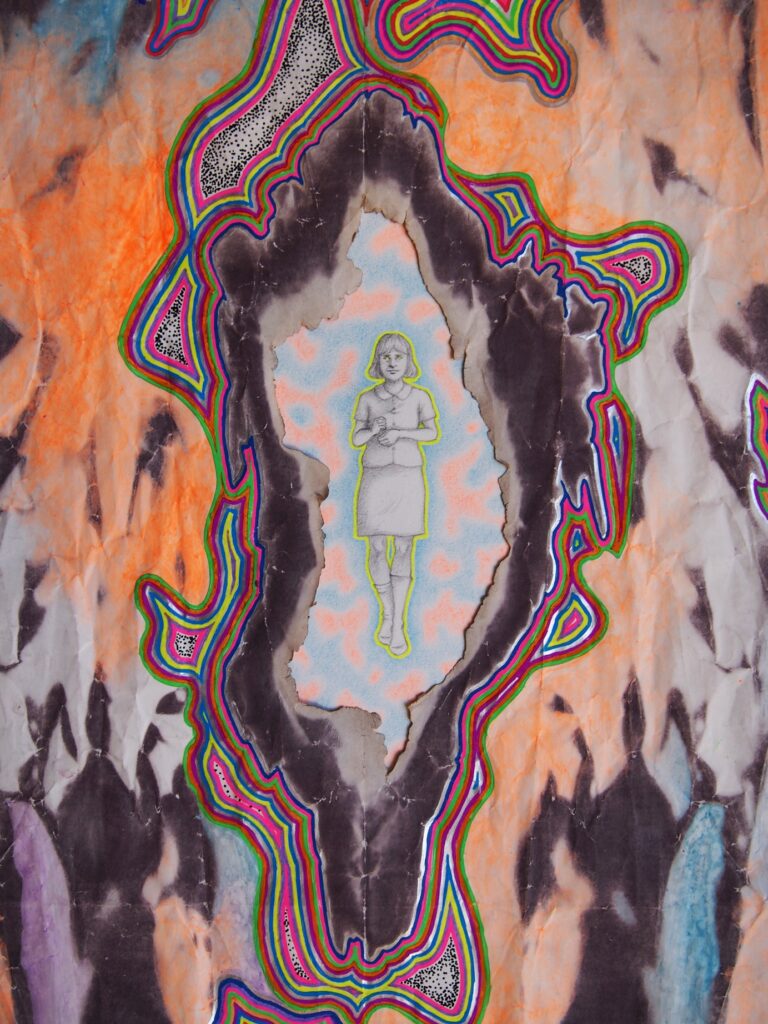
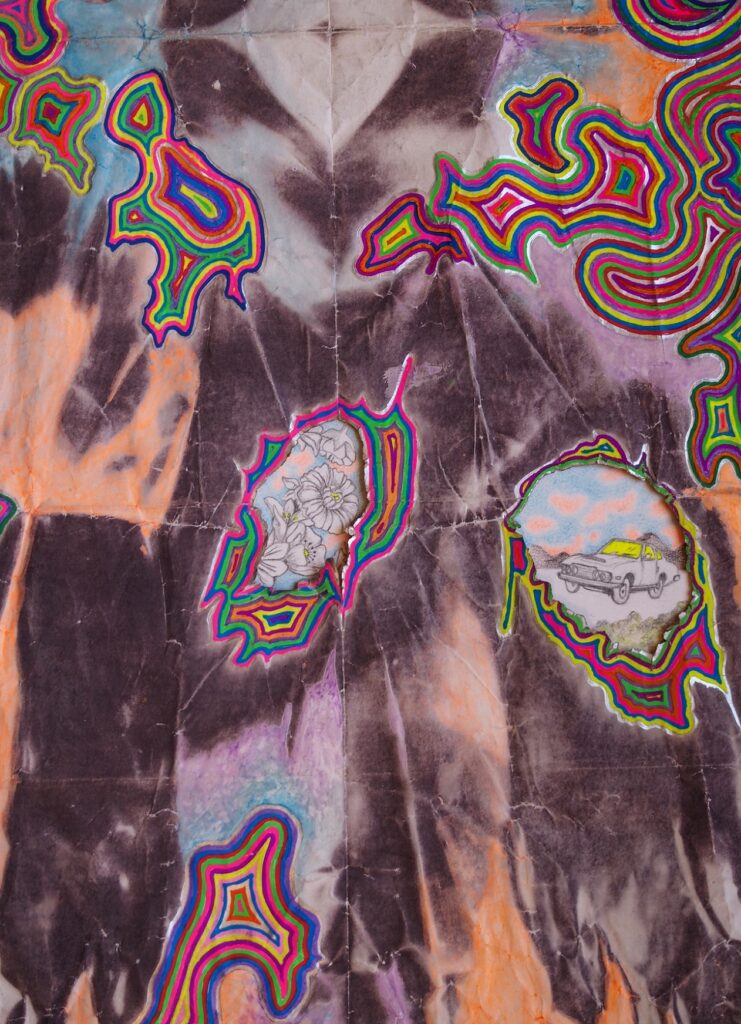
2020, colored pencil and gouache on paper, 70 x 50 cm
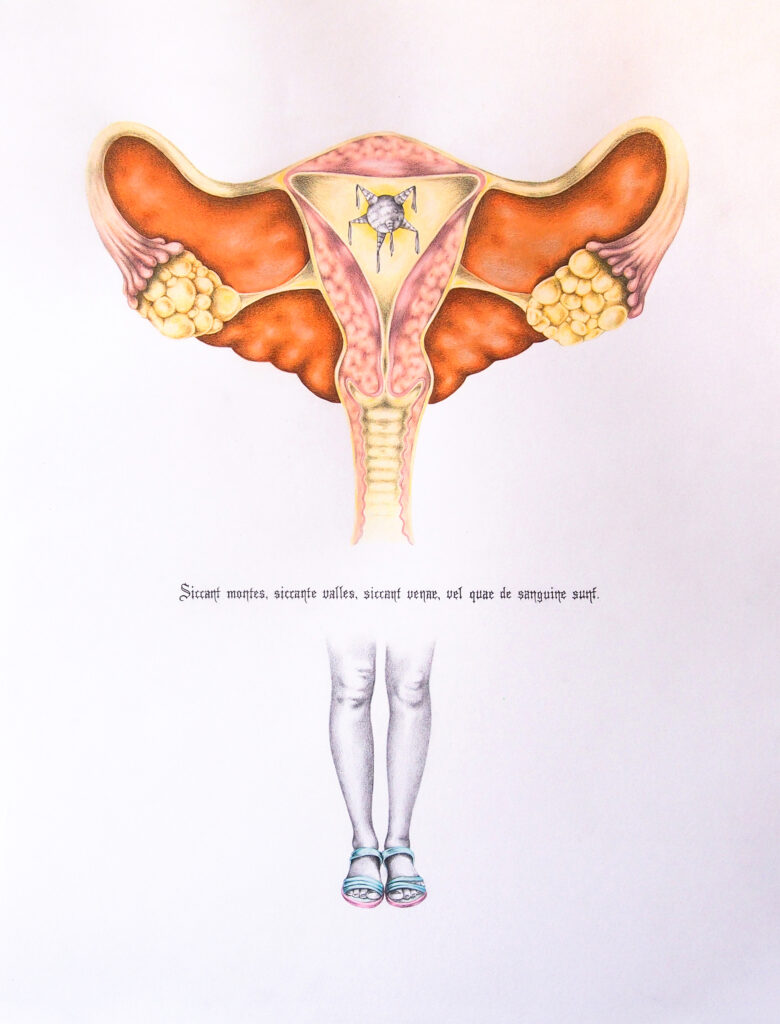
2020, colored pencil and gouache on paper, 70 x 50 cm
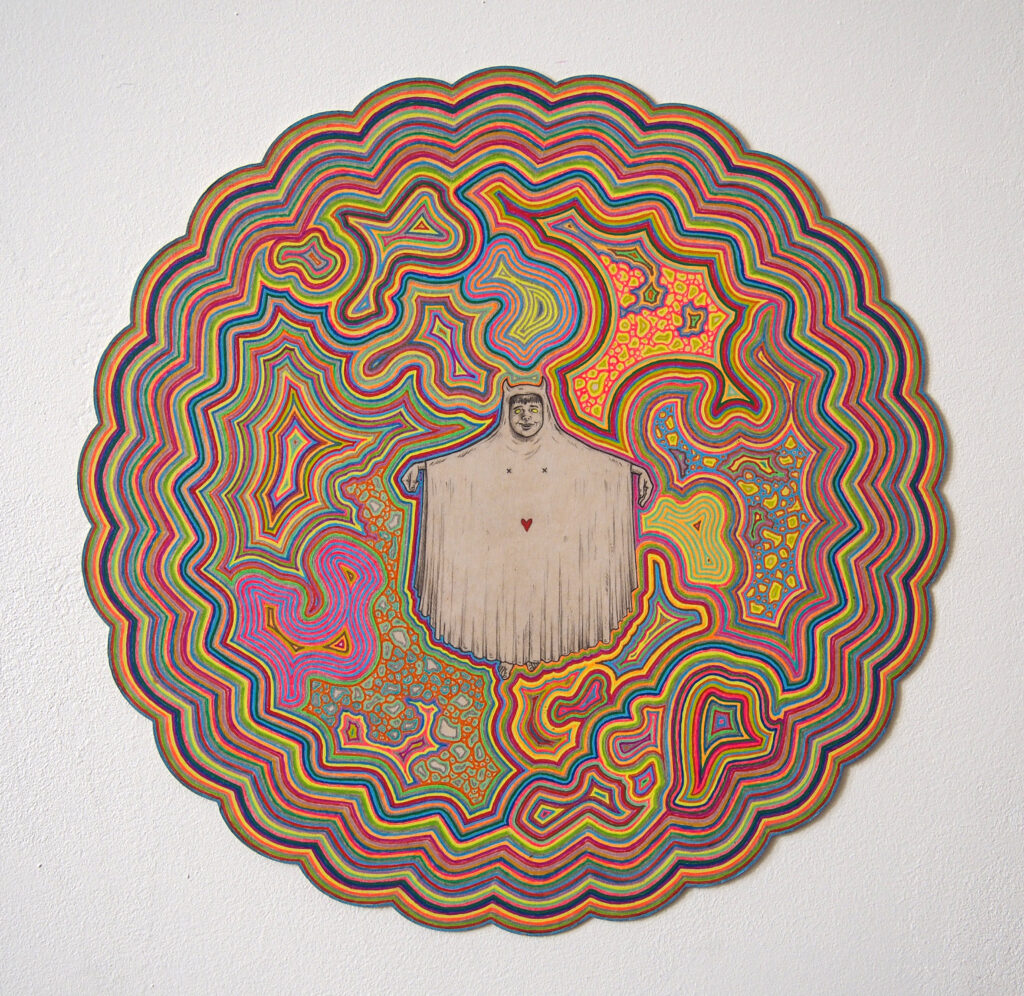
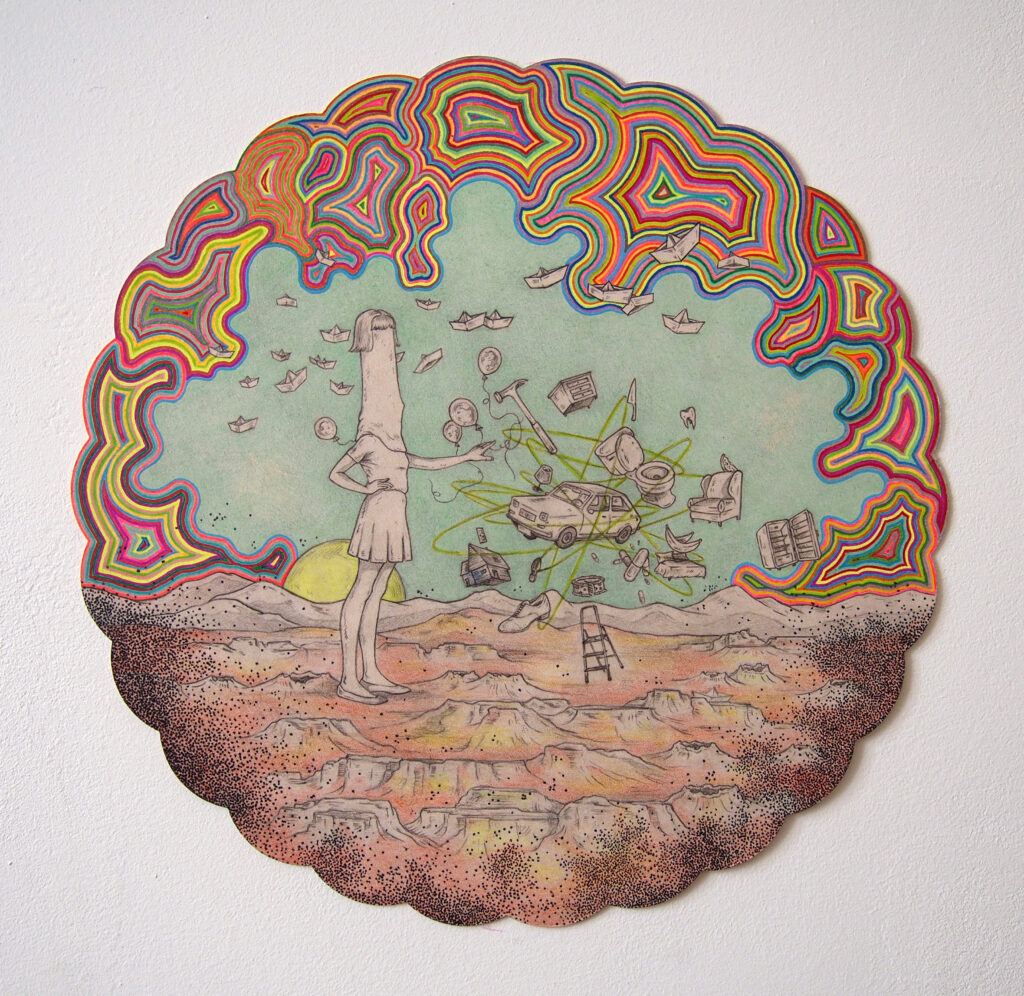

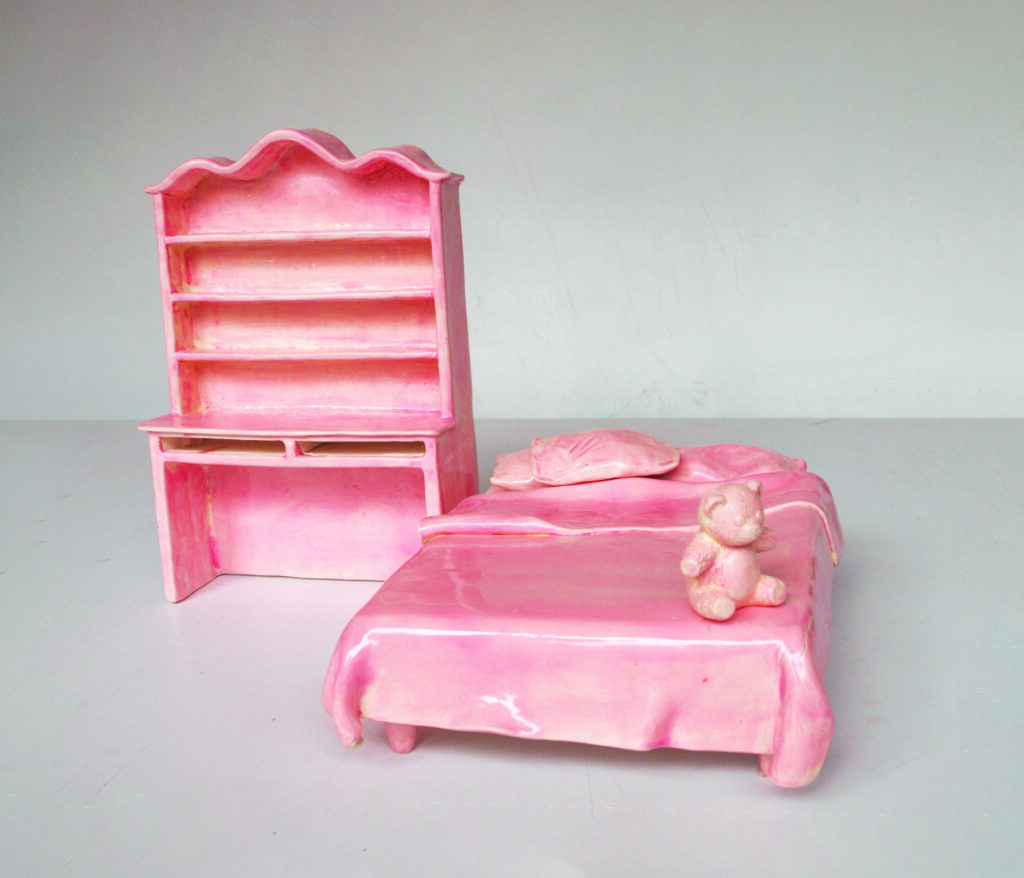
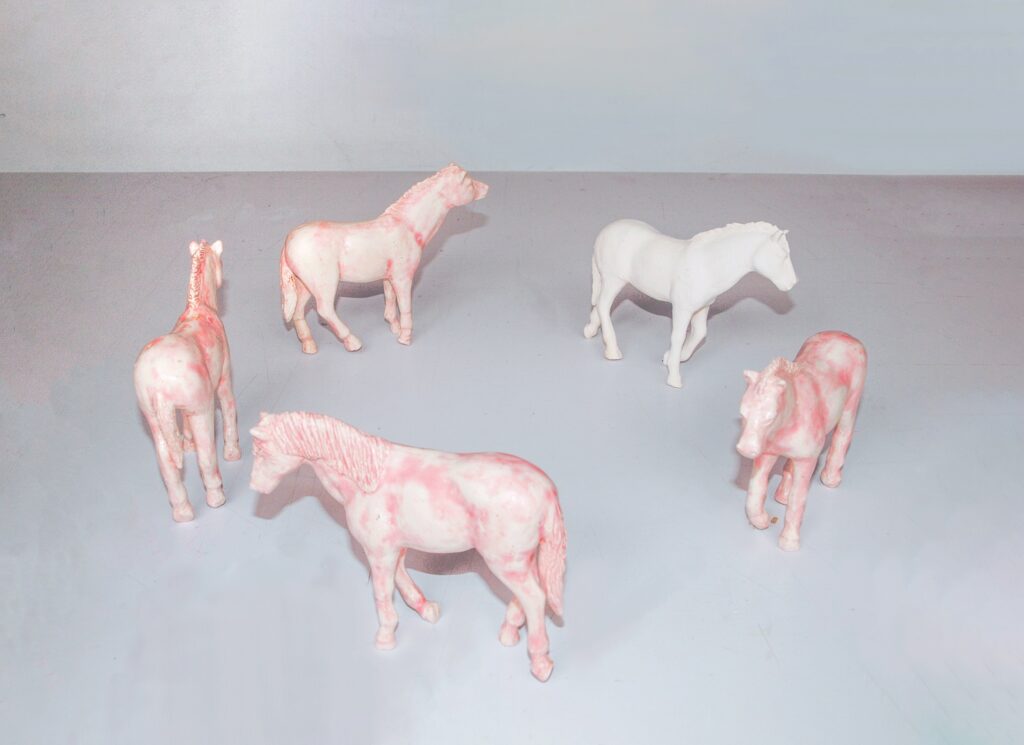
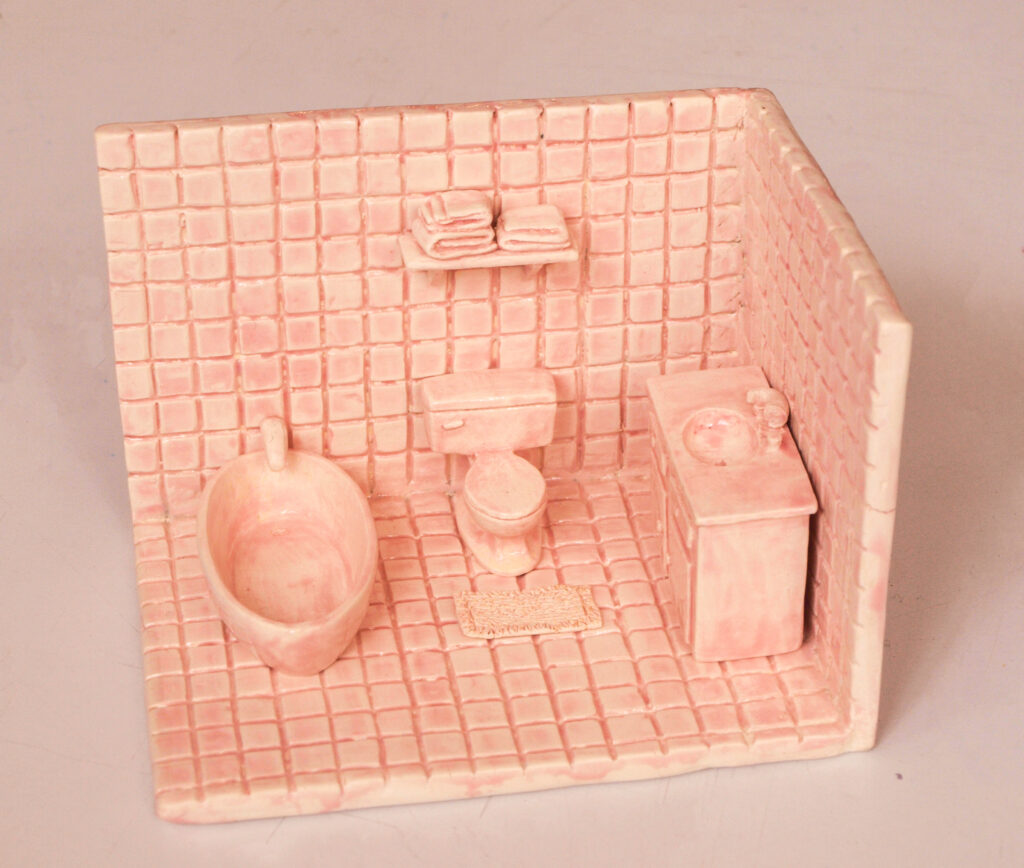
In Pink (ceramics)
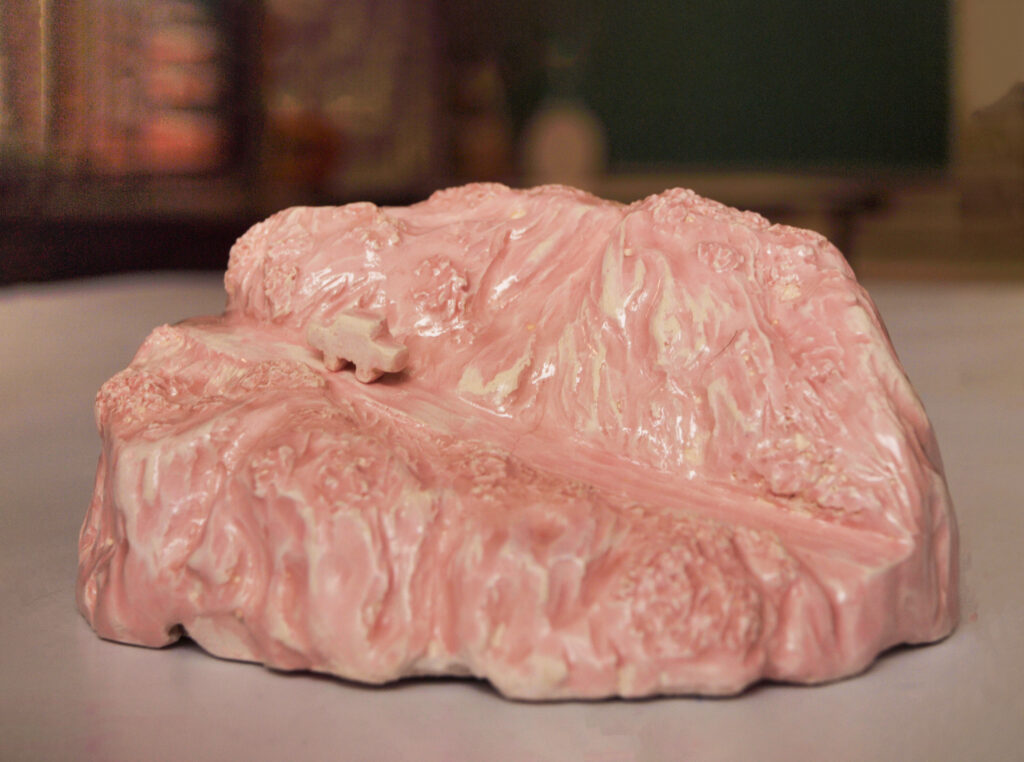
2013
About
Estefanía Bouchot (born in 1988 in Mexico City) is an artist based in France. She studied at the National School of Painting, Sculpture and Printmaking “La Esmeralda” (INBA, Mexico City).
After moving to France in 2014, she temporarily stepped away from artistic practice to pursue other activities, including working as a chef in a Mexican restaurant. In 2022, she resumed her artistic practice, beginning a new stage focused on ceramic sculpture, primarily in stoneware.
In 2025, she presented her work in the solo exhibition Habiter ses fantômes at Artivistas Gallery in Paris. She has also participated in group exhibitions in Mexico, Turkey, France, and Spain, including at Uxval Gochez Gallery in Barcelona and the National Center for the Arts (CENART) in Mexico City. In 2026, she was selected to participate in the XXXIII Concurs de Ceràmica Contemporània “Mediterráneo.”
She is a member of the Factory 87 association in Saint-Léonard-de-Noblat and has been represented by Artivistas Gallery in Paris since 2024.
Statement
The ceramic process unfolds between mastery and uncertainty, echoing the oppositions that run throughout my work: innocence and eroticism, tenderness and violence, vulnerability and control, allowing for ambivalence and the absurd, opening a space for reflection and imagination.
Through segmented bodies that transform into pierced skies, flames, masses, or phallic forms that mount or merge with archetypal houses, and through non-binary, coral-like structures with childish attributes—decorated with bows, clouds, or sad, clown-faced flowers—my work creates unease within the familiar and the whimsical, exposing the domestication of the body and the ways in which heteronormative logics shape our forms of belonging.
Inspired by my experience as a migrant and by The Wizard of Oz, my work embodies the relentless search for a place to call home. Dorothy’s red shoes embody the simultaneous longing to leave and to return. They suggest the possibility of coming back to an ideal “home”: an inner place that haunts us, inhabits us, always re-imagined through memory and desire.
The house is the home of the body, and the body is the home of the self. And since “there’s no place like home”—because such a place does not actually exist—the house-body-self becomes a malleable specter, reconstructed through memory and desire, remaining elusive, fictitious, and ever-changing.
This logic of transformation appears throughout my entire work, where hybrid entities bring together the organic, the corporeal, and the ornamental, evoking multiplicity and movement. My work embodies the imaginary possibility of a free body-home-self that grows, mutates, and re-invents itself constantly.
My upcoming project, Entre cuernos y moños (Between Horns and Bows), consists of a body of organic-fantastical relief sculptures that, together with re(presentations) of the unicorn horn and the bow, sweets, confetti, and hair braids, explores the relationships between body, gender, desire, control, and ritual. Ornament and festive elements become fetishes; the relic becomes banal, while pleasure and desire coexist with forms of control and violence, creating an ambiguous space where the sacred and the mundane blur through celebration and constraint.
Contact
Instagram : @estefaniabouchot
estefaniabouchotjasso@gmail.com